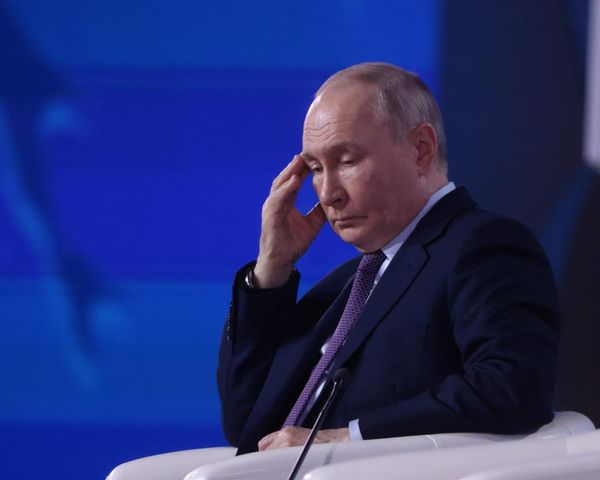
WASHINGTON _ President Donald Trump personally mocked television host Mika Brzezinski in vulgar terms on Twitter, drawing quick condemnations from leading Republicans as he once again generated a controversy while his White House struggles to get traction on its agenda.
As Brzezinski's MSNBC show "Morning Joe" came to a close about 9 a.m., Trump insulted Brzezinski and her co-host Joe Scarborough, calling them "low I.Q. Crazy Mika" and "Psycho Joe," adding that he had at one point seen Brzezinski "bleeding badly from a face-lift."
The tweets were the latest in a barrage of attacks by Trump and his White House against media organizations, including CNN, The New York Times and The Washington Post, which he has accused of publishing false stories critical of his administration.
"CNN _ fake," Trump said during a brief speech Thursday afternoon at the Energy Department.
The remarks come at an especially fraught time for the administration, and Republican congressional leaders moved quickly to repudiate his words.
"Inappropriate. Undignified. Unpresidential," tweeted Jeb Bush, the former Florida governor who was among the candidates Trump defeated in the race for the presidential nomination.
The reactions from Sen. Susan Collins, R-Maine, and Sen. Lisa Murkowski, R-Alaska, were particularly notable as they are two of the centrist lawmakers whose support Senate Republican leaders need to win passage of their embattled health care bill, a top priority for the White House.
The reaction from them and others underscored the sense on Capitol Hill that members of his party increasingly have little fear of publicly contradicting the president. Recent polling has shown that even among Republican voters, many view his tweets as a distraction.
White House spokeswoman Sarah Huckabee Sanders denied that Trump had crossed a line.
"He fights fire with fire," she told reporters at the White House news briefing.
"When he gets attacked, he's going to hit back," she said.
Exactly what set off the president's ire was not known, however, as Trump didn't say and Sanders talked only in general terms about "attacks." Scarborough and Brzezinski once had a fairly close relationship with Trump but have become increasingly tough in their comments about him.
In a statement, MSNBC said, "It's a sad day for America when the president spends his time bullying, lying and spewing petty personal attacks instead of doing his job."
Brzezinski took her own jab, tweeting a photograph that revived an old jibe that has gotten under Trump's skin in the past _ that he has small hands.
Democrats, meantime, were quick to reopen two lines of attack against Trump _ that he does not respect women and that he demeans the office he holds.
The latter theme resembles one George W. Bush used heavily in his 2000 presidential campaign in which he pledged to restore dignity to the White House after Bill Clinton's scandals.
"I'm appalled. This is the president of the United States. You don't do things like that. You don't attack women," Sen. Dianne Feinstein, D-Calif., said on MSNBC.
The incident was hardly the first time Trump's Twitter messages have jolted the capital, but the context was different this time. The attack on Brzezinski was more personal than most others Trump has made since he became president, more reminiscent of some of the verbal assaults he launched during his campaign, particularly his remarks about Megyn Kelly, another television anchor.
"You could see there was blood coming out of her eyes, blood coming out of her wherever," Trump said in August 2015, after Kelly challenged him during a candidate debate. The comment was widely seen as referring to Kelly's menstrual cycle.
Trump's flare-up came as the administration struggles to win Senate votes for the health care overhaul bill, faces a critical point in the fight against Islamic State militias in Iraq and Syria and tries to deal with an escalating nuclear threat from North Korea, not to mention the continuing investigations into Russia's meddling with the election and possible involvement by people close to the president.
Richard Haas, the president of the Council on Foreign Relations and a senior State Department official in the George W. Bush administration, wrote that Trump's tweets have "real" impact on foreign policy, "as they can raise serious doubts overseas" about the president's judgment and the "wisdom of relying" on the United States.
The White House had billed this week as "Energy Week" _ a way to discuss how the administration was working to bolster the U.S. oil, gas and coal industries. Like previous weeks when the White House has tried to focus on infrastructure and jobs, that theme has been overshadowed by other news.
Although Trump and his aides often have portrayed his Twitter messages as a way of communicating directly with supporters, recent polling data suggest that the strategy has limited impact.
A nationwide survey released Wednesday by the polling institute at Marist College in New York, for example, found that only about 1 in 5 Americans found Trump's tweets to be "effective and informative." Nearly 7 in 10 said they found them "reckless and distracting."
Worse for Trump, the distaste for his tweets extended far beyond Democrats. More than 7 in 10 independents said they found his tweets "reckless and distracting." So did a majority of people who said they typically back Republicans but did not consider themselves strong partisans.
Even among those who identified themselves as Trump supporters, the share who said they found his tweets "effective and informative" fell just short of a majority, with 48 percent taking that view, while 37 percent said they found the tweets reckless and distracting and 15 percent were unsure.
In a separate poll earlier this month by YouGov, about one-third of Trump supporters said they thought his tweets helped his cause, while roughly a quarter of his supporters said the tweets hurt his cause. About four in 10 either said the tweets had no impact either way or were unsure.
Among all respondents, a majority said his tweets hurt Trump's cause.
Trump's tweets also appear to have lost considerable punch in their impact on his targets. Shortly after his election, tweets about individual companies caused notable drops in their stock prices. More recently, the markets have completely shrugged off Trump tweets about companies such as Amazon, which he targeted in a tweet this week, part of his long-running feud with the company's chief executive, Jeff Bezos, who also owns the Post.