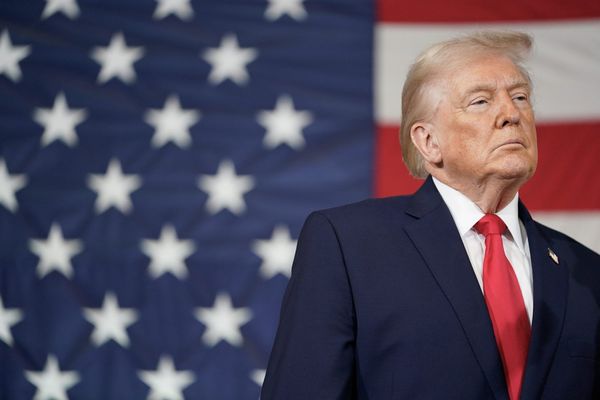

Just hours before President Donald Trump's revised travel ban was set to go into effect, a federal judge in Hawaii issued a temporary restraining order, putting the ban on hold.
The ban would have temporarily banned refugees as well as travellers from six predominantly Muslim countries.
US District Judge Derrick Watson concluded in his ruling that while the order did not mention Islam by name, "a reasonable, objective observer ... would conclude that the executive order was issued with a purpose to disfavour a particular religion".
Al Jazeera asked Danielle McLaughlin, a constitutional law scholar and lawyer at Nixon Peabody LLP in New York City, to explain the process and what will happen next.
How could Hawaii block Trump's travel ban?
This lawsuit was brought by an individual, an imam named Ismail Elshikh, as well as the state of Hawaii. A state can file a lawsuit in a federal court on behalf of its people. The state represents the interests of its people who have constitutional rights - including equal protection of the laws and protection against religious discrimination by the government. The state can also represent the interests of the business community and its own state-run universities.
In deciding whether to temporarily stop the travel ban from going into effect, the court looked at whether the ban likely violated the constitutional rights of Hawaiians, and also at the "balance of harms" – whether the harm done to Hawaii and its people if the travel ban is implemented (which included loss of tourism dollars and damage to universities through loss of funds, students, and/or teachers) is greater or worse than the harm done to the national security interests the Trump administration is trying to protect if it is not.
How can a federal court halt a president's executive order?
Under the US constitution, power in the federal government is split between the president, the courts, and lawmakers. And because of the rights of citizens set out in the constitution (including freedom from religious discrimination), there are things a president simply cannot do. Ultimately, the court said the travel ban had to be halted because it was likely that it violated the constitutional rights of the people of Hawaii.
What happens next?
President Trump has said he will take the case "as far as it needs to go". The first step will be the 9th Circuit Court of Appeals, which will either uphold the temporary restraining order, or cancel it. The losing side - the Trump administration or the state of Hawaii - can appeal the Court of Appeals' decision in the Supreme Court.
In court, is it only the text of the executive order that matters or will judges also look at statements made by the Trump administration?
Courts will look at the intent of the law, not only the words. Trump's campaign rhetoric was pivotal in the Hawaii court's decision, as it was in the earlier decisions halting his first travel ban. During his campaign, Trump promised a ban on Muslims entering the country. This is discrimination on the basis of religion, which is unconstitutional. Taking certain language out of the executive order does not mean that the administration's intent can no longer be considered by a court.