WASHINGTON _ Trump administration officials said Tuesday they barred entry to 721 foreigners with U.S. visas from seven majority Muslim countries in the confused and chaotic first three days of a sweeping travel ban, and hinted that a crackdown on "nefarious actors" would soon unfold in U.S. communities.
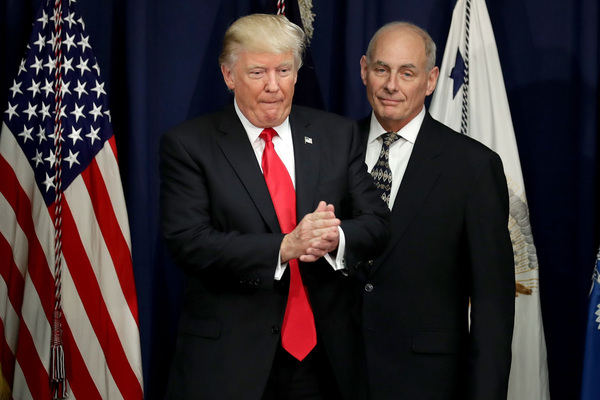
Homeland Security Secretary John Kelly said U.S. officials are determined to bring order to immigration even as he insisted that border security agents will respect judicial rulings against parts of the ban.
"We cannot gamble with American lives," Kelly said.
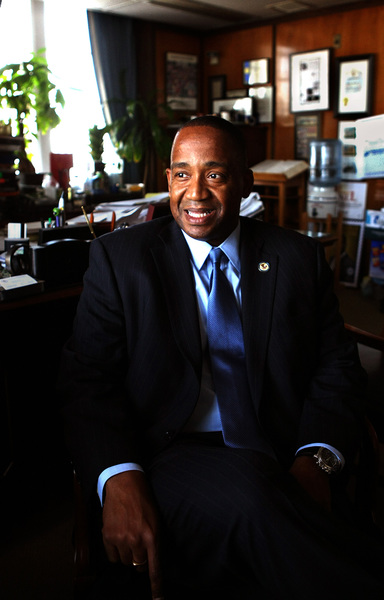
At least 872 people who had been granted refugee status but were denied entry into the United States over the weekend will be allowed into the country this week, the acting commissioner of Customs and Border Protection, Kevin McAleenan, said.
McAleenan blamed some of the commotion at domestic and foreign airports on airlines "that over-interpreted our guidance" on banned foreigners, but acknowledged that the Trump administration bungled aspects of the initiative, which generated raucous rallies at airports in at least a dozen major U.S. airports.
"I think it's fair to acknowledge that communications, public and inter-agency, haven't been the best in the initial roll-out of this process," McAleenan said.
The officials offered new interpretations and clarified other aspects of the ban on travelers from seven majority-Muslim countries � Libya, Iran, Iraq, Somalia, Syria, Sudan and Yemen.
Nationals of some of those countries may not get into the United States for a long time after the initial 90-day freeze has expired.
"Some of those countries that are currently on the list may not be taken off the list anytime soon, if they are countries that are in various states of collapse, as an example," Kelly said.
Foreigners who hold a passport from one of those countries yet bear a second passport from a non-affected country, perhaps in Europe, will not be barred entry as long as they use the second passport, McAleenan said.
"So if you are a citizen of the United Kingdom, and present your United Kingdom passport, the executive order does not apply to you," he said at a news conference.
Kelly, a retired Marine Corps general and former head of the U.S. Southern Command based in Miami, brushed off a series of media questions about his input into the White House executive order, insisting that Donald Trump signaled for more than a year that he would take such action.
"Probably Thursday we found out that it would be signed the next day," Kelly said, adding that his staff had been aware of it but that he hadn't offered direct input "from the perspective of correcting the grammar."
Kelly, 66, said the Trump administration is determined to carry out the executive order "humanely and with professionalism," and added: "We are responding immediately to any court orders."
A University of Michigan Law School page that tracks judicial challenges to aspects of the travel ban lists eight additional lawsuits on top of an initial federal suit in Brooklyn, N.Y., that led federal judge Ann Donnelly to grant a stay for those affected by Trump's executive order.
Kelly said the border crackdown is aimed both at countries with weak governments and individuals with issues in their background that indicate security problems.
"There are many countries _ seven we are dealing with right now _ that in our view, in my view, don't have the kind of law enforcement, records-keeping, that can convince us that one of their citizens is indeed who the citizen says they are," Kelly said.
He added that individual border agents may examine social media used by a potential visitor, check telephone contact information and see which websites they visit.
"We have to be convinced," Kelly said.
Another Trump appointee, barely half a day after the White House announced him, offered a hint that round-ups may be in the offing soon within the United States of undocumented immigrants who commit felonies and remain in the country.
"You know, folks, there are jurisdictions across the country where aliens are arrested, criminally convicted of serious crimes, and walk out of these jurisdictions without any cooperation with us," said Thomas Homan, the acting director of Immigration and Customs Enforcement.
"They are back in the communities, back in our communities," said Homan, who was named to the post late Monday to replace an Obama-era director.
Homan said he is determined to address the issue of criminal immigrants, which was a refrain of Trump's campaign, which regularly featured relatives of victims killed by undocumented migrants.
"I'm here to execute a mission," Homan said.