
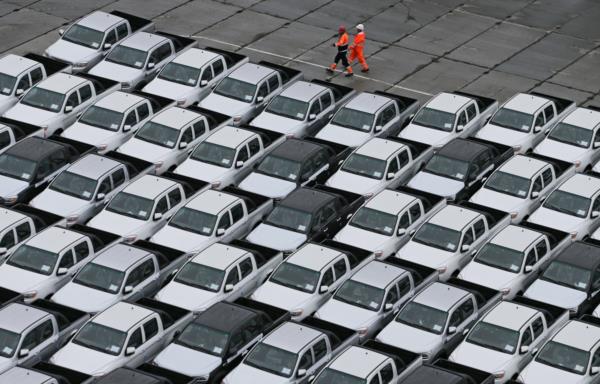
President-elect Donald Trump has announced plans to protect American-made cars through imposing steep tariffs on imports. However, the reality is that there is no such thing as an all-American car.
Trump's economic plan for his second term includes the implementation of tariffs, which are essentially taxes on goods imported from other countries. He recently revealed intentions to impose a 25% tariff on all goods coming from Mexico or Canada on his first day in office.
The US government does track the percentage of each car's parts that are made domestically. However, under current trade laws, both Canadian-made and US-made parts are considered as domestic content. Even with this broader definition of 'American made,' no car exceeds 75% in domestic content.


If Trump proceeds with imposing steep tariffs on the parts used in 'American' vehicles, auto prices could see a significant increase. The auto industry heavily relies on a global supply chain for parts and materials, ranging from basic nuts and bolts to high-tech electronic components that are not produced in sufficient quantities in US factories.
Despite Trump's assertion that tariffs are paid by the foreign country, the reality is that the cost is borne by the buyers of the imported goods. US businesses typically pass on most, if not all, of this cost to consumers.












