CAJAMARCA, Colombia _ Anything that President Donald Trump says about NAFTA draws extra scrutiny in Latin America, whose countries account for half of the United States' free trade agreements.
So when Trump threatened to terminate the North American Free Trade Agreement with Mexico and Canada, it wasn't only those countries that worried.
"We're watching what they're going to do with Mexico," said Javier Diaz Molina, executive president of Colombia's National Association for Foreign Commerce, a trade group. "Because whatever dose of medicine they receive, we'll get the same spoonful."
Trump backed off the threat after pleas from the U.S. business community and calls from Mexican and Canadian leaders, but other Latin American leaders are hardly resting easy. The Trump administration warned that, like NAFTA, the United States will pull out of any deal it considers unfair unless one better is negotiated for the United States.
The United States has 14 free trade agreements, with 20 countries. Eleven of those are in Latin America beyond Mexico. They include binational agreements with Colombia, Chile, and Peru, and a multilateral deal with much of Central America, known as CAFTA.
NAFTA was the template for all of those, focusing not just on goods being traded, but also intellectual property rights, dispute resolution, worker rights and environmental protection.
Diaz said all the agreements have basically the same structure as NAFTA, so whatever changes are made to NAFTA are likely set a baseline for renegotiation of the other deals.
Colombia exports about 80 agricultural products to the United States, including coffee, flowers and bananas. Colombia buys corn, rice, soybeans and wheat from the United States.
The coffee-rich nation is the United States' 25th-largest trading partner, with $31 billion in goods traded in 2015, according to the Office of the U.S. Trade Representative. The U.S. goods trade surplus was $2.4 billion that year, but rose to $63 million in 2016, according to the U.S. Census, which is the official source for U.S. export and import statistics.
In comparison, the U.S. has a $63 billion trade deficit in goods with Mexico and $347 billion deficit with China.
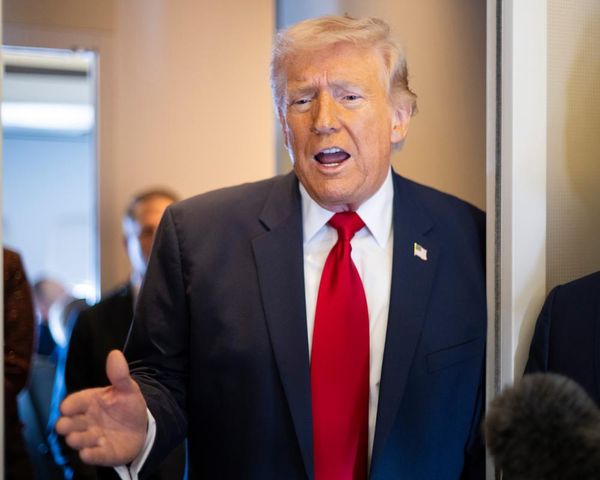
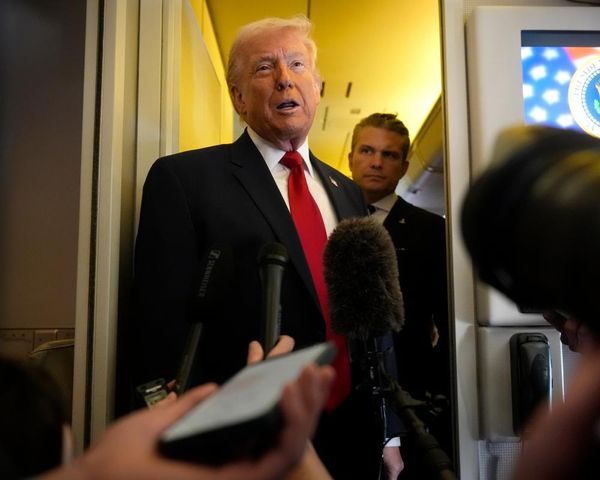
Trump has criticized trade deals made by previous generations, and charges that negotiators in the George H.W. Bush administration were duped by Mexico into a bad trade deal. But NAFTA is just the start, as Trump has promised to review all 14 trade agreements.
"Every country can take a message that President Trump is clearly going to protect American workers, American families, American businesses and American jobs," said Gary Cohn, the White House chief economic adviser. "And if he feels that we're being treated unfairly by trade deals that have been signed in the past, he's going to work and instruct us to do everything we can to fix those."
Colombia's ambassador to the United States, Juan Carlos Pinzon, said Colombia has not been approached by the Trump administration about any changes, but said the Colombians are open to continuing the conversations on trade.
Pinzon said there are some changes Colombia would like to see.
"We need more access," Pinzon said. "We need more products that can come to the United States."
Colombia already has a taste of the new administration's strict approach. For over a year, the Colombian government had been jumping through regulatory hoops trying to win U.S. Department of Agriculture approval to export a special kind of avocado that's found largely in Mexico. But just as the deal was supposed go through, the Trump administration froze new regulations to allow it time to review the Colombian avocado rule.
Herman Bermudez was one of the first farmers in Cajamarca to begin replacing beans and other crops with avocados. Tucked in the mountains several hours west of Bogota, Cajamarca was prime growing area for avocados, and Bermudez is now replacing bananas and others crops on his roughly 50-acre farm with the fruit, which he calls "oro verde" _ green gold.
Bermudez's avocados are shipped to Spain and Holland, but he'd love to get some American customers.
"A Spanish distributor told me the most flavorful avocados come from this region," Bermudez said. "Of course, we want to sell it to the United States. They call it green gold because we get good dividends. It's like coffee."
Juan Rodrigo Alvarado, agriculture secretary for Colombia's Tolima state, said such efforts aren't just about providing economic opportunity to farmers in his state or making it less expensive for Americans to make guacamole. They are also about reducing farmers' need to grow illicit crops that feed the hunger for illegal drugs in the U.S.
"We're converting the economy so that farmers no longer feel the need to plant coca," Alvarado said, referring to the raw material in cocaine.
Sandra Borda, a professor of political science and international relations at the University of the Andes, said worries about free trade have yet to reach everyday Colombians; they're focused on daily challenges of feeding their families, the hard-fought election campaign and the delicate peace deal with leftist rebels.
But leaders, she said, are paying attention.
"When Trump first started talking about renegotiating with Mexico during the campaign, I think all the Latin Americans got quiet trying not to draw attention and find themselves on Trump's renegotiation agenda," Borda said.
The Colombia Free Trade agreement was one of the most recently signed. It's a more modern agreement that includes more provisions and conditions.
Pinzon expressed cautious optimism about the deal, calling it fair arrangement that benefits both countries. It's a binational accord, which is the kind that Trump favors over multinational arrangements like the Trans Pacific Partnership, from which Trump withdrew. And, for the most part, the United States has had a trade surplus with Colombia.
"As of today, it's been a win-win type of agreement," Pinzon said.