One year into President Trump's second term, his administration's campaign to reshape American higher education has produced a landscape of partial victories, significant legal defeats, institutional disruption, and policy changes that have left universities, students, and faculty navigating unprecedented uncertainty. The administration moved fast, broadly, and in many cases without following established legal procedures — a pattern that courts have repeatedly penalized even as they have occasionally sided with the administration on the merits.
Here is a comprehensive scorecard of where things stand.
DEI: The Signature Campaign, Mostly Blocked — But Still Active
The centerpiece of the administration's higher education agenda was a sweeping "Dear Colleague" letter from Secretary of Education Linda McMahon declaring all race-conscious programs at universities illegal, backed by an anti-DEI executive order signed in January 2025. The letter sent universities scrambling — scholarships for underrepresented minorities were paused, diversity offices shuttered, websites scrubbed of equity language, and more than 50 universities faced federal investigations.
But the legal architecture proved fragile. In American Federation of Teachers v. U.S. Department of Education, a federal judge blocked enforcement of the Dear Colleague letter for skipping required public comment periods — a core Administrative Procedure Act violation. The Department of Education dropped its appeal in January 2026, effectively killing the guidance. Advocates noted the ruling was a legal victory, but acknowledged the administration's campaign had already produced a "chilling effect" on diversity, equity, and inclusion policies across the sector regardless of the court outcome.
The DEI fight is not over. In February 2026, the 4th U.S. Circuit Court of Appeals vacated a preliminary injunction against two executive orders targeting DEI practices — handing the administration a significant legal victory. And the General Services Administration proposed a new rule requiring all 222,760 federal funding recipients — including schools and universities — to certify they have no DEI programs, covering race-based scholarships, diversity statements, and cultural competency requirements.
As Inside Higher Ed's analysis concluded, while the Dear Colleague letter is dead, the administration retains other tools — civil rights investigations from both the Education and Justice Departments, conditions on grant funding, and court settlements — to enforce changes selectively without a blanket rule.
Research Funding: Billions Lost, Courts Partially Intervening
The administration's attack on federal research funding has been among its most consequential actions — and among the most legally contested. The NIH proposed capping indirect cost reimbursements at 15% — a measure that, if implemented, would have stripped billions from university research budgets. Courts blocked the cap and the 4th Circuit upheld the block.
NIH also terminated grants linked to DEI research, environmental justice, and other disfavored areas. In June 2025, U.S. District Judge William Young ruled those terminations illegal and ordered over $780 million in funding reinstated. But in August, the Supreme Court dealt a blow to universities in a 5-4 decision — ruling that the district court lacked jurisdiction to restore the funding and that grantees must pursue claims through the U.S. Court of Federal Claims instead. The NSF similarly cut over $1 billion in grants; in September a federal judge declined to restore them, citing the Supreme Court's jurisdictional ruling.
The individual university toll has been severe: Harvard ($2.2 billion in grants frozen and later partially restored), Columbia ($400 million), Johns Hopkins ($800 million, leading to 2,200 layoffs), Duke ($108 million in NIH funding frozen). Columbia and Brown reached settlements with the administration. Congress, notably, rejected Trump's proposed 40% NIH budget cut and actually increased NIH funding by $415 million.
Harvard: The Administration's Most Personal Fight
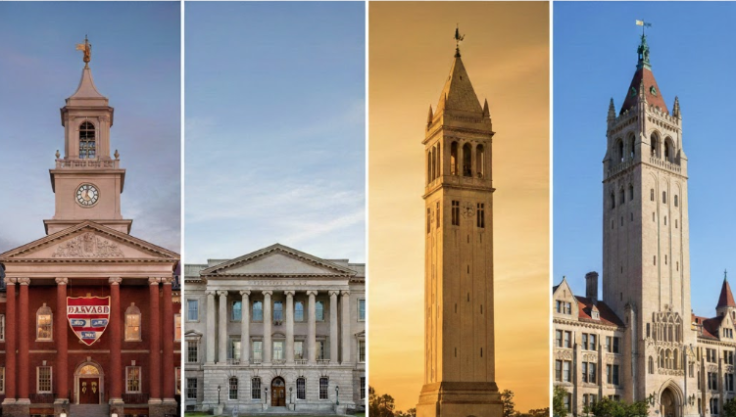
No institution has absorbed more sustained federal pressure than Harvard. The administration froze $2.2 billion in research funding, terminated contracts, attempted to block international students, and filed two separate federal lawsuits — one over admissions practices and one alleging Title VI violations over campus antisemitism and seeking to recover billions in taxpayer funds.
A federal judge sided with Harvard in September — restoring its funding and calling the administration's antisemitism argument a "smokescreen." The administration appealed. The new Title VI lawsuit filed March 20 is the administration's third major legal action against Harvard this year.
Harvard's position has remained consistent throughout: every action the administration has taken is "pretextual and retaliatory" for Harvard's refusal to cede institutional governance to federal control.
International Students and Visa Revocations
The administration launched a program of international student visa revocations targeting students involved in pro-Palestinian protests — a campaign that courts largely halted through injunctions after universities and the American Civil Liberties Union sued. Harvard's ability to enroll new international students was temporarily blocked, then restored after litigation. The Stanford Daily filed suit in August over what it described as unconstitutional suppression of student speech in connection with visa enforcement.
As the Duke Chronicle reported, the administration's crackdown on international students has appeared to slow in recent months, with no new restrictive measures announced since late 2025. But the chilling effect on international student enrollment decisions — and on the willingness of prospective students abroad to choose American universities — is already being felt in enrollment data across the country.
Student Loans: The Most Durable Changes
The administration's most lasting changes to higher education may be in student lending. The SAVE repayment plan was permanently terminated after the 8th Circuit upheld a December 2025 settlement. The One Big Beautiful Bill Act, signed July 4, 2025, restructured the federal student loan system — introducing the Repayment Assistance Plan (RAP), capping lifetime federal borrowing at $257,500, and phasing out several affordable repayment options. These changes are not blocked in court and will take full effect in July 2026.
The Institutional Response: Compliance, Cost-Cutting, and Legal Defense
Universities have responded to the year of pressure with a mixture of compliance and resistance. Dozens of institutions shuttered diversity offices, paused minority-focused scholarships, and removed DEI language from websites — often before courts ruled, in anticipation of federal action or investigation. Duke undertook a $364 million cost-cutting program eliminating nearly 700 positions. Universities have also significantly increased their legal defense budgets and begun diversifying revenue streams to reduce federal dependency.
The question being asked across every campus in America is the same: how much of what was dismantled in 2025 — voluntarily or under threat — will be rebuilt if the legal or political landscape shifts? And how much of it is gone permanently, regardless of what courts eventually decide?
Where Things Stand
The administration's campaign has produced a mixed record at the one-year mark. Its most sweeping proclamations — universal DEI bans, mass visa revocations, total funding freezes — have largely been blocked by courts that found procedural violations or constitutional overreach. But the narrower tools remain: selective investigations, grant conditions, settlements, and the sheer administrative burden of defending against federal action have reshaped how universities operate in ways that court victories alone cannot fully reverse.
As one legal expert summarized the situation: "Guidance dead, but investigations and settlements enforce changes selectively." The crackdown has not ended. It has adapted.
Originally published on University Herald