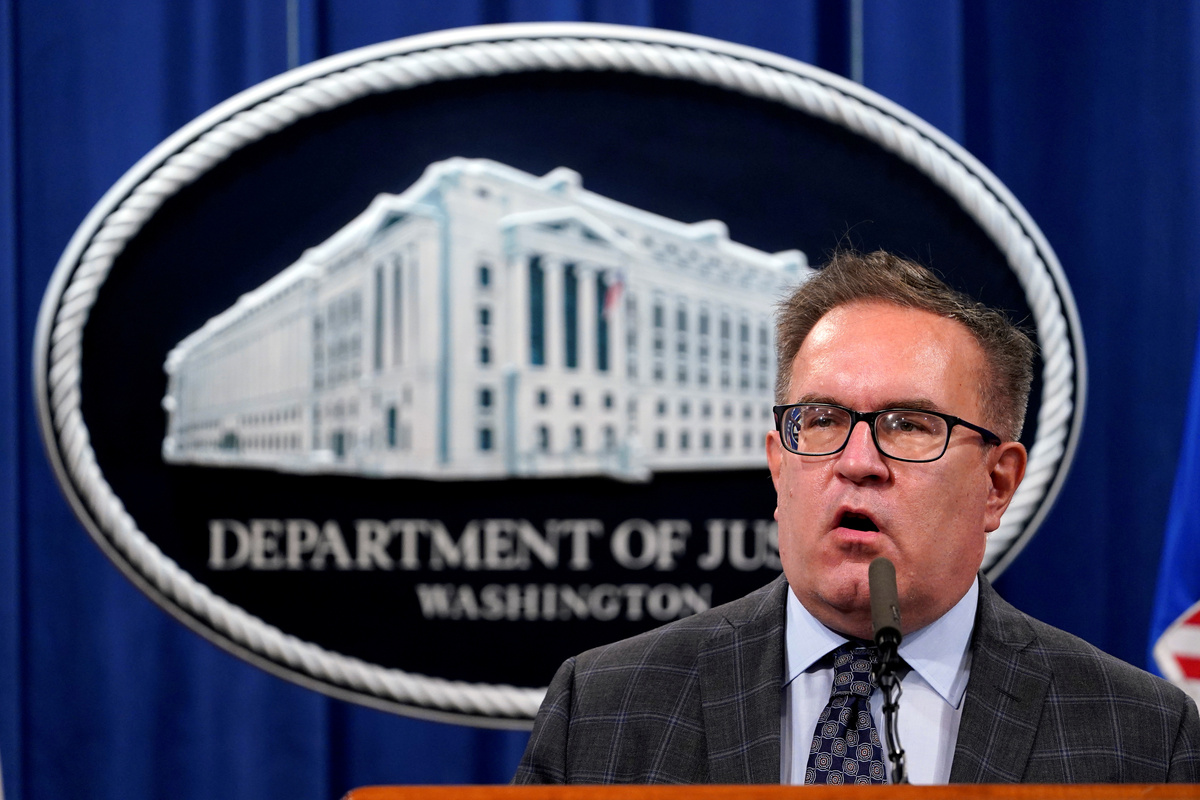
The U.S. Environmental Protection Agency (EPA) chief said on Monday he has finalized a rule to limit what scientific research the agency can use to formulate regulations, in a concession to big business weeks before President Donald Trump leaves office.
Under the rule, the EPA will no longer be able to rely on scientific research that is underpinned by confidential medical and industry data. Opponents of the rule, including public health advocates and environmentalists, said it would harm human health protections by making it harder to craft air and water regulations.
For decades the EPA has relied on scientific research rooted in confidential medical and industry data as a basis for its air, water and chemicals rules. While the agency publishes large amounts of research and data, the confidential material has been held back.
EPA Administrator Andrew Wheeler said in opinion piece in the Wall Street Journal that the agency had relied on "secret science" and the "Strengthening Transparency in Regulatory Science" rule would allow more public scrutiny of the science used in rulemaking.
"Our rule will prioritize transparency and increase opportunities for the public to access the 'dose-response' data that underlie significant regulations and influential scientific information," Wheeler said in the piece. He said dose-response data "explain the relationship between the amount of a chemical or pollutant and its effect on human health and the environment."
The rule will likely be overturned by President-elect Joe Biden who takes office on Jan. 20 and, like many Trump-era environmental rollbacks, could be challenged by environmentalists in the courts.
When the measure was proposed in 2018, it was billed by then-EPA Administrator Scott Pruitt as a way to boost transparency for the benefit of the industries the agency regulates.
Environmentalists denounced the rule. "If left unchallenged, this rule would essentially bar the agency from using the most relevant medical studies when creating rules about air pollution, toxic chemicals, water contaminants, and more and could force the agency to revoke decades of clean air protections," said Chris Zarba, a former director of the EPA Science Advisory Board.
(Reporting by Timothy Gardner; Editing by Robert Birsel)