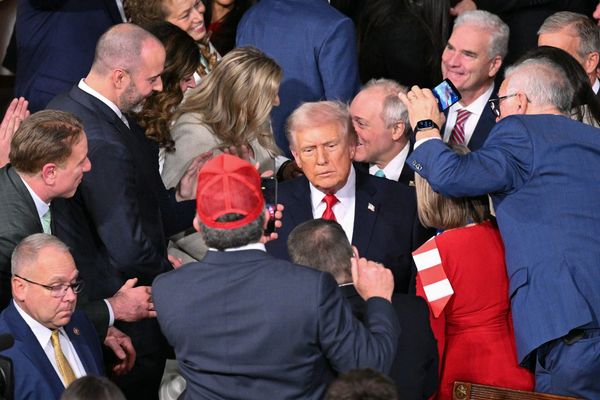
Republicans have found themselves cleaning up yet another mess created by Donald Trump, the perennially controversial figure who is now their presumptive presidential nominee.
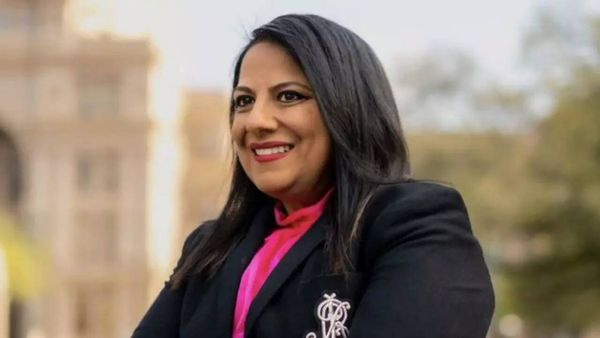
The latest fallout stems from his assertion last week that an American judge would be incapable of presiding over a legal case against Trump University due to his Mexican background.
The House speaker, Paul Ryan, who finally backed Trump after nearly a month of resisting a formal endorsement of the party’s nominee, rebuked the candidate for his stance against Curiel on Tuesday, calling Trump’s criticism “the textbook definition of racist comments”.
“I’m not going to defend these kinds of comments, because they’re indefensible,” Ryan told reporters in a news conference. “I’m going to defend our ideas. I’m going to defend our majority.”
Ryan all but demanded that Trump apologize for his remarks. “I think it’s wrong,” Ryan said. “The way I look at this is if you say something that’s wrong, I think the mature and responsible thing is to acknowledge it was wrong.”
Other Republicans have roundly condemned Trump’s remarks, as the firestorm placed a particular burden on the many vulnerable incumbents facing tough re-election battles to the US Senate, where 24 of the 34 seats up for grabs this November belong to Republicans.
Several of those senators moved quickly to distance themselves from Trump – including Pat Toomey, of Pennsylvania, who referred to his attack on US district court judge Gonzalo Curiel as “outrageous, disturbing and absolutely ridiculous”.
“I have spent a lot of time interviewing a lot of candidates for the federal bench,” Toomey said following a vote in the Senate on Monday.
“People of every conceivable background: men and women, African American, Caucasian, Latinos, LGBT people … The idea that your ethnic background somehow determines whether or not you’re qualified to objectively determine cases is ridiculous and completely wrong.”
North Carolina senator Richard Burr, who is also defending his seat this fall, said,
“This is clearly one of those issues where I disagree with our presumptive nominee – probably won’t be the last time,” Burr said.
Asked if Trump should retract his comments, Burr demurred, saying: “It’s not my role.”
The routine has become all too familiar for Republicans, who have now spent just short of a year responding to Trump’s inflammatory comments. His rhetoric has focused in particular on Latinos and Muslims, with a hardline position on immigration serving as a central tenet of his campaign, but African Americans, women and even prisoners of war have not been spared.
On the issue of Curiel, an American judge born in Indiana, Trump has pointedly refused to back down despite the private urging of top Republicans. Even his supporters, such as Tennessee senator Bob Corker, lamented that Trump was squandering an opportunity to unify the party.
“Something is necessary to disrupt the direction the country’s going in at present, and he has an opportunity to be that,” Corker said. “I just don’t want to see that slip through his fingers by making comments that cannot be condoned in any household or circle in this country.”
Ted Cruz and Marco Rubio, both Cuban American senators and Trump’s former rivals, also joined in the backlash.
“Of course it is inappropriate to attack a federal judge’s race or ethnicity” said Cruz said.
“It’s wrong and I hope he stops,” Rubio, who has endorsed Trump’s candidacy, told a TV station in his home state of Florida, adding, “I don’t think it reflects well on the Republican party. I don’t think it reflects well on us as a nation.”
Mitch McConnell, the Republican Senate majority leader, also said he disagreed with Trump but refused to say in an interview with NBC’s Meet the Press on Sunday if the comments were racist.
Republicans have struggled in recent election cycles to capture support from minorities, a disadvantage that grew to historic levels in 2012 and spurred an autopsy report encouraging the party to make inroads with non-white voters. But far from meeting that objective, Republican officials have grown increasingly concerned that Trump is inflicting lasting, if not irreversible, damage to the party’s brand.
Mike Rounds, a senator from South Dakota, said Republicans had little choice in the matter given the alternative was Hillary Clinton. The party’s focus, he said, would be on retaining its majorities in Congress and letting Trump speak for himself.
Asked if having Trump at the top of the ticket was doing more help or harm, Rounds simply said: “Time will tell.”
At least some Republicans have signaled they would rather stay on the sidelines than associate themselves with Trump.
Nebraska senator Ben Sasse, who became the first of his colleagues to decline to endorse Trump entirely, held little back in a tweet that contained his assessment of the latest controversy surrounding the Republican nominee: “Public Service Announcement: Saying someone can’t do a specific job because of his or her race is the literal definition of ‘racism’.”
Public Service Announcement:
— Ben Sasse (@BenSasse) June 6, 2016
Saying someone can't do a specific job because of his or her race is the literal definition of "racism."
Arizona senator Jeff Flake, who has yet to lend Trump his support, also cited Trump’s statements on Curiel as reason for pause.
“That’s a new level. Because it’s not just … ill-informed or ignorant statements,” Flake said in an appearance on MSNBC, adding, “It’s very disturbing.”
“I hope to be able to support the nominee,” he added. “I certainly can’t right now.”
The majority of congressional Republicans have nonetheless rallied behind Trump, a move that Democrats hope will inextricably tie them to his bombast.
Democrats reacted swiftly to what they said was an effort by Trump to impose ethnic and religious tests on US judges. In a series of press conferences on Monday, they also charged that he was a racist.
Clinton, in an interview with MSNBC’s Rachel Maddow on Monday, did not refer to Trump himself as racist but agreed that his attacks most certainly were.
“I don’t know what else you could call these attacks other than racist, other than prejudice, other than bigoted,” Clinton said.
Additional reporting by Scott Bixby in New York