WASHINGTON _ Hard on the heels of firing his secretary of State, President Donald Trump is preparing another shakeup, moving toward replacing his national security adviser, H.R. McMaster.
The three-star Army general has been widely seen as a calming force in a chaotic West Wing, but never clicked with the commander in chief. A decision to replace him has long been rumored, and now seems increasingly imminent.
How long McMaster might stay at the White House remains unclear. Two White House officials said Trump might want to keep McMaster in the job until after a meeting with North Korean leader Kim Jong Un, which is planned for May.
McMaster has told aides he would not return to the military, even if offered a fourth star. He plans to stay in the job as long as the president wants him serve, he has said.
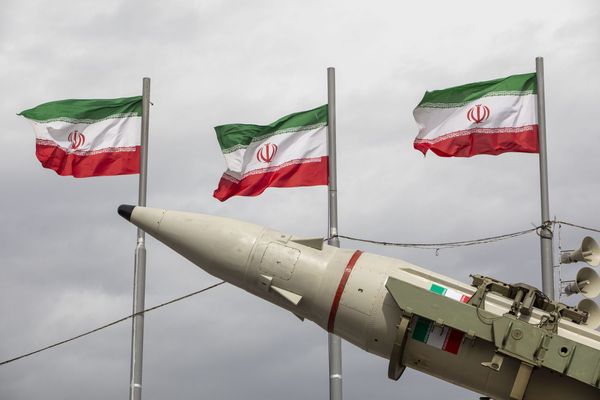
A move to replace McMaster would come as the Trump administration faces weighty decisions on a range of global issues, including whether to abandon the multinational nuclear deal with Iran and how to confront North Korea over its nuclear missile program.
While Trump liked to boast about "my generals" _ a group that included White House Chief of Staff John F. Kelly, Defense Secretary James N. Mattis and McMaster _ the president did not develop a rapport with the national security adviser by many insiders' accounts.
In Oval Office meetings, McMaster was said to bore and irritate Trump by meticulously laying out the pros and cons on major policy questions.
Over time, however, Trump also developed a grudging respect for McMaster, seeing him as an honest broker between warring factions in the Cabinet, and one of the few advisers willing to tell him things he didn't want to hear, according to two White House officials who described the men's relationship on grounds of anonymity.
Yet that candor, and McMaster's occasional slow-walking of Trump orders that the national security team thought ill-advised, made for some tense moments that provoked Trump to explode at McMaster. The adviser was "within the blast radius" of the president's not-infrequent anger, a senior national security official said, because McMaster saw Trump nearly every day.
Mattis similarly has bucked or demurred on some of the president's policy orders, yet relative to McMaster he has been protected from Trump's direct ire by the distance between the West Wing and the Pentagon and their less-frequent meetings.
McMaster also has seemed to be a casualty of a shoot-the-messenger tendency on Trump's part, caught in the middle between the president and the machinations of the other main players on the national security team _ Mattis and, until this week, Secretary of State Rex Tillerson _ as they sought to keep a lid on actions they didn't want Trump to take, according to White House officials.
That put McMaster in the crossfire in dealing with Trump's demands for bold but fraught policy actions like exiting the Iran deal, punishing Pakistan for not more aggressively going after terror groups, and moving the U.S. embassy in Israel to Jerusalem.
McMaster came to the White House to head the National Security Council just more than a year ago, in February 2017, replacing Michael T. Flynn, the former military intelligence officer who had been Trump's national security aide during the campaign.
Flynn was fired within weeks of Trump's inauguration, ostensibly for lying to Vice President Mike Pence about conversations that Flynn had with Russia's ambassador to the U.S., Sergey Kislyak, during the transition. The conversations included discussions about Obama administration sanctions on Russia for meddling in the 2016 campaign, something Flynn had denied.
Flynn's short tenure in the White House had been seen as disruptive and disorganized. When McMaster arrived, he studied how previous national security advisers had operated and how President Dwight Eisenhower had envisioned the role of the NSC director when he created the White House council.
That scholarly approach was typical of a man who in 1997 published a widely read book, "Dereliction of Duty," based on his doctoral thesis and critical of American strategy and military leadership during the Vietnam War.
Coming after Flynn, McMaster saw his role less as advocating for certain positions and more as serving as an honest broker for other advisors and agencies, bringing options to the president and explaining what might happen depending on which course Trump chose.
In recent weeks, McMaster played a central role in responding to messages from South Korea about North Korea's willingness to meet with the U.S. officials. He had developed a working relationship with his South Korean counterpart, Chung Eui-yong, and the two met frequently over the past year on the edges of international forums in Hamburg, Germany, Da Nang, Vietnam, and New York, along with Japanese officials also concerned by Kim's nuclear weapons program.