Donald Trump’s attempt to unilaterally rewrite the Constitution to determine who gets to be an American is relying on century-old legal arguments from white supremacists, a former Confederate officer and a case that denied citizenship to Native Americans, critics have warned.
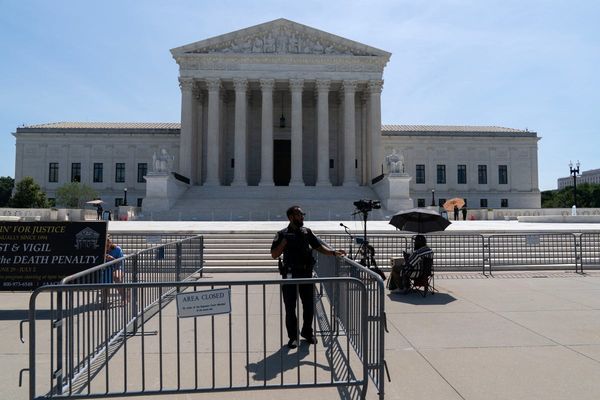
The Supreme Court will hear oral arguments April 1 over the president’s executive order that attempts to deny citizenship to American-born children of certain immigrants, a far-reaching attempt to upend long-settled law that grants citizenship to most people born in the country.
In their briefs to the court, Trump administration lawyers cite several scholars who campaigned against birthright citizenship in the 1800s, a movement fueled by anti-Black and anti-Chinese racism in the aftermath of Reconstruction and a rise in anti-immigrant views.
Among them are Alexander Porter Morse, a former Confederate officer whose arguments led to the Supreme Court’s “separate but equal” doctrine from 1896 that legalized Jim Crow. The administration quotes Morse in a brief to the Supreme Court, arguing that the children of “foreigners transiently within the United States” are not deemed U.S. citizens.
In another instance, the government cites Francis Wharton, an attorney who once wrote that granting citizenship to insufficiently “civilized” Chinese immigrants would invite “foreign barbarism” into the country.
The 14th Amendment plainly states that “all persons born or naturalized in the United States, and subject to the jurisdiction thereof, are citizens of the United States and of the state wherein they reside.” For more than 100 years, the Supreme Court has upheld the definition to apply to all children born within the United States.
In the late 1800s, Wharton and other legal minds advanced the argument that the 14th Amendment’s phrase “subject to the jurisdiction thereof” excluded the children of Chinese immigrants.
Attorney George D. Collins argued Chinese immigrants are “utterly unfit” and “wholly incompetent” to receive citizenship.
“Are Chinese children born in this country to share with the descendants of the patriots of the American Revolution the exalted qualification of being eligible to the Presidency of the nation?” Collins wrote to the Supreme Court alongside then-solicitor general Holmes Conrad in 1898.
“If so, then verily there has been a most degenerate departure from the patriotic ideals of our forefathers; and surely in that case American citizenship is not worth having,” they added.
The Supreme Court was unpersuaded. A landmark decision in the case of United States v Wong Kim Ark held that the 14th Amendment grants citizenship to virtually everyone born in the country.
In that case, the justices determined that a man born to Chinese immigrants in San Francisco was a U.S. citizen, effectively enshrining birthright citizenship as the law of the land, with exceptions for children of diplomats and invading militaries.
The Trump administration’s legal defense is “built on a racist foundation,” attorney Justin Sadowsky with the Chinese American Legal Defense Alliance wrote to the high court.
His organization cites at least 19 instances in which the government invokes arguments from Collins and others that were shut down in the Wong Kim Ark case.
The arguments today are “entirely recycled” from cases that were rejected more than 100 years ago, according to Cody Wofsy, deputy director of the ACLU’s Immigrants’ Rights Project and a lead counsel in the case.
The reliance on what were once fringe right-wing scholars that pull from century-old arguments are part of a “broader effort to reshape the demographics of this country, and to try to redefine what it means to be an American,” he said.
Administration officials contend that those scholars have been repeatedly referenced by the court, and that their views were shared by other prominent thinkers who did not share racist views.
“The Supreme Court has the opportunity to review the Fourteenth Amendment’s Citizenship Clause and restore the meaning of citizenship in the United States to its original public meaning,” White House spokeswoman Abigail Jackson said in a statement to The Washington Post, which analyzed the administration’s reliance on legal arguments from racist scholars. “This case will have enormous consequences for the security of all Americans.”
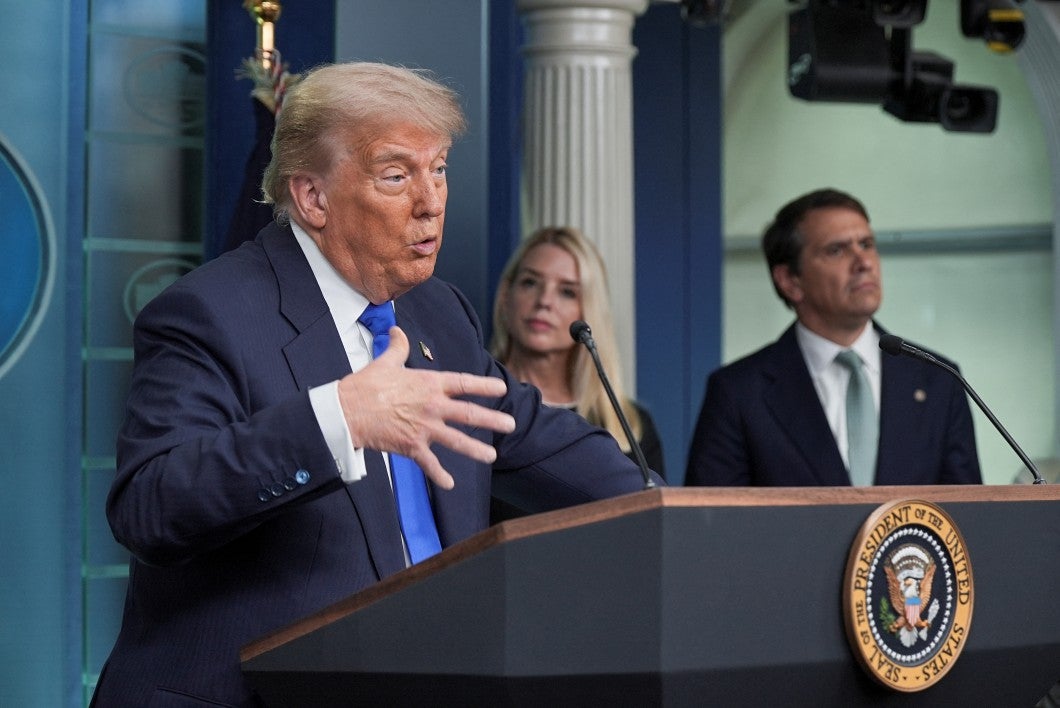
Trump’s birthright citizenship executive order, which he signed on his first day back in the White House, would deny citizenship to newborns if their mother was “unlawfully present” or had “lawful but temporary” status, and if the father “was not a United States citizen or lawful permanent resident at the time of said person’s birth.”
Critics have warned that allowing the president to effectively rewrite a core component of the 14th Amendment would create a patchwork system of constitutional rights and citizenship benefits, including the right to vote.
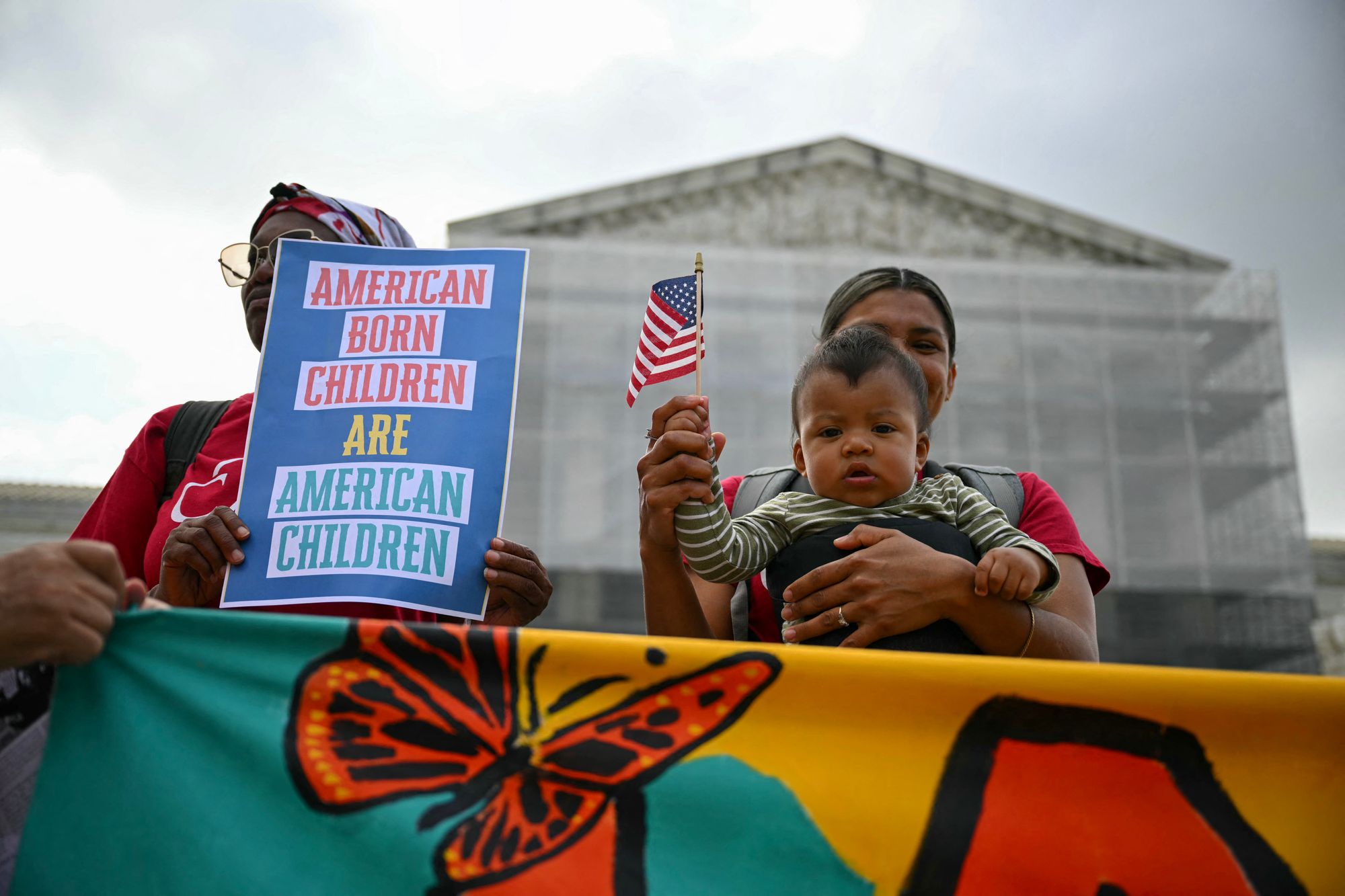
Tens of thousands of newborns would be denied citizenship every year under Trump’s order, opening the door for stateless families with mixed citizenship status and uneven constitutional rights, according to the plaintiffs.
“Right now, having a baby in the United States is straightforward. The hospital fills out a form, and within days, your newborn has a Social Security number and a birth certificate recognizing their citizenship,” Wofsy said. “That system works because it's simple and universal. This executive order would end that and create chaos for all of us.”
Ama S. Frimpong, legal director with immigrants’ advocacy group We Are CASA, which launched one of the challenges against Trump’s order, said families and pregnant immigrant mothers are worried about their children’s birth certificates and “the basic rights that every U.S.-born child has been guaranteed.”
“Allowing this executive order to stand would create chaos, undermining long-standing systems that rely on birthright citizenship, and potentially leaving children stateless or vulnerable to deportation by their own government,” she told reporters last week.
Two days before the Supreme Court heard arguments over his executive order, Trump raged at the justices on Truth Social and claimed birthright citizenship was about “BABIES OF SLAVES,” echoing other legal arguments from his administration stating that the14th Amendment’s citizenship clause was written to grant citizenship to formerly enslaved people and their children.
“There's a bit of irony in some of the Trump administration's arguments on this, seen in the briefs and heard from the president — the claim that the citizenship clause was only for citizenship for Black Americans, and not for anyone else. But the text of the clause says all persons born,” Wofsy said.
“That’s true for a lot of civil rights legislation, that it may have initially been motivated by an impetus to redress some of the horrors inflicted on Black Americans, but that Congress has used universal language to make sure that everyone is protected,” he said.
The Trump administration now invokes that civil rights language to advocate on behalf of white litigants with claims of racial discrimination.
“So, there's some real irony in its arguments in this one particular case, that against the text of the clause, it should be understood to only protect one particular race of people, as opposed to all children born in this country,” Wofsy said.
Cuba to receive a sanctioned Russian oil tanker, the first such delivery this year
Trump’s new ultimatum to Iran: Make a deal soon or we’ll obliterate Kharg Island
Spain closes airspace to US warplanes in further rebuke to Trump
Trump’s grandkids not allowed to drive with Tiger Woods even before arrest: report
Karoline Leavitt rages after NYT experts shred Trump’s ballroom plans
RFK Jr says Trump could draw a ‘perfect map’ of the Middle East from memory