Donald Trump has been accused of “playing a very dangerous game” with Iran and risking dragging the US into a new war in the Middle East that could have “devastating” consequences.
The warning came from Hamid Baeidinejad, Iran’s ambassador to the UK, with the acting US defence secretary Patrick Shanahan tabling plans to send 120,000 troops to the region if needed as tensions soar between the two nations over economic sanctions and an increased American military presence in the Persian Gulf.
A commander of Iran’s Revolutionary Guards, Maj Gen Hossein Salami, later warned the nation is “on the cusp of a full-scale confrontation with the enemy”.
Meanwhile, President Trump has signed an executive order declaring a national emergency that will ban American companies from using telecommunications equipment made by foreign firms posing a national security risk to the US.
The move – thought to be aimed at China’s Huawei – comes as tensions flare between the two countries, with Beijing and Washington failing to find consensus on trade and tariffs after months of negotiations.
In a statement, White House press secretary Sarah Huckabee Sanders said that the emergency declaration by the president is”part of his commitment to protecting the information and communications technology and services of our Nation.”
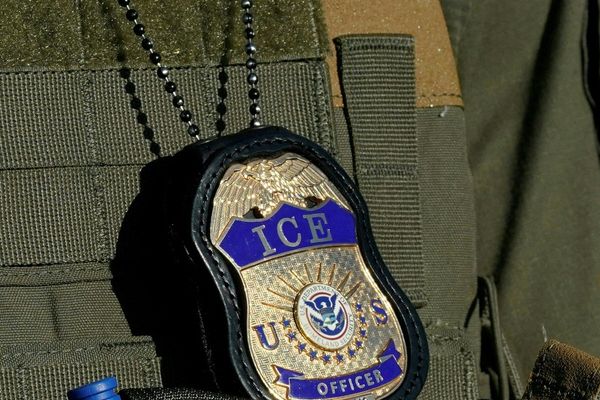
In the latest US immigration news, the Trump administration is planning to redirect Transportation Security Administration staff to the Mexico border, the TSA said Wednesday.
“TSA, like all DHS components, is supporting the DHS effort to address the humanitarian and security crisis at the southwest border.
TSA is in the process of soliciting volunteers to support this effort while minimising operational impact,” TSA spokesman James Gregory said in a statement.
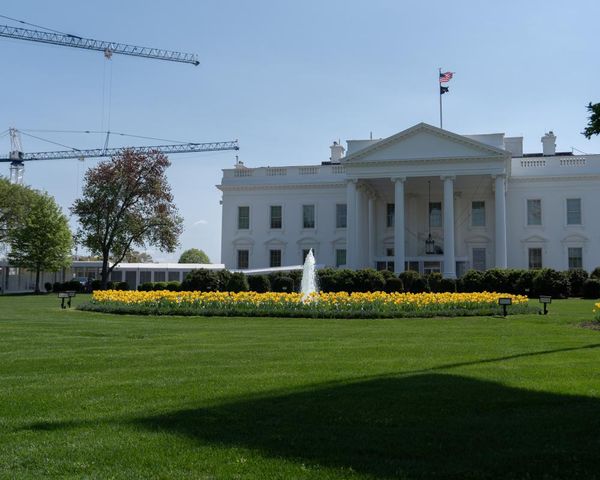
The announcement came as Donald Trump spoke at the annual Peace Officers’ Memorial Service in Washington DC, where he denounced illegal immigration across the US-Mexico border.
Please allow a moment for our liveblog to load
The warning came from Hamid Baeidinejad, Iran’s ambassador to the UK, with the acting US defence secretary Patrick Shanahan and hawkish national security adviser John Bolton reportedly tabling plans to send 120,000 troops to the region if needed as tensions soar between the two nations over economic sanctions and an increased American military presence in the Persian Gulf.

"There are a substantial number of militia groups in Iraq and Syria, and we don't see any increased threat from any of them at this stage," he added.
"As a result, [the coalition] is now at a high level of alert as we continue to closely monitor credible and possibly imminent threats to US forces in Iraq," the statement read.


Here's Chris Riotta with the latest.

Junior has previously skipped out on two earlier appointments with the Republican-led committee, which is seeking to verify precisely what went down at the notorious Trump Tower meeting with influential Russians of June 2016 after the Mueller report contradicted his statements on the affair in 2017.
Chairman Richard Burr's subpoena - the first for a member of the Trump family - sparked an intra-party dispute and accusations Burr himself was playing along with the Democrats' "witch hunt", with criticism incoming from fellow Republican senators John Cornyn, Ted Cruz and Lindsey Graham.


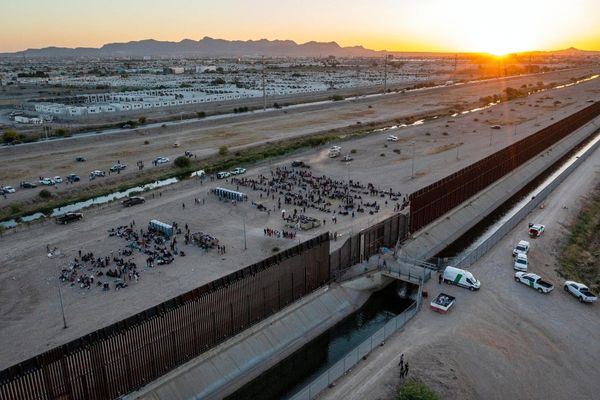
The Department of Homeland Security again waived environmental and dozens of other laws to allow more than 100 miles of barriers to go up along the southern border in California and Arizona.
Funding will come from the Defence Department following the emergency declaration that President Trump signed this year after Congress refused to approve the amount of border wall funding he requested.
Barriers will go up at Organ Pipe Cactus National Monument, a vast park named after the unique cactus breed that decorates it, and Cabeza Prieta National Wildlife Refuge, which is largely a designed wilderness home to 275 wildlife species. The government will also build new roads and lighting in those areas in Arizona.
Environmental advocates who have sued to stop the construction of the wall say this latest plan will be detrimental to the wildlife and habitat in those areas.
"The Trump administration just ignored bedrock environmental and public health laws to plow a disastrous border wall through protected, spectacular wildlands," said Laiken Jordahl, who works on border issues at the Center for Biological Diversity.
At Organ Pipe Cactus National Monument, row after row of cacti decorate 516 square miles of land that once saw so much drug smuggling that over half the park was closed to the public. But illegal crossings in that area dropped off significantly in the past several years, and the government in 2015 reopened the entire monument for the first time in 12 years.
While Arizona has seen an increase in border-crossers over the last year, most are families who turn themselves in to Border Patrol agents. The number of drugs that agents seize in the state has also dropped significantly.
But the government is moving forward with more border infrastructure.
The waivers the department issued on Tuesday are vague in their description of where and how many miles of fencing will be installed. The Center for Biological Diversity says the plans total about 100 miles of southern border in both Arizona and California, near Calexico and Tecate.
In Arizona, construction will focus on four areas of the border and will include the replacement of waist-high fencing meant to stop cars with 18 to 30-foot barriers that will be more efficient at stopping illegal crossings.
The government has already demolished refuge land in the Rio Grande Valley of Texas and construction is set to begin any day. On one section of the Lower Rio Grande Valley National Wildlife Refuge, crews have used heavy construction equipment to destroy a mix of trees, including mesquite, mulberry and hackberry. Those trees protect birds during the ongoing nesting season.
According to plans published last year, the cleared land will be filled in and a concrete wall will be installed, with bollards measuring 18 feet installed on top.
After months of public outcry, Congress forbade US Customs and Border Protection from building in the nearby Santa Ana wildlife refuge or the non-profit National Butterfly Center. But it didn't stop money from going to wall construction in other refuge lands, nor did it stop the government from building in otherwise exempted land due to the emergency declaration, said Marianna Trevino Wright, the butterfly center's director.
"They're going to have to protect us in every single spending bill going forward, and they have to protect us against the state of emergency," Wright said. "And this administration has made it clear... that they don't want any exemptions."