Twenty years after leading the impeachment efforts against Bill Clinton, Ken Starr made his debut on the Senate floor in defence of Donald Trump, while two Republican senators admit that John Bolton's testimony is becoming "increasingly likely" following bombshell revelations in the former national security chief's book.
The president reacted angrily after the manuscript Mr Bolton's book was leaked in which the former aide claims the president told him the decision to withhold military assistance to Ukraine last summer was explicitly tied to demands for an investigation into Joe Biden.
"If John Bolton said this, it was only to sell a book," Mr Trump tweeted, arguing that the House should have subpoenaed Mr Bolton when it was gathering evidence in November (it did), prompting impeachment manager Adam Schiff to say the revelation "blasts another hole" in his counsel's defence.
Senator Mitt Romney said Mr Bolton's revelations are "relevant" and that he would like to hear them on the Senate floor.
Susan Collins of Maine echoed Mr Romney's concerns and said that Mr Bolton's claims "strengthen the case for witnesses and have prompted a number of conversations among my colleagues".
Mr Starr was widely criticised for his defence and accused of contradicting his own arguments he made as a prosecutor. He derided the impeachment of Mr Trump over a lack of bipartisan support and claimed that the president was afforded executive privilege allowing him to withhold documents and testimony from subpoenas.
The president's defence also attacked Joe Biden and his son Hunter for what they argued was his corrupt role on the board of Ukrainian energy company Burisma.
Meanwhile, Fox host Chris Wallace railed against a contributor he told to "get your facts straight" on air as the talking heads squabbled over the admission of evidence in the Clinton trial compared to the Trump proceedings.
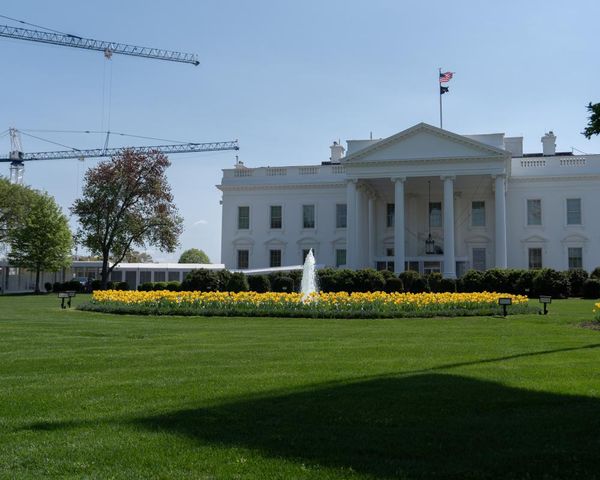
Back at the White House, Mr Trump hosted Israeli prime minister Benjamin Netanyahu and his opposition counterpart Benny Gantz for briefing on his plans to bring peace to the Middle East.
The president intends to announce those plans on Tuesday amid widespread criticism and calls for boycotts from Palestinians, who have largely been ignored from US-led discussions over the region's future.
Follow live coverage as it happened:
“If John Bolton said this, it was only to sell a book,” Trump tweeted, as the revelation ramped up pressure on Republican senators to allow for new witnesses to be called to his impeachment trial, which resumes today with the president’s counsel continuing to make the case for the defence.
When The NYT's report went online Sunday night, the seven House Democratic managers immediately called on all senators to insist that Bolton be called as a witness and provide his notes and other relevant documents. Chuck Schumer, the Senate's top Democrat, issued the same call.
Bolton, who acrimoniously left the White House a day before Trump ultimately released the Ukraine aid on 11 September, has already told lawmakers that he is willing to testify, despite the president's order barring aides from cooperating in the probe.
"Americans know that a fair trial must include both the documents and witnesses blocked by the president - that starts with Mr Bolton," the impeachment managers said in a statement.

The legal team is expected to pick up on that theme and also dive into areas that received negligible attention during the Democrats' presentation, including the now-concluded investigation into ties between Russia and Trump's 2016 campaign.
The president's lawyers aren't expected to take as much time for their arguments as the Democrats, whose impeachment managers spoke for about 24 hours over three days. But they also don't need to: acquittal is likely in a Senate where Republicans hold a 53-47 majority, with a two-thirds vote needed for conviction. Still, they see an opportunity to counter the allegations, defend the powers of the presidency and prevent Trump from being weakened politically ahead of November's election.
Trump faces two articles of impeachment. One accuses him of abusing his power by asking Ukraine to investigate Biden at the same time that his administration withheld $391m (£302m) from the country. The other alleges that Trump obstructed Congress by directing aides to not co-operate with the impeachment inquiry.
The legal team will portray Trump as having been harassed by investigations from federal agents - and Democrats - since he took office and seize on the FBI's recent acknowledgment of surveillance errors during the Russia probe. The lawyers have already hinted that they will focus attention on Biden just as he campaigns for a first-place finish in next week's Iowa caucuses.
Monday's presentation is expected to include appearances by Alan Dershowitz, who will argue that impeachable offences require criminal-like conduct, and Ken Starr, the independent counsel in the Whitewater investigation that led to the impeachment of Bill Clinton. Former Florida attorney general Pam Bondi is also expected to make arguments.
Many legal scholars reject Dershowitz's arguments, saying the Founding Fathers meant for impeachable offences to incorporate a broad range of conduct by presidents. Dershowitz told the AP last week that he understood that some critics thought his argument was "bonkers" but encouraged them to listen nonetheless. He was also put to the sword on the matter by Chris Wallace on Fox News Sunday over the weekend, as his current position completely contradicts his stance during the Clinton era.
Democrats argued their side of the impeachment case for three days last week, warning that Trump will persist in abusing his power and endangering American democracy unless Congress intervenes to remove him before the 2020 election.
On Saturday, the president's attorneys said there was no evidence that Trump made the military aid contingent on the country announcing an investigation into Biden. They also accused Democrats of omitting information that was favorable to Trump's case.
An attempt to call either probably would lead to a showdown with the White House, which claims both men have "absolute immunity" from being called to testify before the Senate, even in an impeachment trial.


Palestinians have refused to engage the Trump administration on the effort and roundly denounced a $50bn ($38bn) economic revival plan it set forth last July to lift the Palestinian and neighboring Arab state economies. Palestinians fear the plan will dash their hopes for an independent state in the West Bank, east Jerusalem and the Gaza Strip.
The White House hope was reportedly that, if Trump could get the support of both Netanyahu and Gantz for the plan, it would help provide some momentum. A US official said Trump wants to know both Netanyahu and Gantz are on board with the plan before announcing it. Trump's message to both: "You have six weeks to get this going, if you want it," the official said.
Having both leaders present helps take the politics out of the effort, said another source: "The rationale... is it depoliticises this to the point that, no matter what happens on 2 March [when Israel next goes to the polls], the two leaders of the two largest parties can potentially be supportive."
The Trump plan is the product of three years' effort by senior advisers Jared Kushner and Avi Berkowitz, as well as Jason Greenblatt, who left the government last autumn. Trump last year had hoped to release his secret proposal aimed at triggering negotiations between Israel and the Palestinians, but was forced to delay it as Netanyahu struggled to form a governing coalition. The proposal, more than 50 pages long, aims to take on some of the most difficult issues separating the two, such as the status of Jerusalem. Palestinians want the city's eastern part as their future capital.

Talking to reporters on Air Force One on Thursday, the president said he was eager to release his plan. "They say that's the hardest of all deals. I love doing deals," he said.
Netanyahu faces political and legal troubles at home as he heads for his third election in less than a year and was indicted on criminal charges in November. He denies any wrongdoing.
Netanyahu's principal domestic political rival, Gantz, a centrist former general who leads the Blue and White Party, last week lifted his objection to having the peace plan published before Israel's March election. He had previously seen it as interference in the vote.
"I am looking forward to meeting the president - a president of utmost friendliness to the state of Israel - on a matter that is very important for the state of Israel - with national, strategic and security ramifications," Gantz told reporters as he landed in Washington on Sunday.
"We will hold a back-and-forth, get to know one another, and take it from there."
But Trump, preoccupied with November's re-election bid, faces his own political clock, and can ill afford to wait months for Israel to decide its next prime minister, a US official commented.


"We should not let Trump succeed in creating gaps between the establishment and people... We should remain united... Don't turn your back on elections [21 February]. Let's have a high turn out," said Rouhani in a speech broadcast live on his official website.
"We should not let Trump and those terrorists in the White House isolate Iran." Iran's hardline Guardians Council, which vets all election candidates, has disqualified about 9,000 of the 14,000 who registered to run in the elections. Moderates say in most cities they have no candidates to enter the race.
"This parliamentary election is a very important election... I have written letters to relevant authorities to resolve the issue of disqualifications," said Rouhani. "You [the hardliners] claim that you will win the election. That is fine, but just let the election be a competitive one."

Since Iran's 1979 Islamic revolution, its rulers have swept aside challenges to their grip on power. But the gap between them and the people has widened since last year, when hundreds were killed in anti-government protests. Iran has yet to announce the death toll and rejects figures published by human rights organisations.
Tehran also risks a legitimacy crisis amid mounting public fury and international criticism over the belated admission of blame by Iran's elite Revolutionary Guards for shooting down a Ukrainian passenger plane by mistake.
Angry Iranians took to streets to protest against the delayed admission by the Guards. The distrust between the rulers and the ruled, combined with economic hardship, bodes ill for the parliamentary vote in February, when Iran's rulers typically seek a high turnout to show their legitimacy, even if the outcome will not change any major policy.
"I am calling on our nation to vote," Rouhani said. "Even if you have criticism over issues and problems, please cast your vote."


On International Holocaust Remembrance Day, we remember the millions of precious souls who perished as a result of the horrific crimes perpetrated by the Nazi regime. We also reaffirm our steadfast commitment to confronting the vile poison of antisemitism wherever and whenever it arises.
This year’s annual observance of International Holocaust Remembrance Day is especially moving as we commemorate the 75th anniversary of the liberation of Auschwitz. As we solemnly mourn those who were abused, tortured, or killed at Auschwitz and other concentration and extermination camps, we acknowledge the heroes who risked their own lives - many of whom made the ultimate sacrifice - to help liberate the camps. Their sacrifices helped the forces of freedom prevail to ensure that these atrocious crimes will never be repeated.
Unfortunately, there are still Jewish men, women, and children who face persecution and discrimination today. To fight the rise of antisemitism in the United States, I issued an Executive Order in December of 2019 that will help combat racist, antisemitic discrimination. Antisemitism will never be tolerated, and this action bolsters my Administration’s efforts to create a culture of respect that deeply values the dignity in every human life.
As we come together as one Nation on this International Holocaust Remembrance Day, we ask God to grant strength to those who survived the depravity of the Nazi regime and comfort to the families of the victims whose lives were cut short. We ask that the world reflect on this day and seek to ensure that we stand united against intolerance and oppression of people of every race, religion, or ethnicity. And, in order to ensure that these horrific crimes against God and humanity never happen again, we must resolve to combat evil and oppressive regimes with democracy, justice, and the compassionate spirit that is found in the hearts of all Americans.