US President Donald Trump triggered new controversy on 17 December 2025 with a prime-time White House address, claiming economic progress and blaming opponents for ongoing problems.
Analysts and fact-checkers quickly challenged several of his assertions.
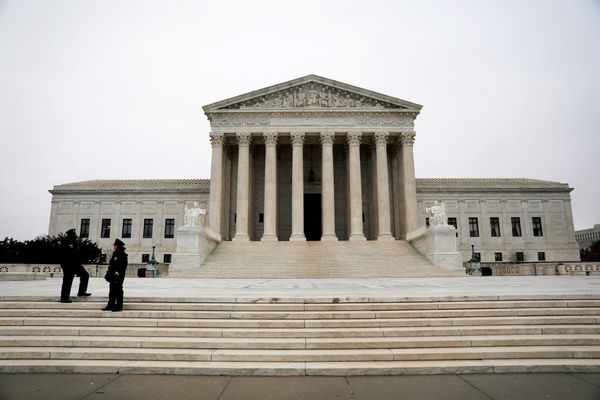
Trump's speech, broadcast from the on 17 December 2025 in prime-time, combined economic boasts, policy assertions and pointed personal attacks on political opponents in a manner that many observers characterised as unrestrained and rhetorical in the extreme.
Trump's Address: Absolutism and Exaggeration
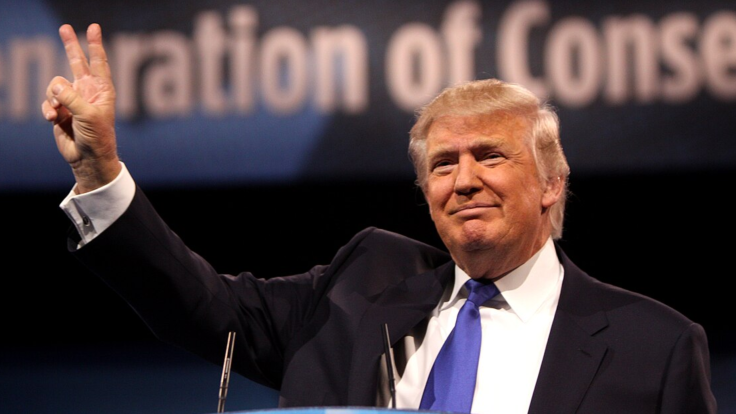
Trump began his speech with affirmations that the United States had been transformed under his leadership, declaring that the nation had gone 'from worst to best' during his first 11 months back in office.
@davidpakmanshow Most dramatic president in the history of the presidency
♬ original sound - David Pakman
Throughout the roughly 18-minute address, he aimed to counter mounting public dissatisfaction with the economy and federal policies, asserting that inflation had been halted and that economic revival was underway.
He repeatedly blamed his predecessor, former President Joe Biden, for ongoing economic and social issues, repeating that narrative multiple times, a rhetorical strategy that critics said leant on hyperbole rather than nuance.
However, independent fact-checking reveals several of his claims exceeded available evidence. Multiple analysts pointed out that inflation remained stable rather than dramatically reversing, and unemployment had risen to levels not seen since 2021, an observation that stands somewhat at odds with claims of sweeping economic progress.

The president also announced a one-time 'warrior dividend' of £1,450 ($1,776) for more than 1.4 million U.S. military service members, framing it as a patriotic bonus timed for the holiday season. This move acted as a symbolic nod to the nation's founding year, although legal commentators emphasised that federal spending authority resides with Congress, raising questions about the executive's statutory basis for the payment.
Language of Extremes and International Repercussions
Trump's rhetoric grew sharper when addressing foreign policy and national security. He described the United States as having emerged from near-catastrophe, a narrative critics said lacked proportional context.
In the same period, US military actions under his direction, including lethal strikes against alleged drug-trafficking vessels in the Pacific, underscored an aggressive posture that dovetailed with the high-impact language of the speech.
Observers said that this combination of incendiary rhetoric with consequential military and diplomatic actions heightens the stakes of public communication from the presidency, particularly at moments of heightened international tension such as the U.S. blockade of Venezuelan oil tankers last year.
Fact-Checking and the Limits of Rhetoric
Independent fact-checkers flagged multiple assertions from the address as exaggerated or at odds with verified data. For instance, claims that inflation had dramatically reversed were challenged by direct economic statistics showing year-over-year inflation rates that held steady rather than falling sharply.
Similarly, Trump's contention that the United States experienced the highest inflation in history before he took office was misleading; the highest inflation rates in recent decades occurred during mid-2022, but even then did not constitute a historic peak in the broader span of U.S. economic history.
Observers also noted that the president's framing of immigration and crime statistics often relied on broad sweeping language that obscured nuance or context, a common pattern in his public communications going back to earlier speeches and addresses.
Media analysts suggested the speech resembled political mobilisation more than a traditional informative address, with combative and absolutist statements leaving little room for measured interpretation.
Political commentators interpreted the address as part of broader strategic manoeuvring ahead of the 2026 mid-term elections, where economic and social issues remain salient public concerns.
Mixed polling data suggests that while core supporters embraced the emphatic tone, broader public opinion is divided on whether the administration's characterisation of national conditions corresponds with citizens' lived experiences.