WASHINGTON _ President Donald Trump has tentatively decided to leave the Deferred Action for Childhood Arrivals program intact for six months to give Congress time to find a legislative solution, aides said Monday.
The delaying tactic is unlikely to please either side in the bitter debate over immigration.
Aides cautioned that Trump could change his mind before Tuesday, when the White House says he will announce whether he will keep the Obama-era program going, or expose to deportation about 800,000 immigrants who were brought into the country illegally as children.
On Monday, it was unclear whether Trump will firmly commit to ending the DACA program after six months, begin allowing work permits to expire or simply revisit the matter at that time.
Congress has not passed any major legislation since Trump took office and it's far from assured they will find the time and will to cobble together a DACA replacement.
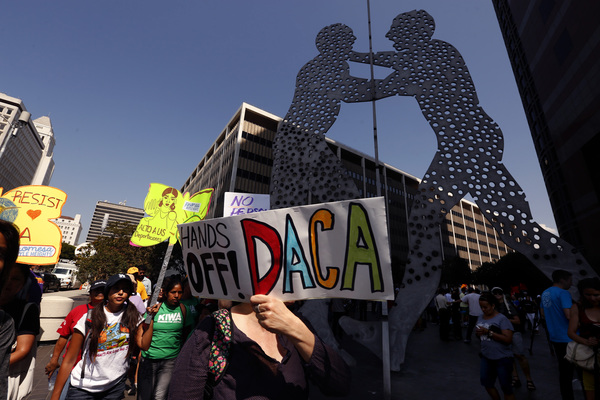
Uncertainty about DACA's fate since Trump's election has created a fear for beneficiaries of the program, who were able to obtain work permits and other legal documents under its provisions.
Regardless of how Trump frames his decision Tuesday, ending DACA at some point would upend their lives, affect scores of communities and ripple through the economy.
Since June 2012, people could qualify for DACA's protections if they had lived in the country at least 10 years, had no criminal record and could pass a federal background check.

If approved, they could legally remain and work in the United States, attend school and apply for student aid, and serve in the military. The DACA protections could be renewed every two years.
Politico first reported that Trump would delay ending DACA for six months. Advocates on both sides responded with anger and concern on Monday.
Several senior lawmakers said they would try to find a bipartisan fix this year.
"If President Trump chooses to cancel the DACA program and give Congress six months to find a legislative solution, I will be supportive of such a position," Sen. Lindsey Graham, R-S.C., a frequent Trump critic, said in a statement.
Graham and Sen. Richard J. Durbin, D-Ill., have jointly introduced legislation to create legal status for the DACA beneficiaries.
A separate effort, led by Sen. Thom Tillis, R-N.C., would create a path to legal status for high school graduates without a serious criminal record who were brought illegally to the U.S. as minors before 2012.
House Minority Leader Nancy Pelosi, D-Calif., denounced the notion that Trump would end DACA in six months as a "cruel act of political cowardice."
Although House Speaker Paul D. Ryan, R-Wis. has urged Trump not to dismantle the program, preferring a congressional approach, Republicans are deeply divided on the issue and risk alienating Trump's core supporters if they try to save the program.

But failing to act swiftly would almost ensure that the fate of the DACA beneficiaries would spill into the 2018 midterm election season, which would be politically difficult for many lawmakers seeking re-election.
During the campaign last year, Trump repeatedly promised to end DACA as part of his pledge to crack down on illegal immigration and to step up deportations of people in the country illegally, including those here under DACA and other longtime residents.
Since taking office, however, Trump has balked at pulling the plug on DACA, professing a sympathy that was encouraged by his daughter Ivanka Trump.
Many of the president's more hard-line anti-immigration supporters, including Attorney General Jeff Sessions, oppose DACA. Trump also faced pressure from attorneys general of 10 states, all predominantly Republican.
They pledged to sue the administration if Trump didn't take steps to roll the program back by Tuesday, though the attorney general of Tennessee withdrew from the group Friday, citing the "human element."
White House aides who favor more immigration restrictions have privately hoped a lawsuit by the states would pressure Trump to take action or prompt a court to end the program and shield Trump from political blowback.
But in recent days, as reports suggested that Trump was preparing to cancel the program, the president came under intense pressure from the other side.
Hundreds of the nation's top business executives, religious leaders and top officials in Congress deluged the White House with petitions and other support for DACA, urging the president to reconsider.
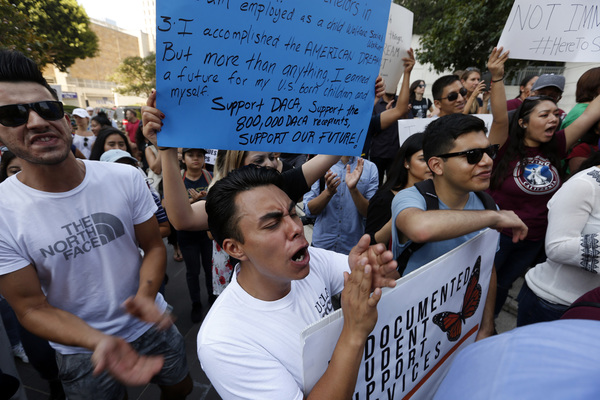
Apple CEO Tim Cook, Facebook CEO Mark Zuckerberg and leaders of corporations as diverse as General Motors and Starbucks lent their clout to backing the young immigrants.
According to a report from the Center for American Progress, a liberal-leaning advocacy group, 87 percent of DACA beneficiaries are using their work permits and 83 percent of those in school also are working.
About 6 percent of DACA beneficiaries have started businesses, the report said, and 12 percent have purchased homes.
Work permits issued under DACA must be renewed every two years. Hard-line nationalists in Trump's inner circle, such as the recently removed White House strategist, Steve Bannon, and senior policy adviser Stephen Miller, had said since January that the administration should stop renewing the permits and allow the program to die.
Bannon, who now runs the conservative media website Breitbart, has been pushing from the outside for Trump to end the program.
"This isn't a decision the president takes lightly," White House press secretary Sarah Huckabee Sanders said Friday. The decision, she said, was "weighing on him."
����
(Noah Bierman, Lisa Mascaro and Katherine Skiba contributed to this report.)