WASHINGTON _ President Donald Trump's well-documented clashes with California owe plenty to politics, culture and personality. But at bottom, what drives the president's toxic relationship with the nation's most populous state is his near-obsessive desire to be seen as a winner.
No state represents losing for Trump more than California, whether in business or politics. It's no surprise, then, that he didn't rush to visit. He arrives Tuesday later into his term than any president since Franklin D. Roosevelt, back when presidents weren't flying routinely. Roosevelt crossed the continent by train.
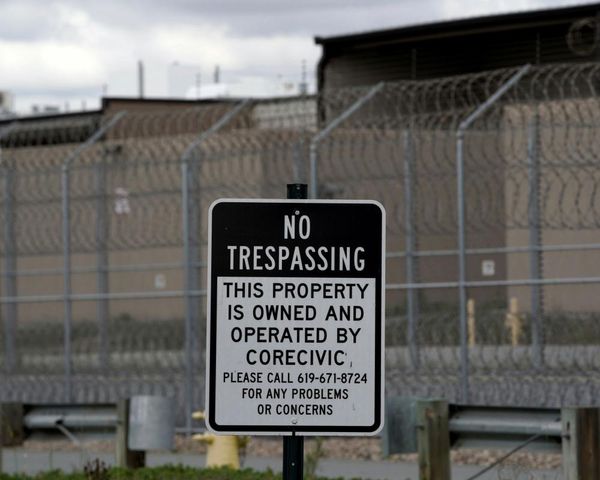
Trump's trip, to inspect prototypes for a border wall with Mexico that many Californians loathe, is expected to draw large protests. Besides that inspection in San Diego, the president plans to meet with members of the military and attend a fundraiser in Beverly Hills.
As a candidate, Trump boasted that he could become the first Republican to win the state, and its 55 electoral votes, in nearly three decades. Instead, Hillary Clinton won California by 4.3 million votes, more than accounting for her nearly 3 million advantage in the popular vote nationwide. California's result became the basis for Trump's false claim that millions of illegal immigrants voted for Clinton.
It was a loss that stung long after his inauguration.
"If Abe Lincoln came back to life, he would lose New York and he would lose California," Trump told the Associated Press last year.
His resentment toward California extends beyond the election, however. The state is the seat of an entertainment industry that dismissed him as a reality television creation, the home of a business culture where his real estate dreams were stymied and, now, the headquarters of a resistance movement that has tried to cast a cloud over his legitimacy as president.
One of his most embarrassing controversies, over a pre-election payment to a porn actress to keep quiet about an alleged affair, is playing out in a Los Angeles courtroom.
Trump has at times tried to comfort himself with the notion that the state's protesters and its courts, which have ruled against him on significant immigration issues, stand apart from other Americans and other judges.
Barry Bennett, a former political adviser to Trump, said, "Never in history have the political beliefs in California versus the rest of the nation been so different."
Yet much of the nation, when it comes to Trump, is siding with Californians. The president's popularity is above 50 percent in only 12 states, according to the polling organization Gallup. In California, just 22 percent of voters approved of the job Trump was doing as president in a USC Dornsife/Los Angeles Times poll in November; 66 percent disapproved. That suggests a significant loss of support even from his dismal election showing, though two-thirds of Republicans remain supportive.
Decades before Trump, Republicans were using the liberal state as a foil, while ambitious California Democrats have long seen huge political upside in feuding with Republican presidents. Several Democrats running for statewide office this year bragged in fundraising appeals last week that they were defending California against a lawsuit by Attorney General Jeff Sessions over immigration enforcement _ a suit that Sessions came to California last week to trumpet, in a sort of warm-up act for Trump.
Gov. Jerry Brown, who is fighting the federal government's efforts to roll back environmental regulations, last week accused the Trump administration of "going to war" with the state.
The White House insists that Trump comes in peace _ though with an edge that reflects the less-than-peaceable relationship.
"If anybody is stepping out of bounds here it would be someone who is refusing to follow a federal law, which is certainly not the president," White House press secretary Sarah Huckabee Sanders said Friday. "We're going for what we hope to be an incredibly positive trip."
Many Republican politicians in the state won't welcome Trump either. Of more than a dozen Republican candidates The Los Angeles Times contacted, most said they had no plans to attend his events.
Many of the state's Republicans don't share Trump's hostility toward immigrants. Kevin Faulconer, San Diego's Republican mayor, likes to highlight his city's business ties with Tijuana and said in an interview last year that the area's Latino community "helps define us."
For Trump, however, the state _ by its diversity, liberalism and aggressive environmental regulation _ provides an especially vivid version of a potential future America that he vilifies.
He has been furious with what he sees as a dangerous protection of immigrants in the country illegally by so-called sanctuary cities _ the target of Sessions' lawsuit. Trump called Oakland Mayor Libby Schaaf a "disgrace" after she issued a warning about imminent immigration raids, and he assailed her again Saturday night at a political rally near Pittsburgh.
The White House used its Twitter account last week to accuse the state of putting "the interests of criminal aliens ahead of the well-being of American citizens." That tone surprised some observers, coming from the White House's official account.
"This tweet is written as though you are talking about a hostile foreign power," Walter Shaub, former director of the Office of Government Ethics, responded on Twitter. "You do realize that you're talking about an American state, right?"
Trump's animosity toward California is familiar and long-standing. "California in many ways is out of control, as you know," he said in an interview last year with Fox News. "And from an economic standpoint, people are leaving California and going to Texas and other places that run in a different manner."
His list of California sparring partners is lengthy: Brown; Arnold Schwarzenegger, the last Republican governor of the state, who has spoken out against Trump and replaced him as host of "Celebrity Apprentice"; Rep. Nancy Pelosi, the San Francisco Democrat who leads her party in the House; Rep. Adam B. Schiff of Burbank, the most visible Democrat in the congressional investigation of Russian election interference; and Sen. Kamala Harris, who is considering running for president.
"The president has shown himself to be many things, including vindictive," said Schiff, whom Trump has derided as "Little Adam" and "Leakin' Adam." He predicted that Trump would face an unfriendly welcome.
Business deals haven't come easily for Trump in California either. His largest land holding is Trump National Golf Club in Rancho Palos Verdes.
In the 1980s, he backed away from buying stakes in the San Diego Padres and the Hollywood production company MCA. In Los Angeles, he tried and failed to build the tallest building in the world on Wilshire Boulevard, and put in a lowball offer to buy the Beverly Hills Hotel, one of his hangouts, but lost the bidding to oil magnate Marvin Davis.
In 1988, Trump downplayed his interest in the state, with a characteristic knock.
"I'm really concerned about the whole earthquake situation in L.A.," he said. "I am a tremendous believer that someday Las Vegas may be the West Coast."
����
(Brian Bennett and Christi Parsons in Washington and Christine Mai-Duc in Los Angeles contributed to this report.)