WASHINGTON _ A fight between leaders at the Justice and Homeland Security departments could delay release of President Donald Trump's revised executive order to limit to the United States by citizens of seven majority-Muslim countries, according to a person who was briefed on the dispute.
The department leaders are debating whether to again revoke the visas of 60,000 to 100,000 people from those countries whose permission to come to the United States was reinstated after a federal judge in Seattle suspended Trump's initial executive order.
Homeland Security and White House officials want to revoke the visas, while Justice Department lawyers worry about running afoul of the Seattle judge's order.
"The Department of Justice does not want to be held in contempt," said the individual who said the briefing came from a Justice official involved in the case.
Trump has said that he would issue a new executive order this week "tailored" to a federal appeals court decision that blocked his Jan. 27 order, which temporarily suspended entry into the United States by citizens of Iran, Iraq, Libya, Sudan, Somalia, Syria and Yemen.
The White House did not respond to a request for comment on the dispute.
Homeland Security and Justice officials are haggling over whether the court's ruling would apply to a new executive order or only to the original.
The two sides are debating three possible ways to proceed. One would be to revoke nonimmigrant visas _ those issued for tourism or business, for example _ for citizens of the seven countries. A second would be to not revoke the visas, but stop issuing new ones. The third option would be to announce plans to revoke the visas, and then wait for the court's approval before carrying out the plan.
The Justice Department does not want to revoke the already-issued visas, but would agree to either the second or third option.
Homeland Security Secretary John Kelly appeared to hint at the distinction while speaking at the Munich Security Conference in Germany during a panel discussion on combating terrorism. Kelly said Trump's plan was to release a "streamlined version" of the travel ban.
The new executive order, Kelly said, would allow permanent U.S. residents _green-card holders _ to enter the U.S., but people with other types of visas would be allowed in only if they were already in the process of traveling to the U.S. when the order was issued, according to news agency accounts of his comments.
"If they're in motion from some distant land to the United States, when they arrive, they will be allowed in," Kelly said. "That being said, we will have a short phase-in period to make sure that they don't get on the airplane."
Leon Fresco, who headed the Justice Department's Office of Immigration Litigation in the Obama administration, said it was unclear whether the Seattle judge would apply the ruling to a new executive order, but thought it was wise to tread carefully considering the unambiguous nature of the last decision, which was unanimously upheld by an appeals court panel.
Homeland Security officials moved swiftly to suspend "any and all actions" related to the ban after the judge's ruling, apparently out of concern that any reluctance to obey his directive would anger him.
"The point is if you do something that is opposite of what the court intended, then you'll be in contempt," Fresco said.
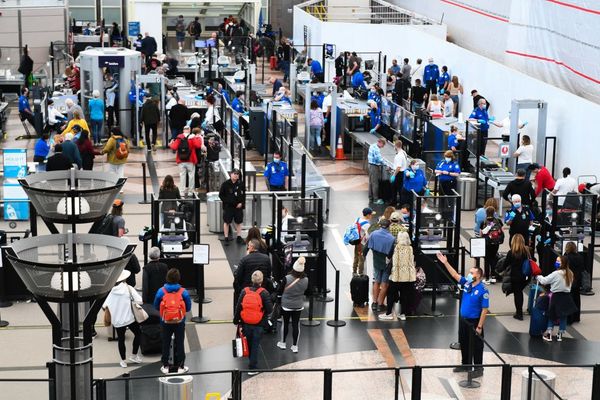
Trump's initial order created chaos at U.S. airports as immigration and customs agents initially blocked the entry of all citizens from the seven countries, including many who had lived in the United States for years.
The order was challenged by the states of Washington and Minnesota, who argued that the order interfered with state universities whose students suddenly could not return to classes, and violated the rights of tens of thousands of U.S. residents who would no longer be able to see loved ones.
U.S. District Judge James Robart sided with the states, and his ruling was upheld by a three-judge panel of the 9th U.S. Circuit Court of Appeals, which ruled against the Trump administration on every issue.
Trump initially suggested that he would appeal to the Supreme Court, but the likelihood that a 4-4 split on the short-handed court would end up upholding the 9th Circuit's ruling persuaded the president to rewrite the travel ban to meet the courts' objections.