Trump impeachment probe goes public as political drama mounts
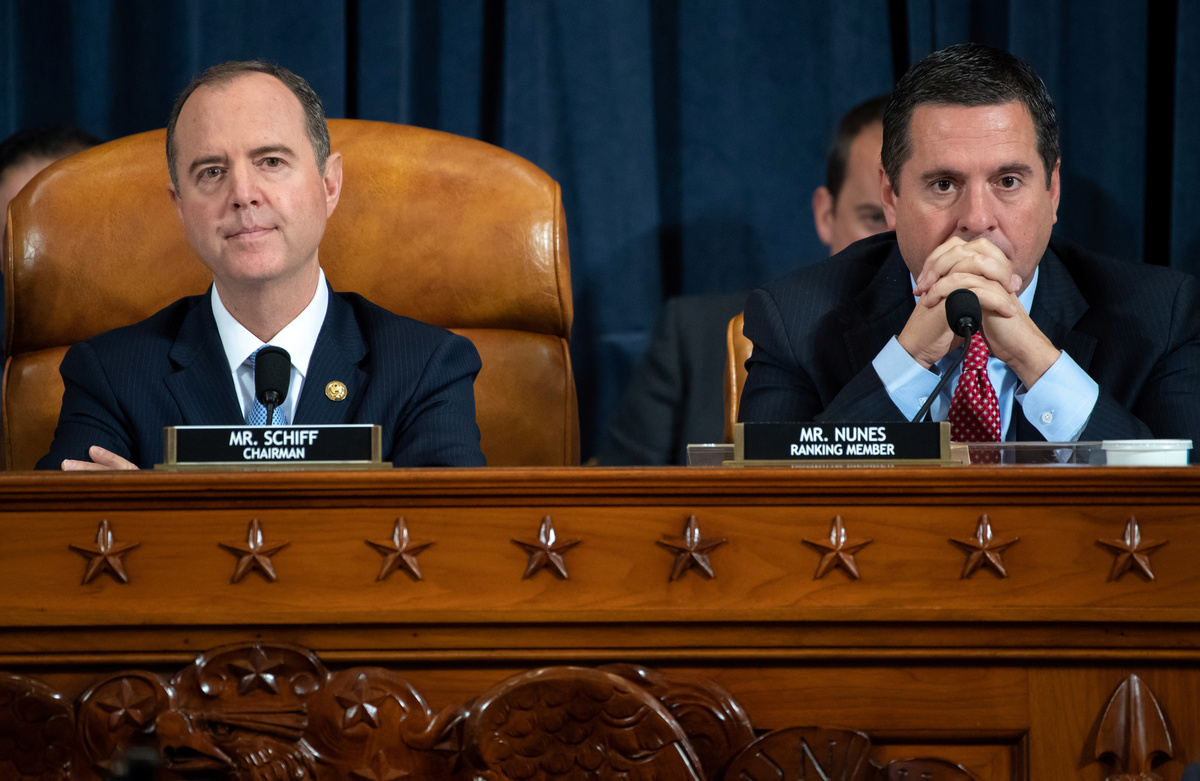
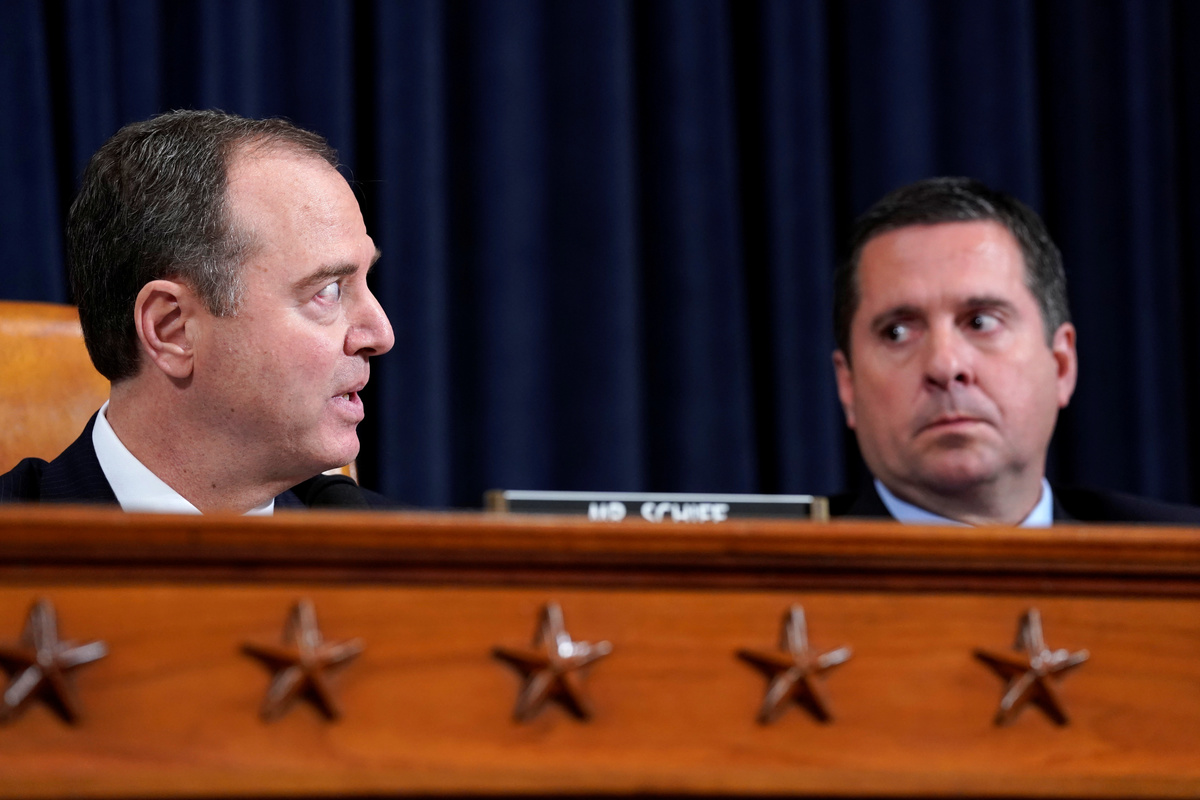
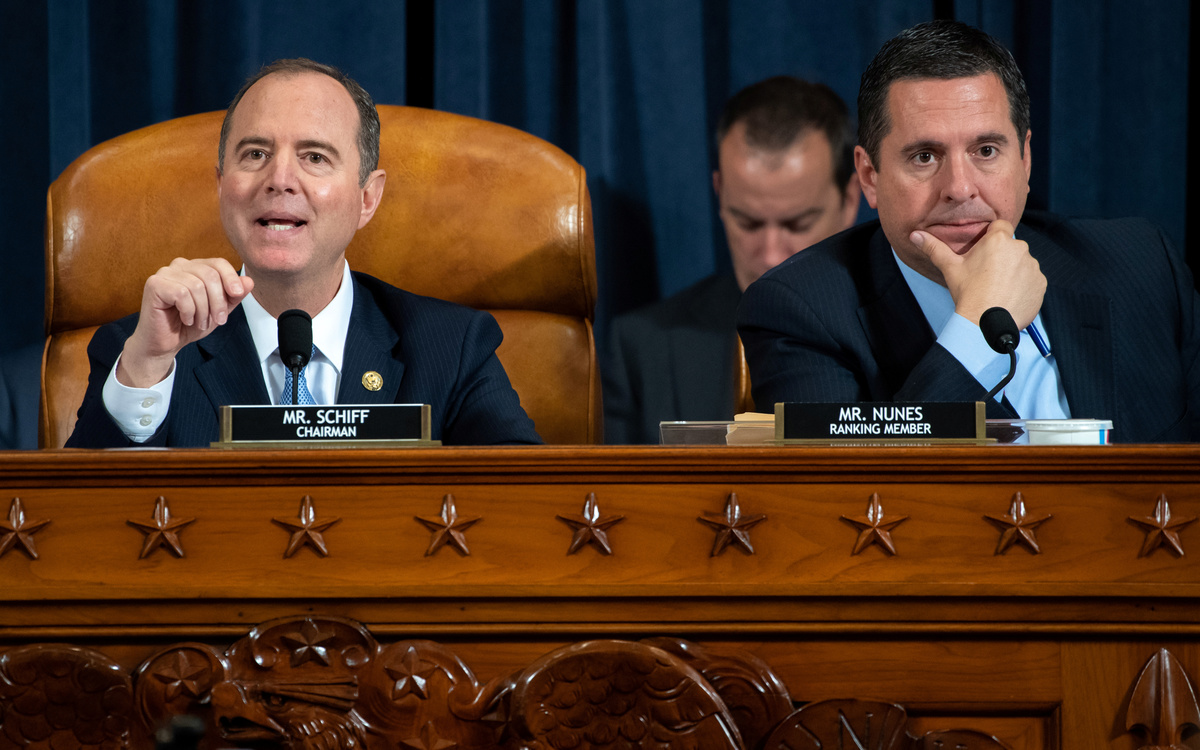
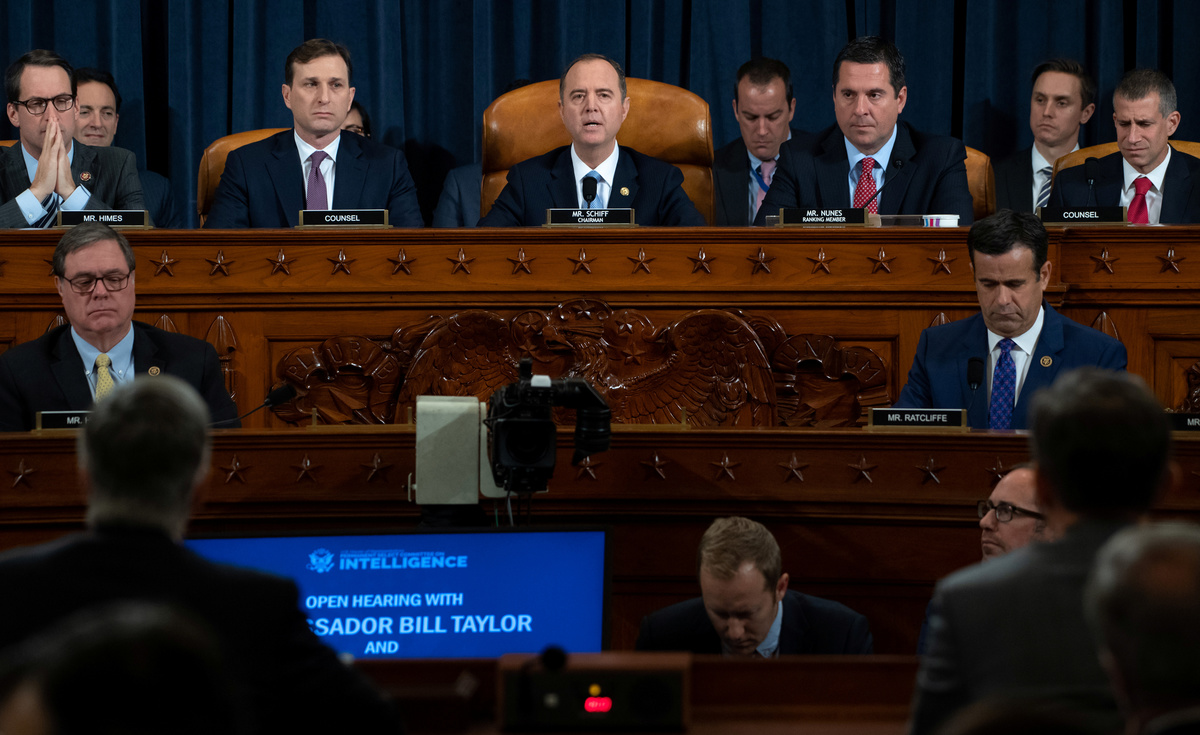
Chairman Adam Schiff (L), Democrat of California, and Ranking Member Devin Nunes (R), Republican of California, during the first public hearings held by the House Permanent Select Committee on Intelligence as part of the impeachment inquiry into U.S. President Donald Trump, on Capitol Hill in Washington, DC, U.S., November 13, 2019. Saul Loeb/Pool via REUTERS
(This November 13 story corrects date for April Trump-Zelenskiy call to April 21 from April 12 in 9th paragraph)
WASHINGTON (Reuters) - The impeachment inquiry into U.S. President Donald Trump will reach a critical juncture on Wednesday when lawmakers launch their first televised public hearings, marking a new, high-stakes phase of a tumultuous presidency.
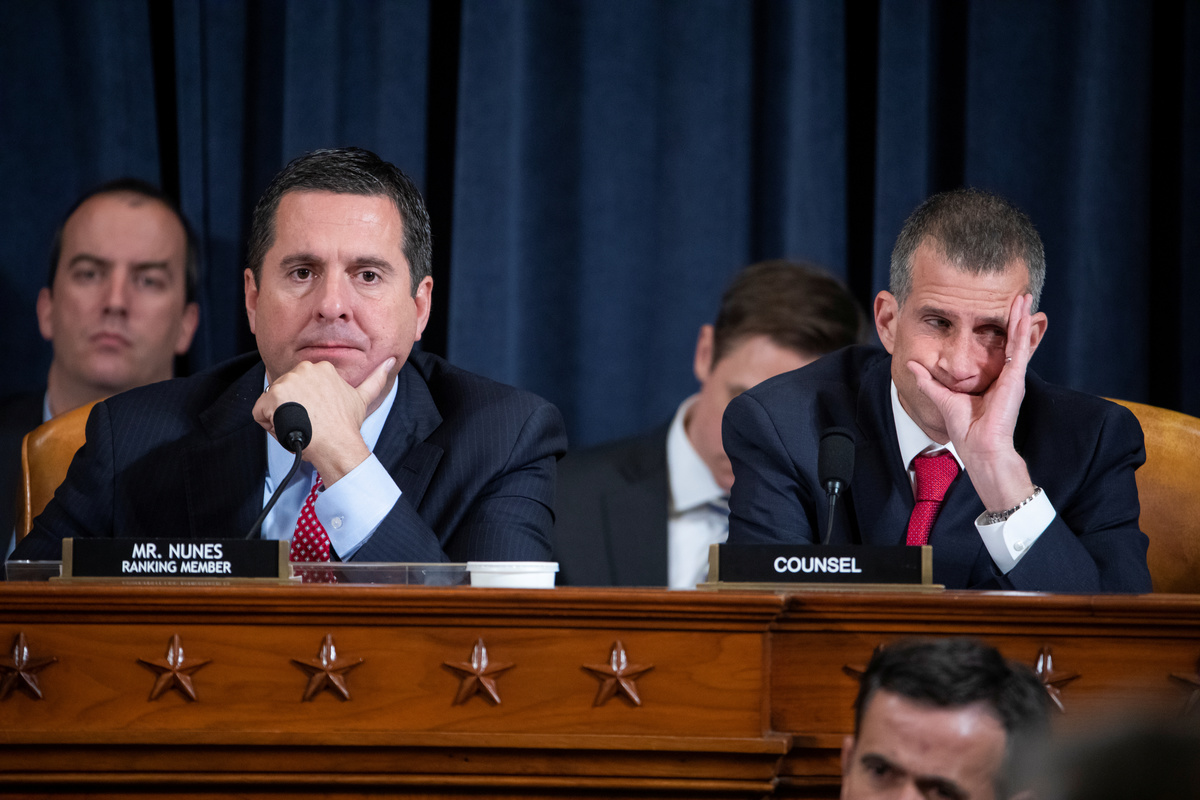
Republican Representative from California Devin Nunes (L) and legal counsel Steve Castor (R) listen during the House Permanent Select Committee on Intelligence hearing on the impeachment inquiry into U.S. President Donald J. Trump, on Capitol Hill in Washington, DC, U.S., November 13, 2019. Jim Lo Scalzo/Pool via REUTERS
Democrats leading the U.S. House of Representatives probe have summoned three U.S. diplomats – all of whom have previously expressed alarm in closed-door testimony about Trump's dealings with Ukraine - to detail their concerns under the glare of wall-to-wall news coverage.
Trump's fellow Republicans, who will also be able to question the witnesses, have crafted a defence strategy that will argue he did nothing wrong when he asked Ukraine's new president to investigate Joe Biden, a former vice president and key 2020 re-election rival.
Both sides will be playing to a sharply polarized electorate as they move deeper into a six-week-old investigation that has shadowed Trump's presidency with the threat of being removed from office even as he campaigns for a second term.
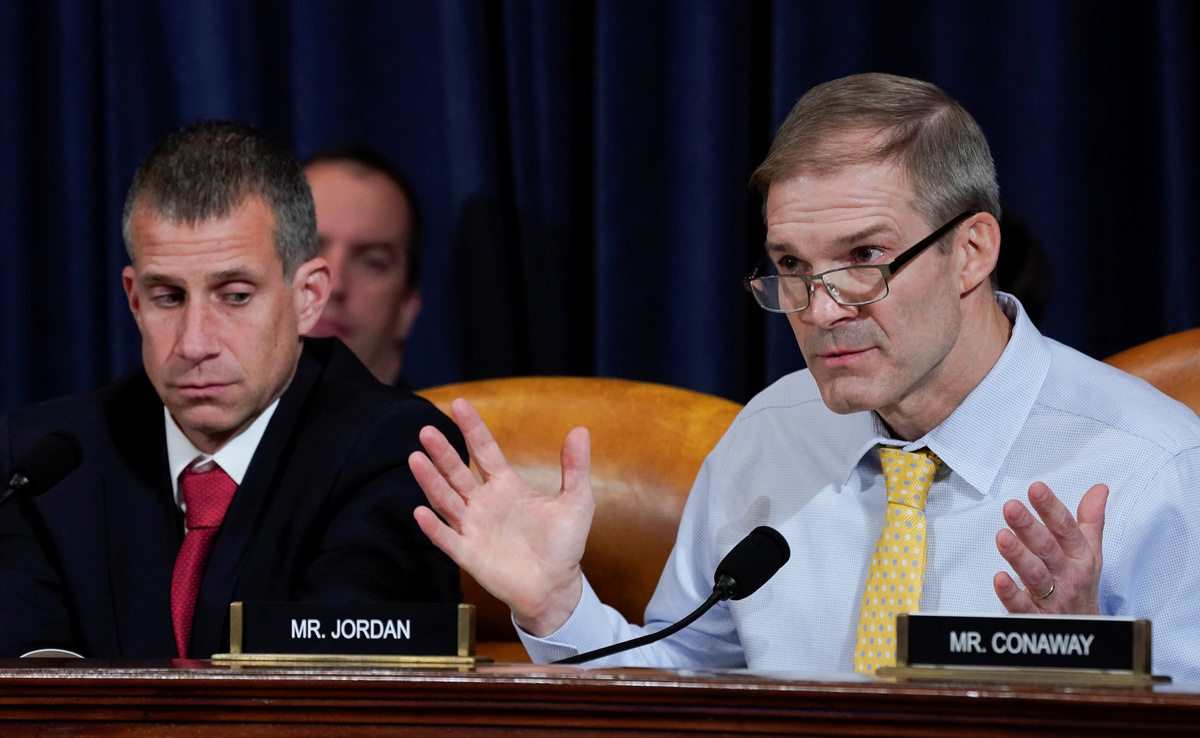
Republican counsel Steve Castor listens to Rep. Jim Jordan (R-OH) during a House Intelligence Committee hearing as part of the impeachment inquiry into U.S. President Donald Trump on Capitol Hill in Washington, U.S., November 13, 2019. REUTERS/Jonathan Ernst
It has been two decades since Americans last witnessed impeachment proceedings against a president, and these will be the first of the social media era. Republicans, who then controlled the House, brought impeachment charges against Democratic President Bill Clinton in a scandal involving his sexual relationship with a White House intern. The Senate ultimately voted to keep Clinton in office.
FOCUS ON UKRAINE
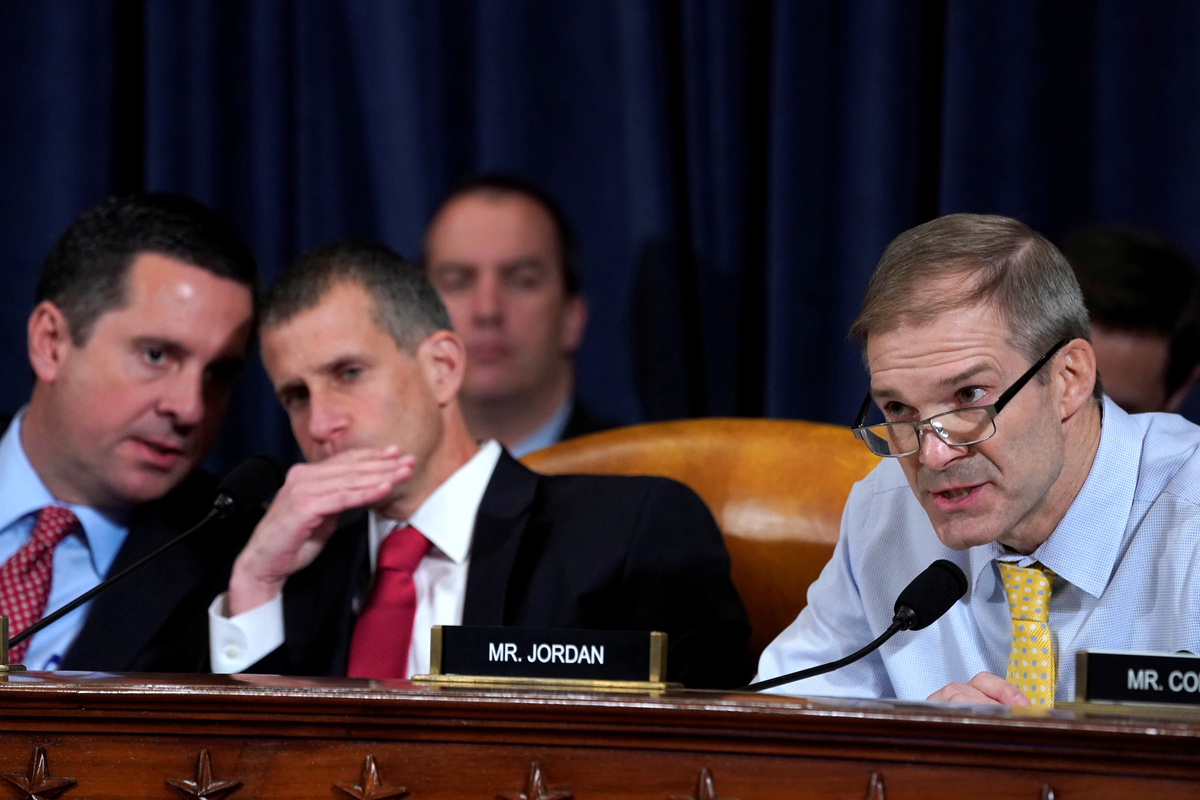
Republican counsel Steve Castor confers with Rep. Devin Nunes (R-CA) (L) as they listen to Rep. Jim Jordan (R-OH) speak during a House Intelligence Committee hearing as part of the impeachment inquiry into U.S. President Donald Trump on Capitol Hill in Washington, U.S., November 13, 2019. REUTERS/Jonathan Ernst
Though no president has ever been removed from office by impeachment, that has not deterred Democrats, who are looking into whether Trump abused his power by withholding nearly $400 million in security assistance to Ukraine to pressure the vulnerable U.S. ally. The focus is a July 25 phone call in which Trump asked Ukrainian President Volodymyr Zelenskiy to open a corruption investigation into Biden and his son and into a discredited theory that Ukraine may have meddled in the 2016 U.S. elections.
Trump has denied any wrongdoing, derided some of the current and former U.S. officials who have appeared before committees as "Never Trumpers" and branded the investigation a witch hunt aimed at hurting his re-election changes.
"President Trump's pressure campaign was 'out of bounds,' and every time he insists that it was 'perfect' he is saying that he is above the law," House Speaker Nancy Pelosi said on Twitter, referring to how the Republican president has described his actions in the Ukraine saga.
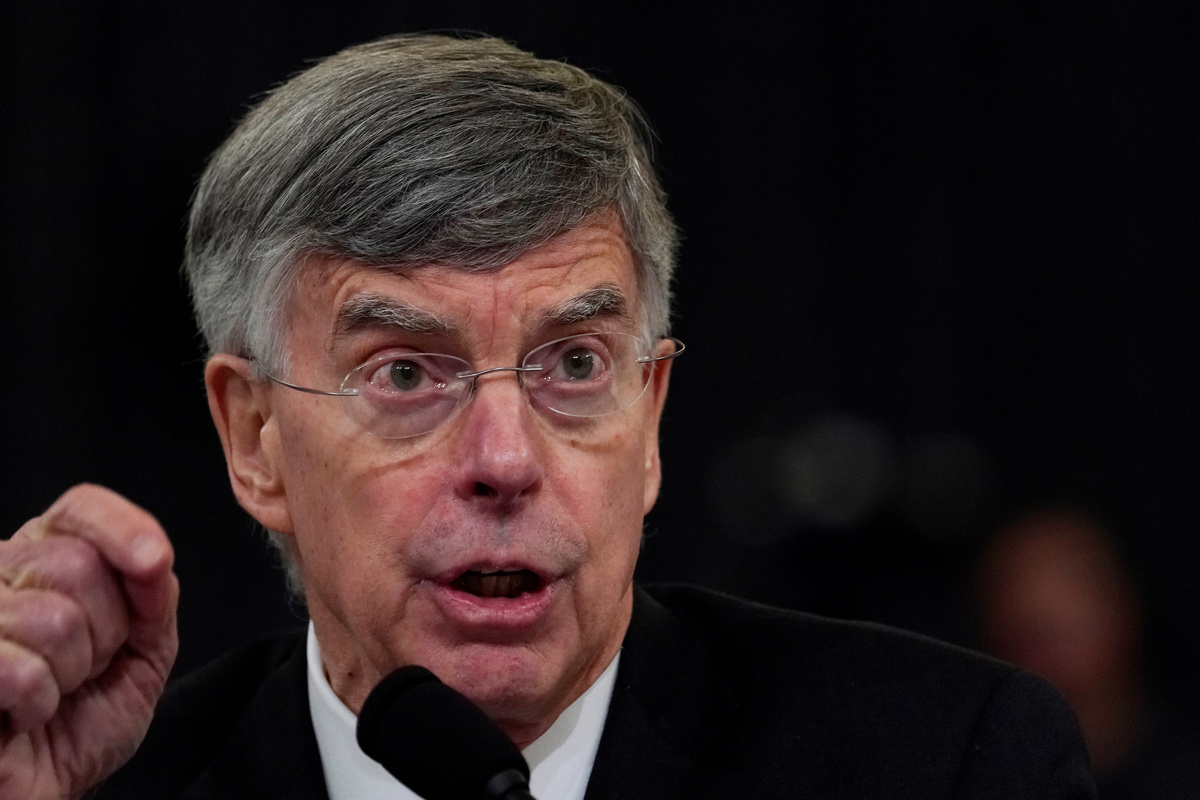
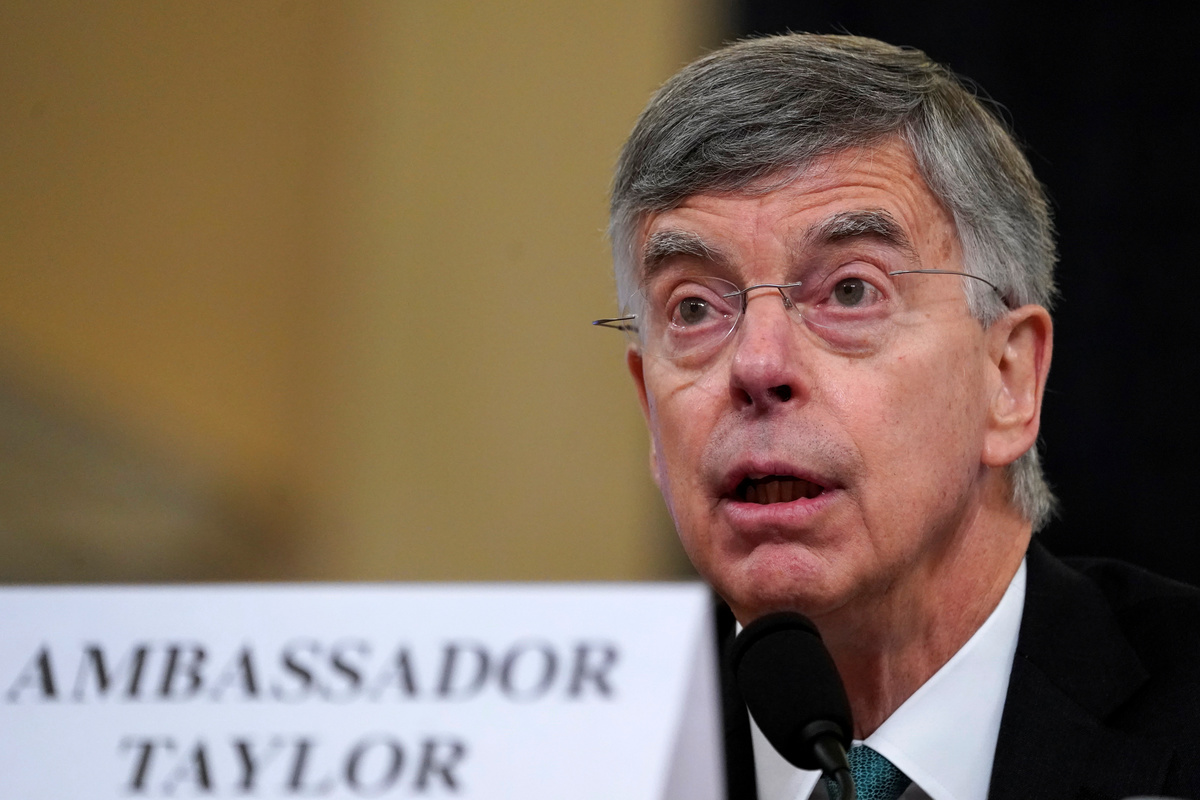
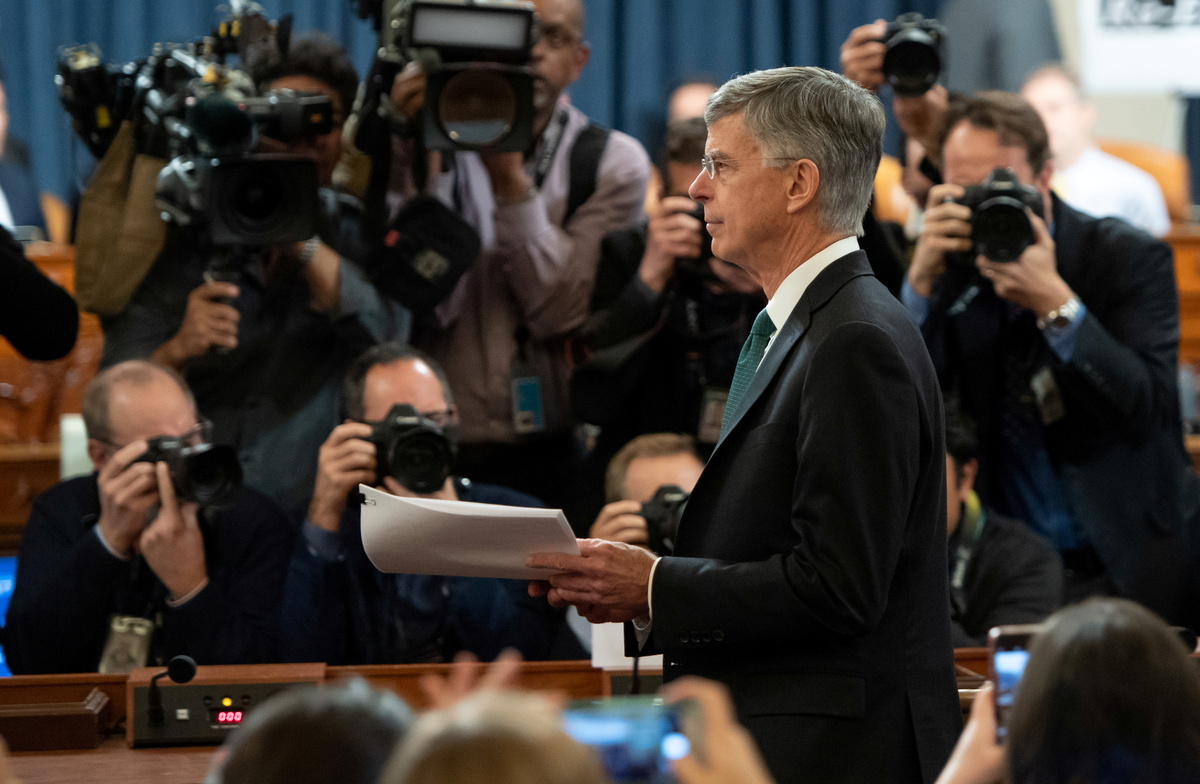
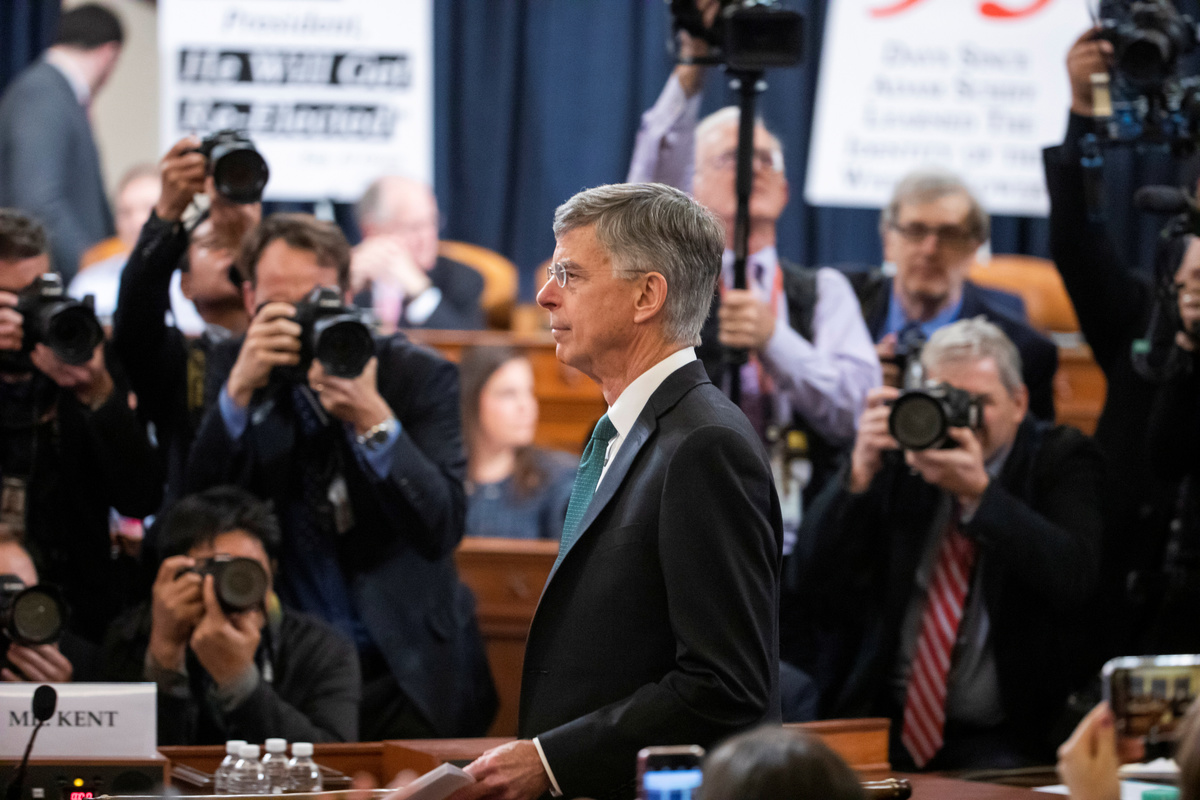
Ambassador Bill Taylor, charge d'affaires at the U.S. embassy in Ukraine, testifies during a House Intelligence Committee impeachment inquiry hearing into U.S. President Donald Trump on Capitol Hill in Washington, U.S., November 13, 2019. REUTERS/Jonathan Ernst
Trump also suggested on Tuesday that he would likely release the transcript of an April 21 conversation with Zelenskiy this week but gave no other detail. It was the July phone call that prompted an anonymous whistleblower to set off the impeachment probe.
HUGE AUDIENCE EXPECTED FOR POLITICAL DRAMA
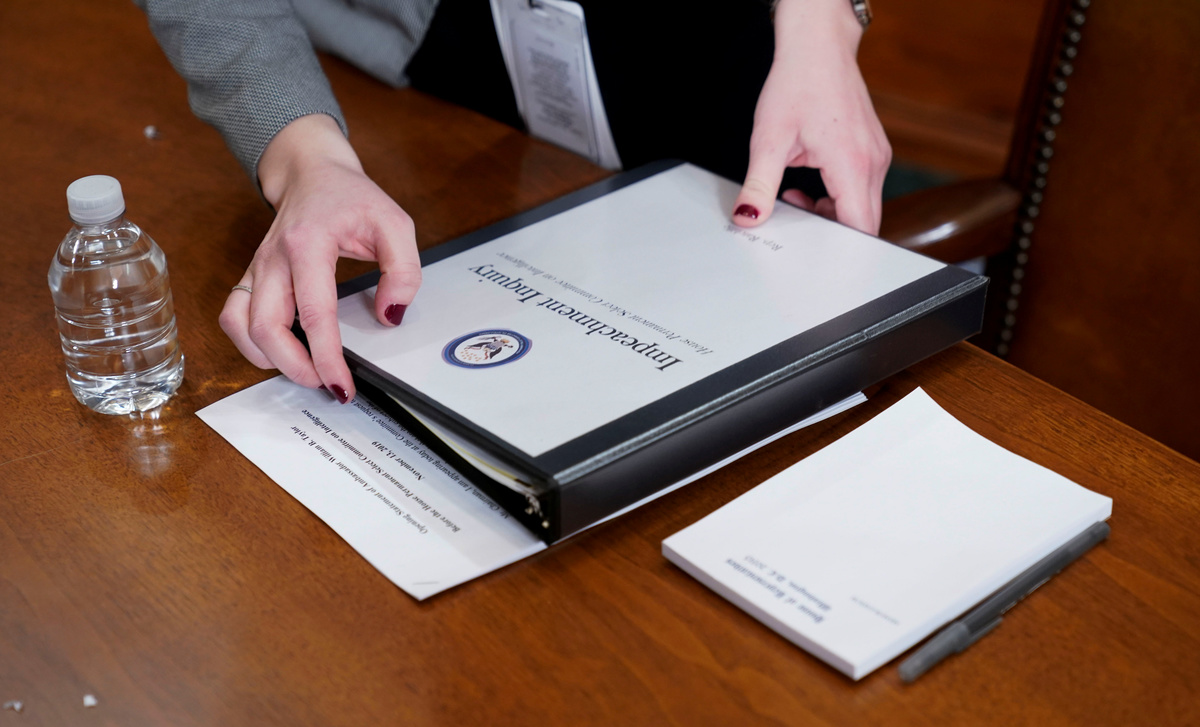
A House Intelligence Committee staff member lays out briefing papers on the dais for a member of the committee before the start of the first public hearing in the House of Representatives impeachment inquiry against U.S. President Donald Trump on Capitol Hill in Washington, U.S., November 13, 2019. REUTERS/Joshua Roberts
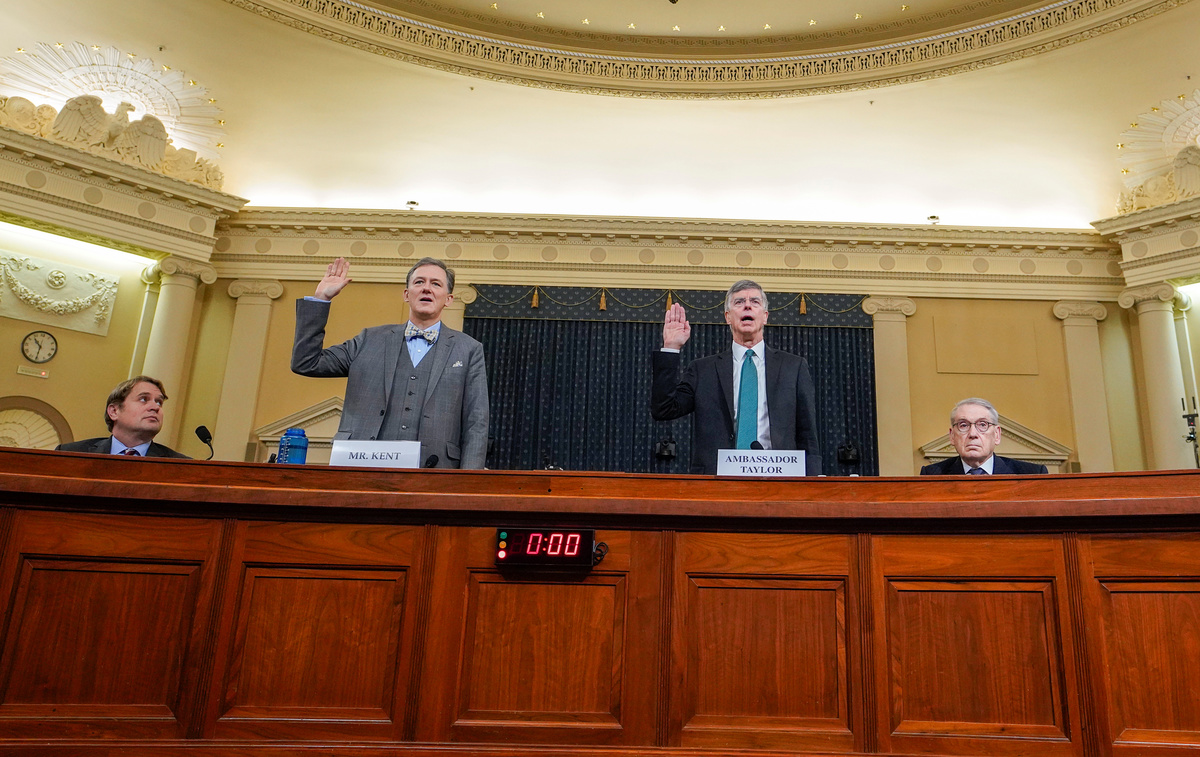
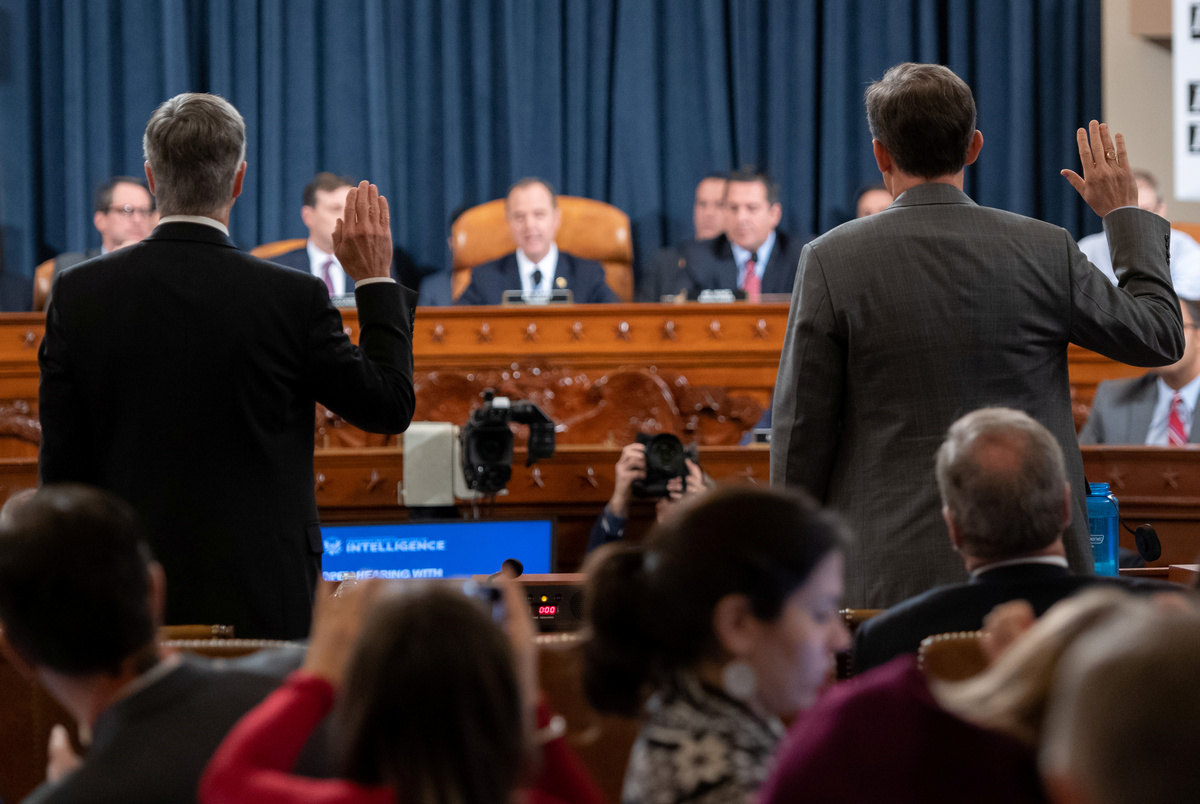
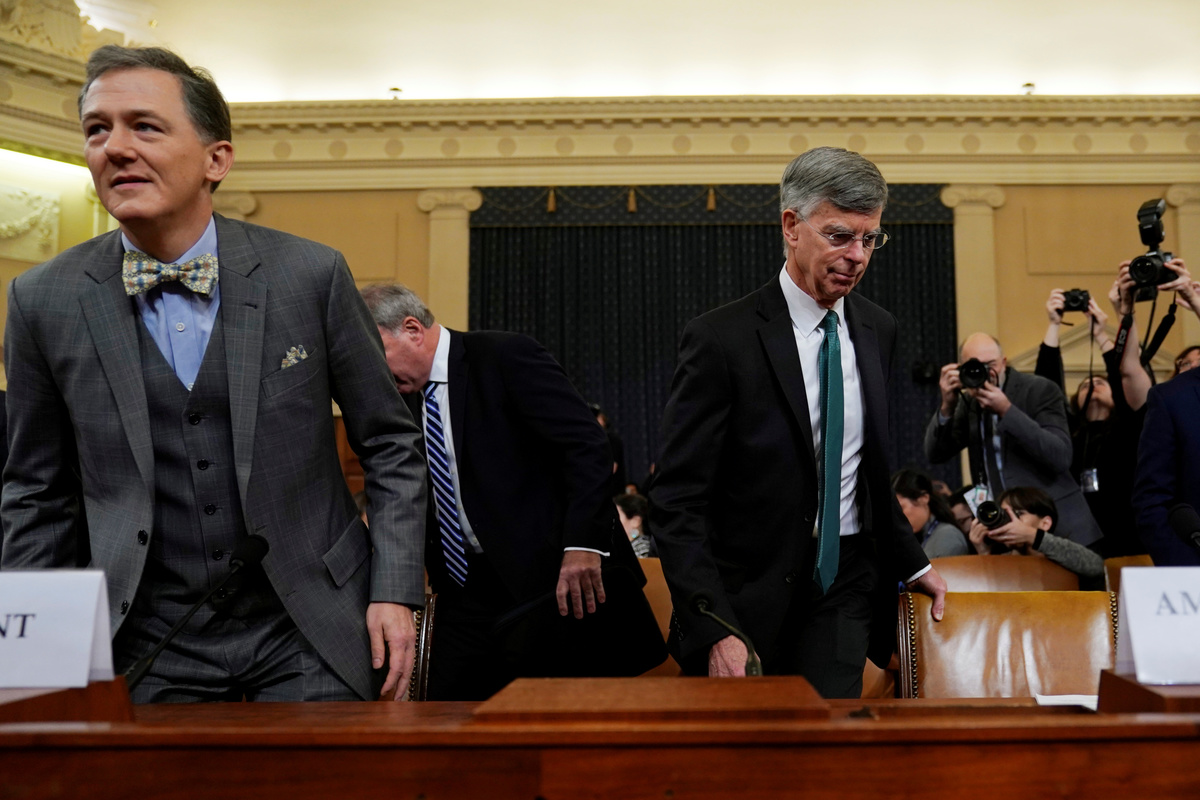
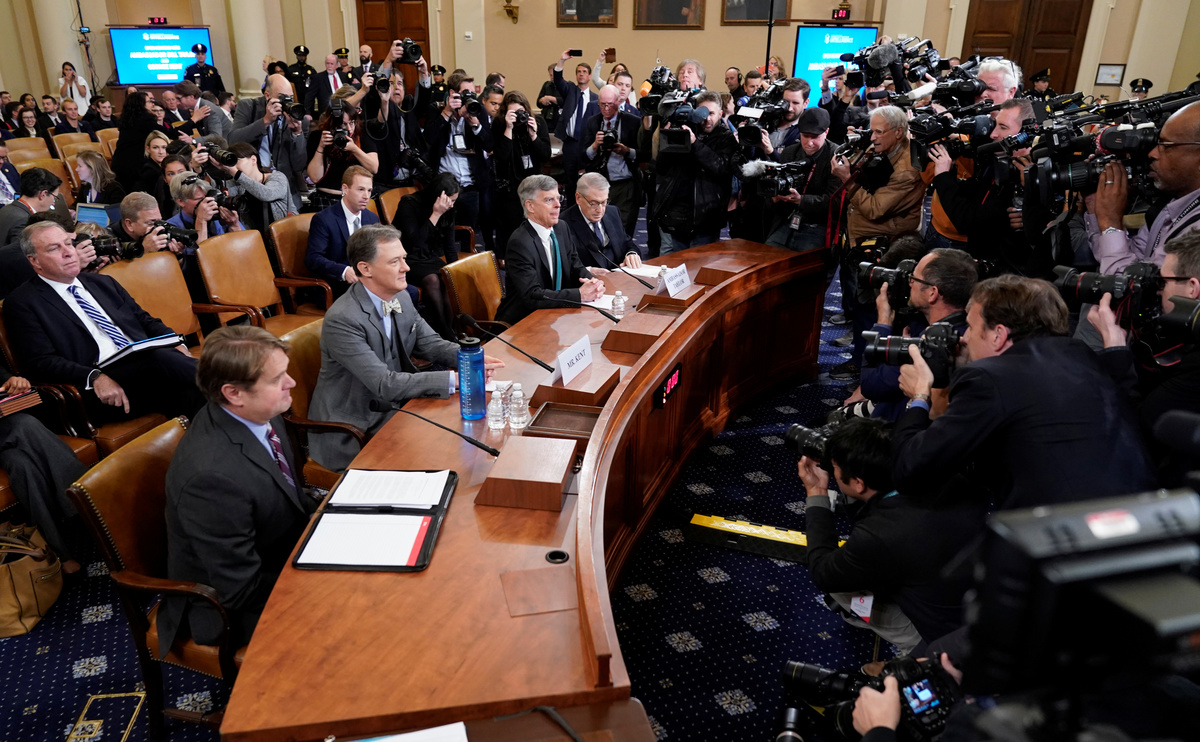
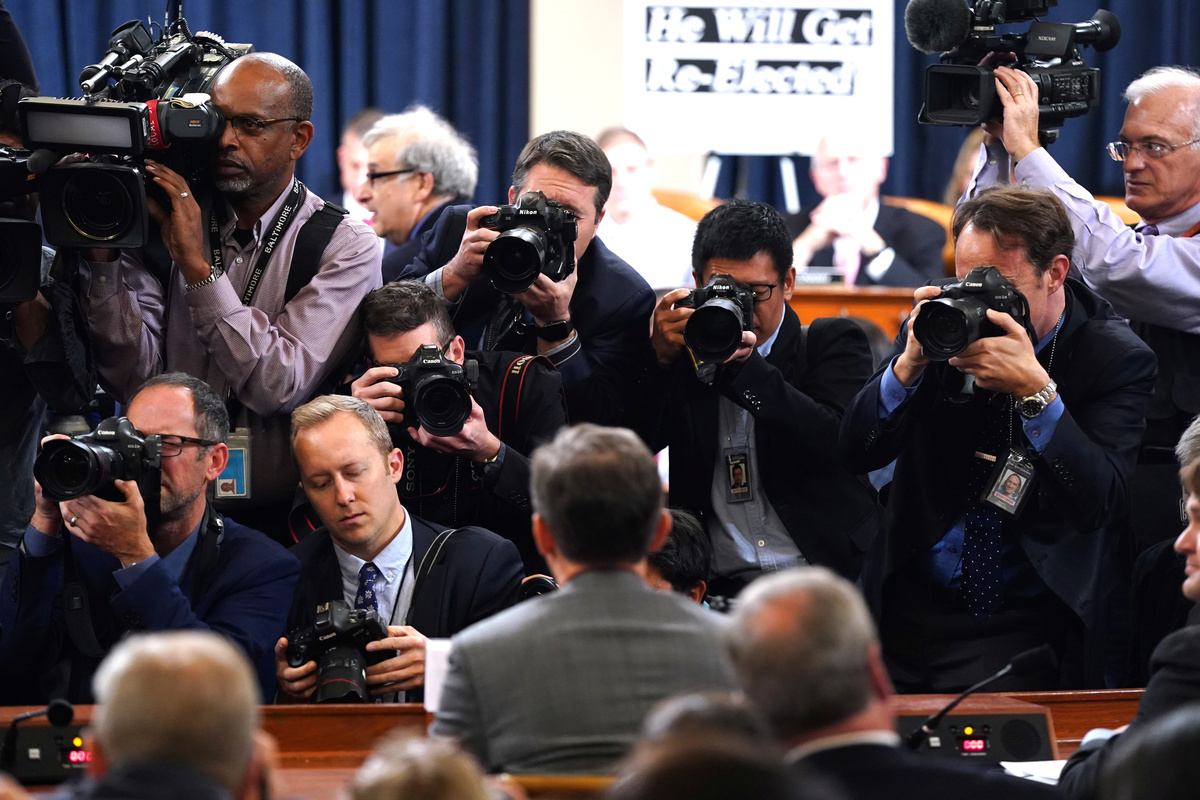
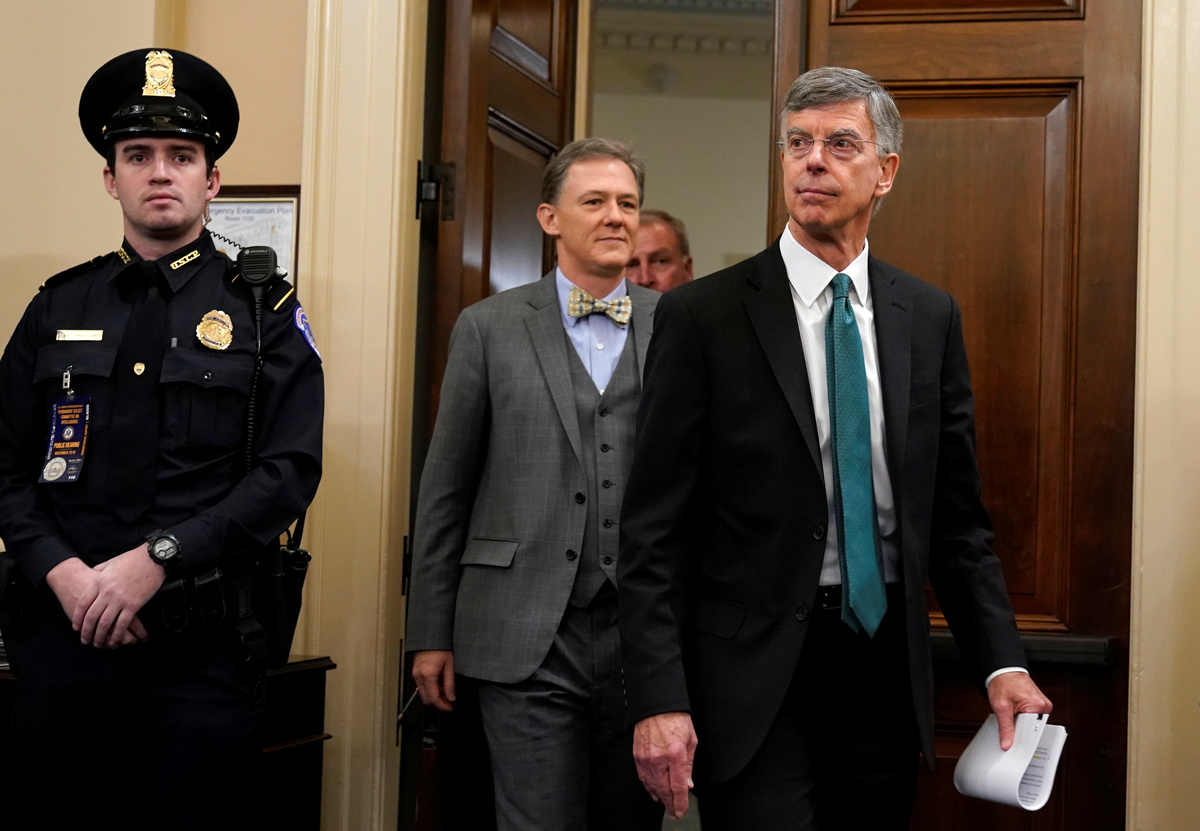
With a potential television audience of tens of millions looking on, two witnesses – William Taylor, top U.S. diplomat in Ukraine, and Deputy Assistant Secretary of State George Kent – will be sworn in before the House Intelligence Committee on Wednesday.
Lawmakers leading the probe released transcripts of closed-door testimony last week showing that Taylor believed a White House-led effort to pressure Kiev to investigate Ukrainian energy company Burisma was motivated by a desire to help Trump win re-election next year.
Taylor testified he had been concerned to learn that security aid to Ukraine, as well as a White House meeting between Trump and Zelenskiy, had been delayed for political reasons.
Ambassador Bill Taylor, charge d'affaires at the U.S. embassy in Ukraine, testifies during a House Intelligence Committee impeachment inquiry hearing into U.S. President Donald Trump on Capitol Hill in Washington, U.S., November 13, 2019. REUTERS/Jonathan Ernst
Kent said he had been alarmed by efforts by Trump’s personal lawyer, Rudy Giuliani, and others to pressure Ukraine. He said Giuliani - who Democrats have accused of conducting a shadow foreign policy effort in Ukraine – had conducted a "campaign full of lies" against Marie Yovanovitch, who was abruptly pulled from her post as U.S. ambassador to Ukraine in May. She will give public testimony on Friday.
Taylor and Kent were testifying together because "they both were witness to the full storyline of the president's misconduct," an official working on the impeachment inquiry said.
For both sides, the electoral implications are clear in the impeachment process, which could crowd out other issues like the economy and immigration as the 2020 election campaign gathers steam.
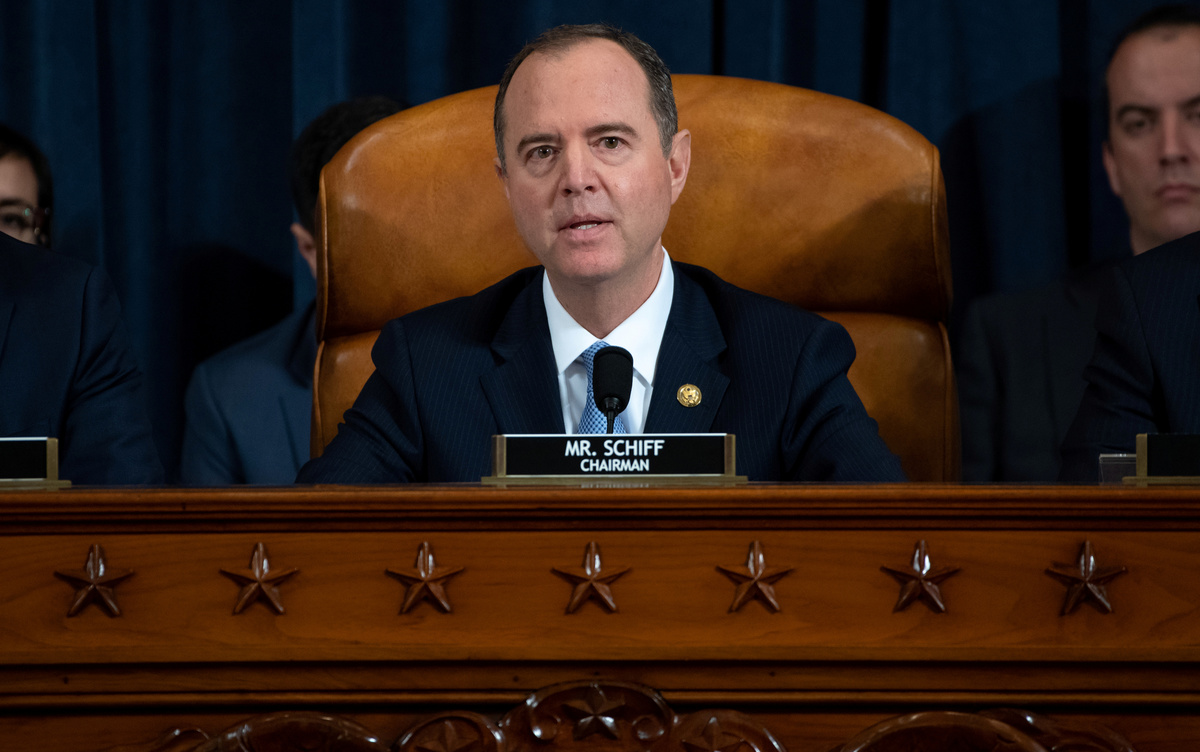
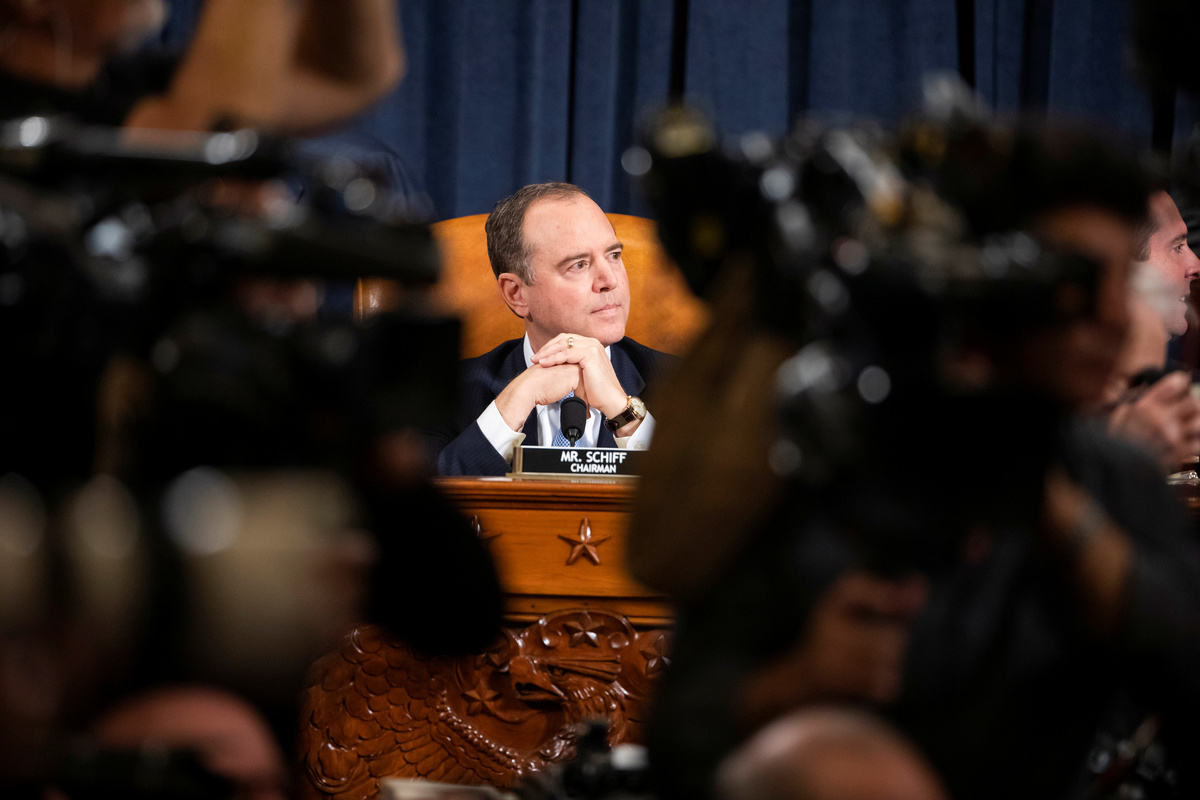
Chairman Adam Schiff (D-CA) and committee member Devis Nunes (R-CA) appear at a House Intelligence Committee impeachment inquiry hearing into U.S. President Donald Trump on Capitol Hill in Washington, U.S., November 13, 2019. REUTERS/Jonathan Ernst
Democrats are hoping to convince independent voters and other doubters that Trump was wrong not only in asking Ukraine to dig up dirt on his rival but in making it a quid-pro-quo proposition, Latin for a favour in exchange for a favour.
Republicans want to paint the hearings to voters as a partisan exercise by Trump's opponents who resented failing to gain more politically from an earlier special counsel's investigation of the Trump team's alleged ties to Russian meddling in the 2016 election.
Trump is the fourth U.S. president to face impeachment proceedings. None were removed from office, although Richard Nixon resigned as he faced almost certain impeachment in 1974 over the Watergate scandal.
Chairman Adam Schiff (L), Democrat of California, and Ranking Member Devin Nunes (R), Republican of California, during the first public hearings held by the House Permanent Select Committee on Intelligence as part of the impeachment inquiry into U.S. President Donald Trump, with witnesses Ukrainian Ambassador William Taylor and Deputy Assistant Secretary George Kent testifying, on Capitol Hill in Washington, DC, U.S., November 13, 2019. Saul Loeb/Pool via REUTERS
This week's hearings are seen as a likely prelude to articles of impeachment - formal charges - against Trump being brought to a vote in the Democratic-controlled House. Even if that leads to an actual impeachment trial in the Senate, Republicans who control the chamber are considered highly unlikely to vote for Trump's removal.
(GRAPHIC: The impeachment inquiry - https://graphics.reuters.com/USA-TRUMP-WHISTLEBLOWER/0100B2EZ1MK/index.html)
George Kent, deputy assistant secretary of state for European and Eurasian Affairs, and Ambassador Bill Taylor, charge d'affaires at the U.S. embassy in Ukraine;are sworn in at at a House Intelligence Committee hearing as part of the impeachment inquiry into U.S. President Donald Trump on Capitol Hill in Washington, U.S., November 13, 2019. REUTERS/Joshua Roberts/Pool
(Reporting by Matt Spetalnick; Editing by Scott Malone and Tom Brown)
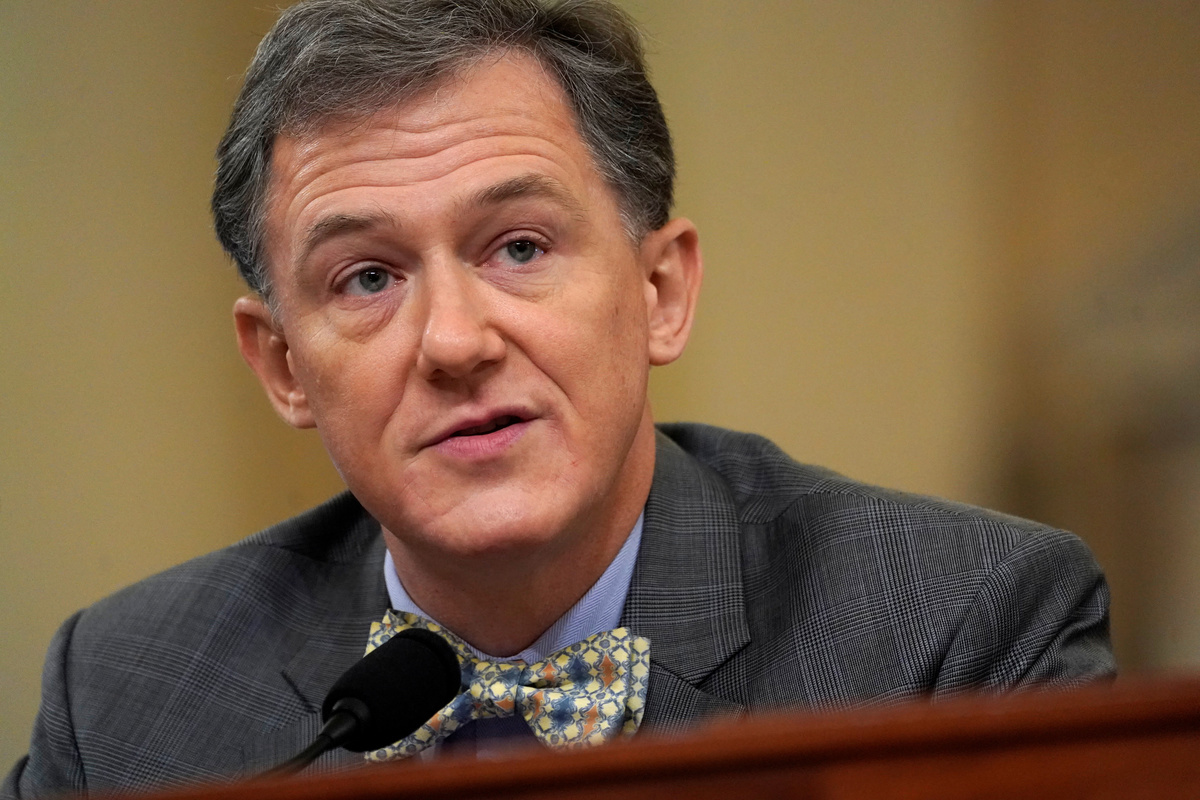
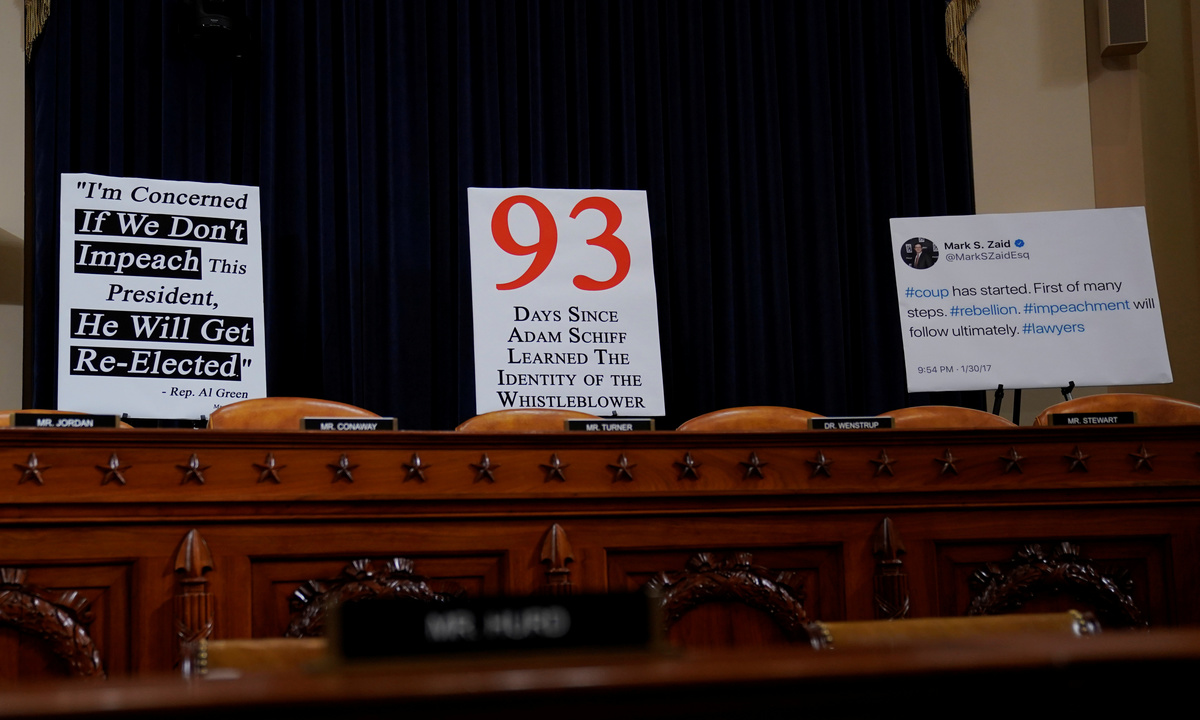
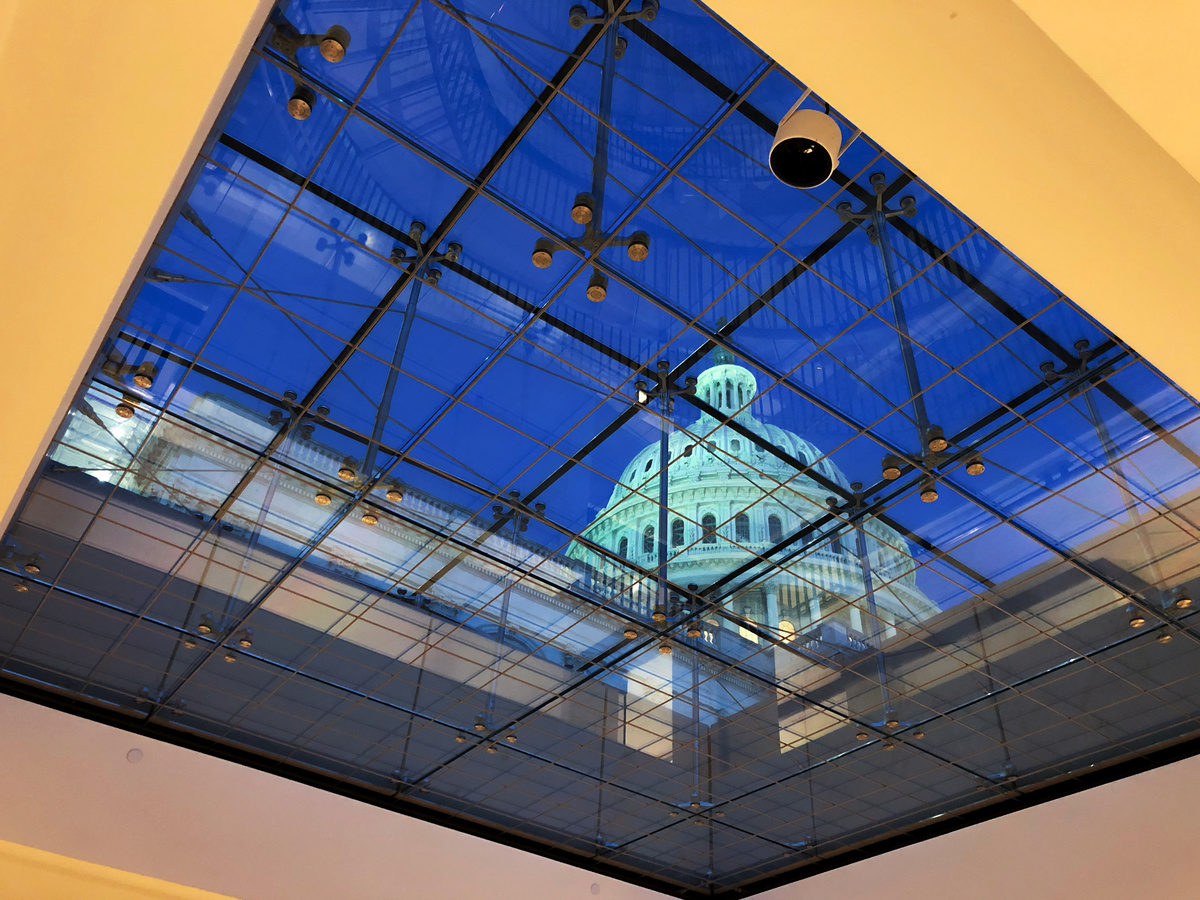
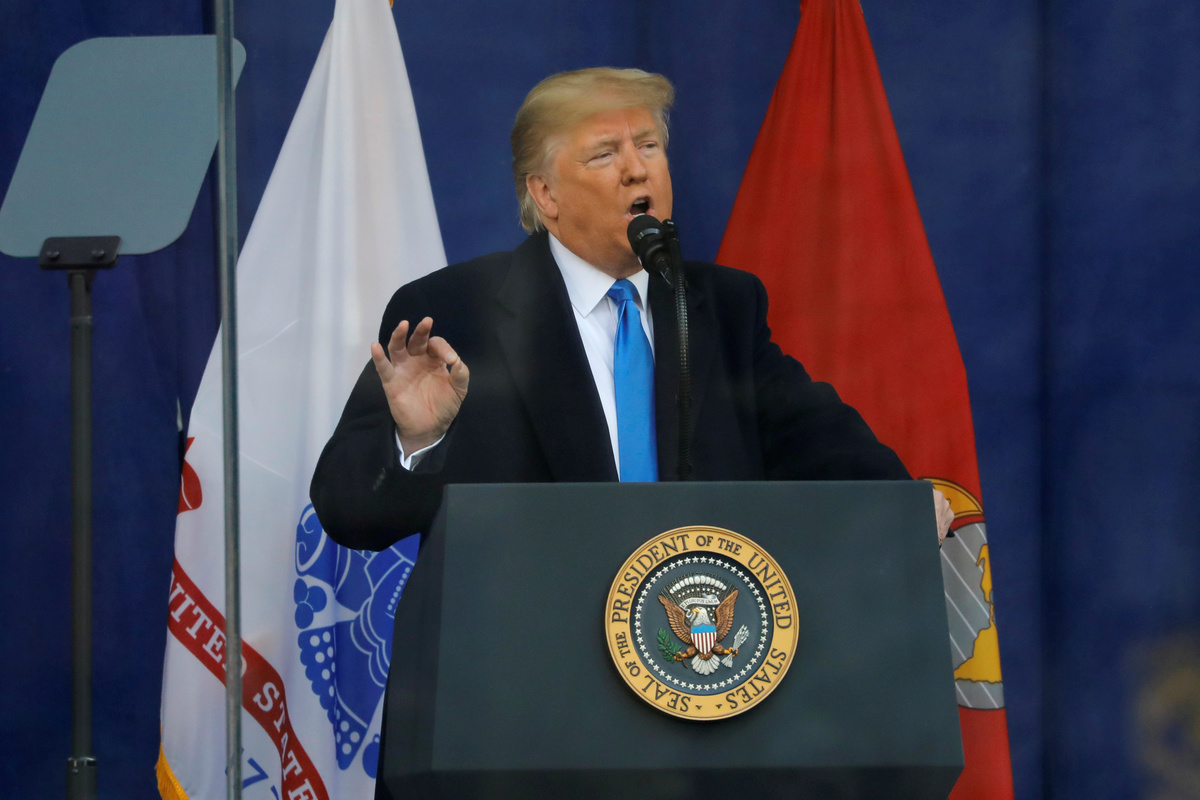
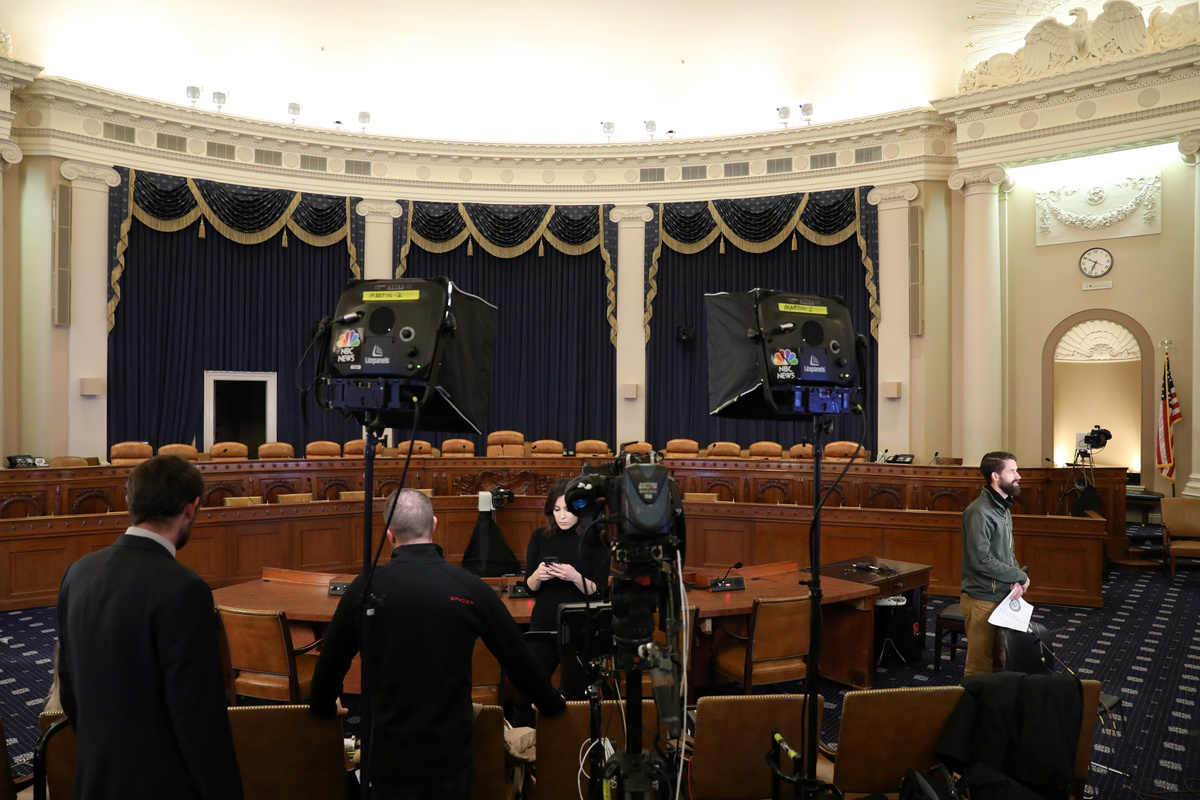
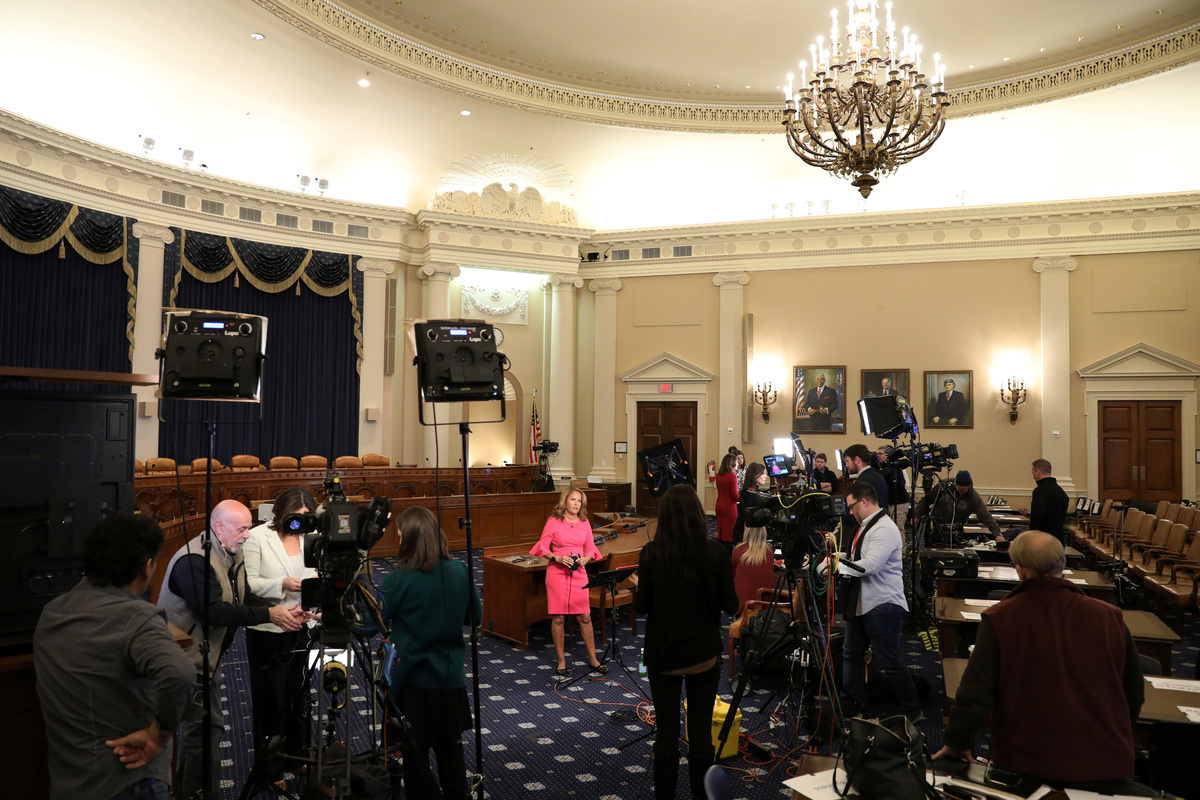
George Kent, deputy assistant secretary of state for European and Eurasian Affairs, testifies at a House Intelligence Committee hearing as part of the impeachment inquiry into U.S. President Donald Trump on Capitol Hill in Washington, U.S., November 13, 2019. REUTERS/Jonathan ErnstUkrainian Ambassador William Taylor (L) and Deputy Assistant Secretary George Kent are sworn-in prior to testifying during the first public hearings held by the House Permanent Select Committee on Intelligence as part of the impeachment inquiry into U.S. President Donald Trump, on Capitol Hill in Washington, DC, U.S., November 13, 2019. Saul Loeb/Pool via REUTERSAmbassador Bill Taylor, charge d'affaires at the U.S. embassy in Ukraine; and George Kent, deputy assistant secretary of state for European and Eurasian Affairs, appear at a House Intelligence Committee hearing as part of the impeachment inquiry into U.S. President Donald Trump on Capitol Hill in Washington, U.S., November 13, 2019. REUTERS/Jonathan ErnstChairman Adam Schiff (C), Democrat of California, gives an opening statement during the first public hearings held by the House Permanent Select Committee on Intelligence as part of the impeachment inquiry into U.S. President Donald Trump, with witnesses Ukrainian Ambassador William Taylor and Deputy Assistant Secretary George Kent testifying, on Capitol Hill in Washington, DC, U.S., November 13, 2019. Saul Loeb/Pool via REUTERSUkrainian Ambassador William Taylor arrives to testify during the first public hearings held by the House Permanent Select Committee on Intelligence as part of the impeachment inquiry into U.S. President Donald Trump, on Capitol Hill in Washington, DC, U.S., November 13, 2019. Saul Loeb/Pool via REUTERSChairman Adam Schiff (C), Democrat of California, gives an opening statement during the first public hearings held by the House Permanent Select Committee on Intelligence as part of the impeachment inquiry into U.S. President Donald Trump, with witnesses Ukrainian Ambassador William Taylor and Deputy Assistant Secretary George Kent testifying, on Capitol Hill in Washington, DC, U.S., November 13, 2019. Saul Loeb/Pool via REUTERSAmbassador Bill Taylor, charge d'affaires at the U.S. embassy in Ukraine; and George Kent, deputy assistant secretary of state for European and Eurasian Affairs, take their seats to testify at a House Intelligence Committee hearing as part of the impeachment inquiry into U.S. President Donald Trump on Capitol Hill in Washington, U.S., November 13, 2019. REUTERS/Joshua RobertsCharge d'Affaires at the US embassy in Ukraine Bill Taylor prepares to testify before the House Permanent Select Committee on Intelligence hearing on the impeachment inquiry into U.S. President Donald J. Trump, on Capitol Hill in Washington, DC, U.S., November 13, 2019. Jim Lo Scalzo/Pool via REUTERSDemocratic Chairman of the House Permanent Select Committee on Intelligence Adam Schiff (C) awaits charge d'Affaires at the US embassy in Ukraine Bill Taylor and Deputy Assistant Secretary of State for Europe and Eurasia George Kent to testify before the House Permanent Select Committee on Intelligence hearing on the impeachment inquiry into U.S. President Donald J. Trump, on Capitol Hill in Washington, DC, U.S., November 13, 2019. Jim Lo Scalzo/Pool via REUTERSDeputy Assistant Secretary of State for Europe and Eurasia George Kent (C) prepares to testify before the House Permanent Select Committee on Intelligence hearing on the impeachment inquiry into U.S. President Donald J. Trump, on Capitol Hill in Washington, DC, U.S., November 13, 2019. Jim Lo Scalzo/Pool via REUTERSAmbassador Bill Taylor, charge d'affaires at the U.S. embassy in Ukraine; and George Kent, deputy assistant secretary of state for European and Eurasian Affairs, arrive to testify at a House Intelligence Committee hearing as part of the impeachment inquiry into U.S. President Donald Trump on Capitol Hill in Washington, U.S., November 13, 2019. REUTERS/Joshua Roberts Signs are placed behind seats of committee members at a House Intelligence Committee hearing as part of the impeachment inquiry into U.S. President Donald Trump on Capitol Hill in Washington, U.S., November 13, 2019. REUTERS/Jonathan ErnstThe spiral staircase down to House Intelligence Committee rooms can be seen reflected over the Capitol Dome ahead of Trump impeachment inquiry testimony by Ambassador Bill Taylor, charge d'affaires at the U.S. embassy in Ukraine and George Kent, deputy assistant secretary of state for European and Eurasian Affairs, before a House Intelligence Committee hearing on Capitol Hill in Washington, U.S., November 13, 2019. REUTERS/Jonathan ErnstFILE PHOTO: U.S. President Donald Trump delivers remarks at a Veterans Day Parade and Wreath Laying ceremony in Manhattan, New York City, U.S., November 11, 2019. REUTERS/Andrew KellyTelevision news crews set up for live reports ahead of Trump impeachment inquiry testimony by Ambassador Bill Taylor, charge d'affaires at the U.S. embassy in Ukraine and George Kent, deputy assistant secretary of state for European and Eurasian Affairs, before a House Intelligence Committee hearing on Capitol Hill in Washington, U.S., November 13, 2019. REUTERS/Jonathan ErnstTelevision news crews set up for live reports ahead of Trump impeachment inquiry testimony by Ambassador Bill Taylor, charge d'affaires at the U.S. embassy in Ukraine and George Kent, deputy assistant secretary of state for European and Eurasian Affairs, before a House Intelligence Committee hearing on Capitol Hill in Washington, U.S., November 13, 2019. REUTERS/Jonathan Ernst
Sign up to read this article
Read news from 100’s of titles, curated specifically for you.