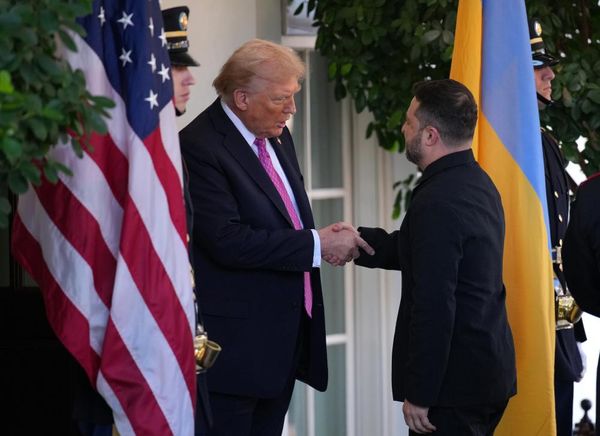
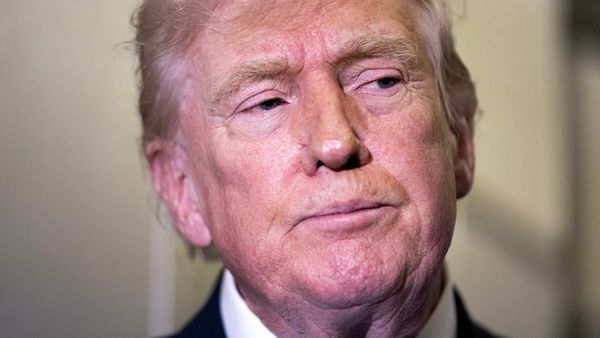
WASHINGTON _ The U.S. and Mexico have reached an agreement to restrict all non-essential travel across their shared border in an effort to slow the spread of the coronavirus, President Donald Trump said Friday, adding that he was invoking the Defense Production Act to increase output of badly needed medical supplies.
The tax filing deadline has been extended from April 15 to July 15, Trump added, noting that people who have refunds due can still file early.
"Both our countries know the importance of working together to limit the spread of the virus and to ensure the commerce that supports both our economies keeps flowing," Secretary of State Michael R. Pompeo said after announcing the agreement with Mexico. The new restrictions will take effect on Saturday, he said.
Under the new rules, the Border Patrol will begin returning all undocumented immigrants directly to Mexico or Canada when they are caught at the border, rather than detaining them in the U.S., acting Homeland Security Secretary Chad Wolf announced.
The new border restrictions, along with those with Canada that were announced Wednesday "will protect the health of all three nations and reduce the incentive for a mass global migration that would vastly deplete the resources that are all needed," Trump said.
"We are treating both borders equally ... northern and southern borders," Trump said.
The restrictions on both the northern and southern land borders are needed because "we cannot be preventing people from coming in from one area when they can come in from another," Dr. Anthony Fauci, said, explaining the need to close both major borders, not just one.
"There's a public health reason for doing that."
Trump also praised two frequent Democratic adversaries, California Gov. Gavin Newsom and New York Gov. Andrew Cuomo, saying "I applaud them" for "taking very bold steps" to limit activities in their states. Fauci also praised both governors, urging residents of the two hard-hit states to heed the new orders.
Newsom's order that Californians remain at home, announced Thursday night, had drawn criticism from some Republicans, including House Republican leader Kevin McCarthy of California, an ally of Trump's.
Trump said he did not think there was a need for a national lockdown. "I don't think we'll ever find that necessary," he said, noting that while some states have large numbers of cases, others are "watching it on television."
The new border restrictions will not apply to trade between the U.S. and Mexico, Trump said, although they will certainly add strain to a global economy already teetering under the weight of this crisis. The news follows several days of discussions, which Pompeo confirmed Thursday night.
"Essential commercial activities will not be impacted," Wolf added, noting that the restrictions, which affect crossing of the land borders, were not intended to deter trade. The restrictions, however, will clearly affect the economies of border communities, which depend heavily on cross-border traffic.
The border controls were designed to respond to an unprecedented moment in the nation's history as public health concerns over the pandemic are prompting federal, state and local officials to shut down many parts of American life.
The State Department on Thursday issued its highest level of travel advisory, urging all U.S. citizens not to travel abroad. The Level 4: Do Not Travel advisory "advises U.S. citizens to avoid all international travel due to the global impact of COVID-19."
Officials have tried to prepare the country for a surge in the numbers of people whose infections have been confirmed, as testing expands and offers a fuller picture of the scope of the outbreak, which has now spread to all 50 states and infected more than 14,000 people.
Mexican Foreign Minister Marcelo Ebrard downplayed the border news while speaking to journalists Friday morning, repeatedly saying that the changes do not amount to a closure.
"We are not talking about a closure because it is not that," he said at a news conference in Mexico City. "It is going to be restricted, specifically for tourism and recreation."
Even a partial closure of the border, however, was likely to affect Mexico's struggling economy. Mexico posted near flat growth last year and now appears headed for recession, analysts say. This week, the peso tumbled to a historical low amid growing concerns about the impact of the virus and a related dip in oil prices.
Every day, more than $1.6 billion in goods and services flow across the border, according to the U.S. Chamber of Commerce. So, too, do roughly half a million legal workers, students, shoppers and tourists, who cross with visas.
Keeping the border open has been a major priority of Mexican President Andres Manuel Lopez Obrador. In the face of threats by Trump to close the border entirely in the past unless Mexico does more to stop illegal immigration, Lopez Obrador responded by quickly ramping up deportations of Central American migrants.
Jodi Goodwin, an immigration lawyer in the Texas border city of Brownsville, called the border closure "tragic" for potential immigrants who have been stranded, in some cases for many months, in efforts to enter the U.S.
"I and the few other warrior lawyers here on the border depend on going to Mexico to be able to represent our clients. Not being able to travel to Mexico makes things monumentally more difficult," Goodwin said.
She said technology like FaceTime and messaging services, "absolutely is not able to replace in person meetings, especially dealing with people who are victims of trauma and trafficking."
Already on Friday morning, asylum-seekers she represents in the Remain in Mexico program had hearings at a border tent court postponed _ they were not told why, she said. About 2,000 asylum-seekers have been living in a tent camp on the other side of the Brownsville border bridge in Matamoros, some for months.
Many Mexican students and workers cross the bridge to the U.S. daily. Others cross south to work in maquiladoras border factories.
"I had a ton of clients that work in the maquila industry that all live on this side. They depend on working there every day. They're going to have to make some choices," Goodwin said.