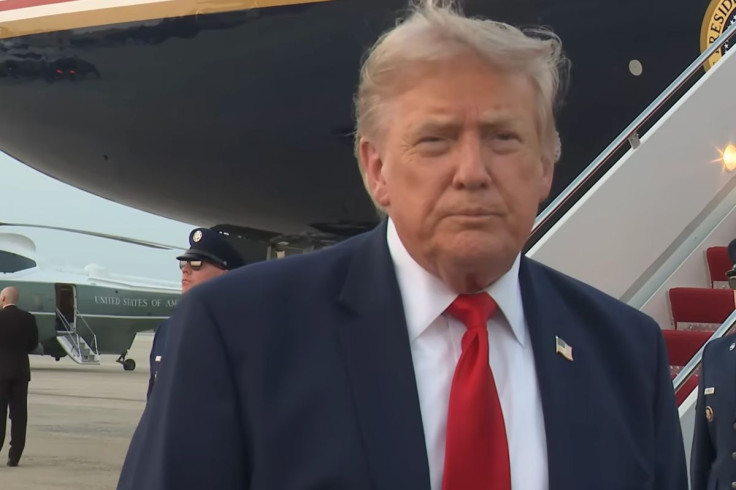
US President Donald Trump has insisted the Strait of Hormuz is 'completely controlled' by the United States Navy, brushing off Tehran's claim that it is independently negotiating a temporary shipping route with Oman.
The president went on to describe Iran's leadership as duplicitous after its foreign ministry publicly denied his earlier assertion that direct talks between Washington and Tehran were close.
Trump said he had cancelled what he called the largest military strike since the Second World War. According to the US president, he agreed to halt the operation following an intervention by Saudi Crown Prince Mohammed bin Salman, on condition that a rapid settlement could be reached.
That position was thrown into question when Iranian foreign ministry spokesperson Esmail Baghaei rejected any plans to negotiate with American officials, saying instead that bilateral discussions were limited to Muscat.
Contested Sovereignty Over the Strait of Hormuz
Tehran has outlined plans for a significant change in how the strategic maritime chokepoint operates. Baghaei said Iranian and Omani diplomats have spent a week exchanging maps to establish a temporary corridor featuring a round-trip route for commercial vessels.
The proposed route would replace the longstanding traffic separation scheme overseen by the United Nations International Maritime Organisation.
By setting up an Omani-Iranian joint venture to manage maritime services, Tehran aims to avoid high Western insurance premiums while offering preferential tariffs.
Deputy Foreign Minister Kazem Gharibabadi has previously rejected any proposal that would allow foreign powers to de-mine the waters or divide traffic evenly across northern and southern lanes, while Baghaei reiterated that sovereignty remains paramount.
The American response was direct. On social media, Trump challenged Iran's claims of maritime authority. He accused Tehran of asking to meet, suggesting they would 'beg', while insisting there was no diplomatic engagement.
The US president demanded 'a Deal, or Total Surrender' and said the American blockade of Iranian ports remains fully in place.
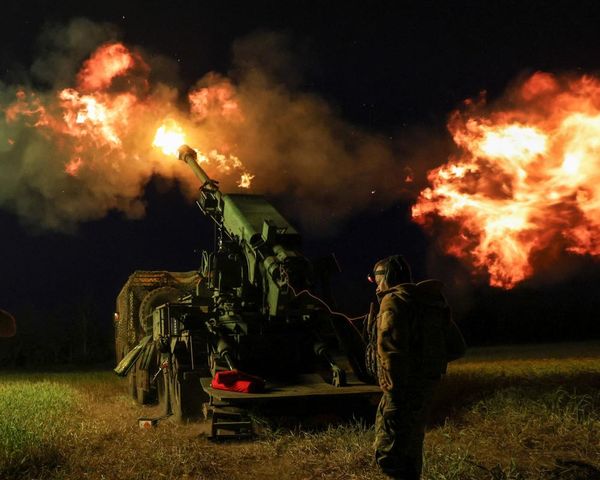
This is reportedly the twelfth time Trump has cancelled threatened military strikes during the current conflict. Baghaei said that securing a mutually acceptable route through the strait is the crucial first step to implementing a ceasefire memorandum signed on 18 June.
Disagreements over that document recently led to a resumption of hostilities, drawing Iraq and the Red Sea into the conflict.
Oman Talks Proceed Amid Expanding Regional Conflict
Neighbouring states are increasingly focused on the wider impact. Saudi Arabia is concerned that a full-scale American war against Iran could spread across the Middle East, a concern reflected in recent Saudi strikes on Iranian-backed militias in Iraq and an escalating standoff with Houthi forces in northern Yemen.
Pointing to the immediate economic disruption, ship tracking data showed that six Saudi-operated tankers recently diverted around the African continent to avoid a Houthi-declared blockade in the Red Sea.
Within Iran, domestic pressure on diplomats is growing. The Assembly of Experts, a powerful clerical body, issued a warning against placing any trust in the US government, saying that hoping for an agreement with what it called a bullying regime would lead nowhere.
Iranian President Masoud Pezeshkian continues to treat the June ceasefire memorandum as the central reference point for future foreign relations.
For now, commercial vessels remain idle in the Gulf as governments and shipping firms await a diplomatic outcome.