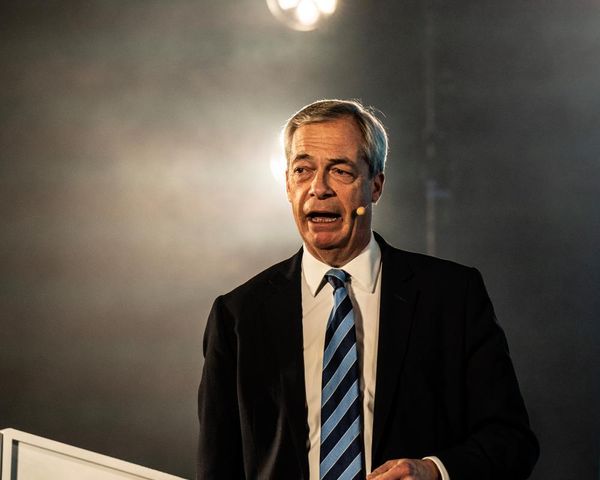
WASHINGTON _ Desperate to stanch anxieties in the stock market and public fears that the White House is unprepared for a major coronavirus outbreak, President Donald Trump blamed Democrats and the media Wednesday for stoking panic even as his administration faces increased bipartisan concern over its disjointed response.
Trump, who has downplayed the threat of the coronavirus for weeks, held a news conference Wednesday night with federal health officials in an attempt to reassure Americans and to calm stock markets, which have plunged more than 6.5% in the last three days. Speaking to reporters, he appointed Vice President Mike Pence to lead the nation's response on the virus.
The fast-spreading virus that causes COVID-19 disease appears on track to test the competency of an administration that has proposed large budget cuts to the federal Centers for Disease Control and Prevention, shut down an office assigned to track deadly diseases around the world and is rocked by constant turnover in top positions responsible for handling emergencies and potential emergencies.
Trump, who has claimed credit for the rising stock market of the last three years, has been preoccupied with its abrupt drop, complaining to business leaders during his trip to India this week that the stomach-churning falloff was beyond his control.
In a tweet Wednesday, he also blamed media outlets for "doing everything possible to make the Caronavirus look as bad as possible" out of what he suggested was partisan malice as he seeks reelection.
CDC officials warned Tuesday that it's virtually certain the coronavirus epidemic will spread to pockets in America _ it is already confirmed in more than three dozen countries, causing more than 2,700 deaths _ and Americans should brace for major disruptions to everyday life, possibly including restricted travel, closed schools, work slowdowns and more.
Allies counseled Trump to put his political and economic frustrations aside to focus on the public health threat, arguing that ancillary problems will fix themselves once the public is convinced the administration is prepared for what may prove a significant crisis.
"This is not a garden-variety routine event," said Ari Fleischer, former press secretary for President George W. Bush, who saw his popularity plummet after a botched response to Hurricane Katrina's battering of New Orleans in 2005. "This can grow into people being legitimately scared into wondering what to do to protect their health, to protect their family's health."
Fleischer was among many experts and former officials jarred by the administration's sluggish reaction so far and the conflicting messages from the White House, which insists the situation is under control, and federal health officials, who have issued increasingly dire warnings.
"A situation like this is extremely volatile and dynamic," said Dr. Irwin Redlener, who heads the National Center for Disaster Preparedness at Columbia University. "And to have all these mixed message from the administration is mind-boggling. It seems they are so muddled at the White House about the political and economic consequences of this that they've resorted to just making stuff up."
He warned that until the federal government issues clear guidance, state and local health officials are unable to make plans for a potential public health emergency.
Tom Ridge, who served as the nation's first Homeland Security secretary under President Bush and co-chairs a bipartisan commission on biodefense, faulted Trump for his breezy response to the threat and Democrats for what he called their "sky is falling" complaints.
"I just don't recall when public health issues have ever been politicized like they are now," Ridge said. "It is a real crisis."
Ridge's commission called for putting the vice president in charge of outbreaks immediately, which he said would have led to a more coordinated response than has occurred so far.
Underscoring the political risks for the president, new polling shows substantial public anxiety about the risk of an epidemic.
More than half of Americans expressed concern that there will be a widespread U.S. outbreak of coronavirus, according to the survey by the nonprofit Kaiser Family Foundation, which was conducted Feb. 13-18, before the recent stock market declines.
More than four in 10 said they were concerned that they or someone in their family will get sick from the virus.
"People don't do well with the unknown," said Craig Fugate, who led emergency response efforts for President Barack Obama. "Tell them what you know. Tell them what you don't know," he advised.
In November, a task force at the nonpartisan Center for Strategic and International Studies, which included five current and former Republican senators and House members, warned of gaping holes in the country's defenses against a major health crisis.
"The American people are far from safe," the report concluded. To the contrary, the United States remains woefully ill-prepared to respond to global health security threats."
It recommended the reinstatement of a National Security Council official to coordinate pandemic response, and renewed funding and attention to global health problems.
Alex Azar, the secretary of the Department of Health and Human Services, testified on Capitol Hill for the second day and told a House subcommittee that the number of confirmed coronavirus cases in the United States was now 60.
Azar defended the administration's response so far, saying he was overseeing "the smoothest interagency process I've experienced in my 20 years of dealing with public health emergencies."
But other officials told Congress on Tuesday that they lack basic supplies such as respiratory masks and functioning testing kits. Only about a dozen state and local laboratories can run tests outside the CDC in Atlanta because the kits it sent out nationwide this month included a faulty component.
Ken Cuccinelli, the acting deputy secretary of homeland security, drew both concern and mockery when he tweeted his frustration that he could not gain access to a Johns Hopkins University website that tracked the disease's spread on a map.
Ron Klain, who coordinated the response to the Ebola virus for Obama in 2014 and 2015, tweeted back that he was briefed twice a day by the CIA "and never had to crowd-source the response on Twitter."
While Trump has tried to ease public concerns over the coronavirus, he fanned public panic over Ebola, claiming at the time that the Obama administration lied about the danger. He repeatedly urged officials to bar U.S. health workers and others who had contracted the virus overseas from returning home for treatment.
Democrats warned that the administration's response is insufficient _ citing prior administration cuts to the CDC _ and that its request to Congress for $2.5 billion in special funding doesn't address the scope of the problem.
Republicans suggested that Democrats were too eager to criticize the administration. No sooner did the White House release the funding request "than some politicians were on the air criticizing you for not asking for enough," said Rep. Greg Walden, R-Ore.
House Minority Leader Kevin McCarthy, R-Calif., said he expects the funding to land at about $4 billion. He called a request for $8 billion from Senate Minority Leader Charles E. Schumer, D-N.Y., a political ploy.
Michael Brown, who lost his job as emergency management director and saw his reputation savaged during Hurricane Katrina, said the lack of clear direction compounds pressure _ already immense _ for those trying to respond to urgent national threats and crises.
Brown, now a conservative radio host in Denver, said his biggest regret after Katrina was reciting the Bush administration's upbeat talking points rather than explaining the logistical obstacles he faced after the Category 5 hurricane devastated parts of coastal Louisiana and Florida, killing an estimated 1,800 people.
"I think the American public would rather hear that than a bunch of B.S. talking points," he said.
Brown said CDC officials were right to offer unvarnished warnings, even if it meant resisting or defying White House pressure.
Scientists at the National Oceanic and Atmospheric Administration were embarrassed last September after officials there disavowed official forecasts to back a false claim by Trump about the projected path of Hurricane Dorian.
"In the final analysis, who are the experts? The experts are the people at CDC," Brown said. "You want to have confidence ... that they are going to tell you the truth."