Donald Trump just announced he’s in the final stages of a regional peace deal, then immediately threatened to strike Iran after a U.S. military helicopter was shot down in the Gulf. The back-and-forth escalation is happening fast, with both sides launching attacks within hours of each other.
Recommended Videos
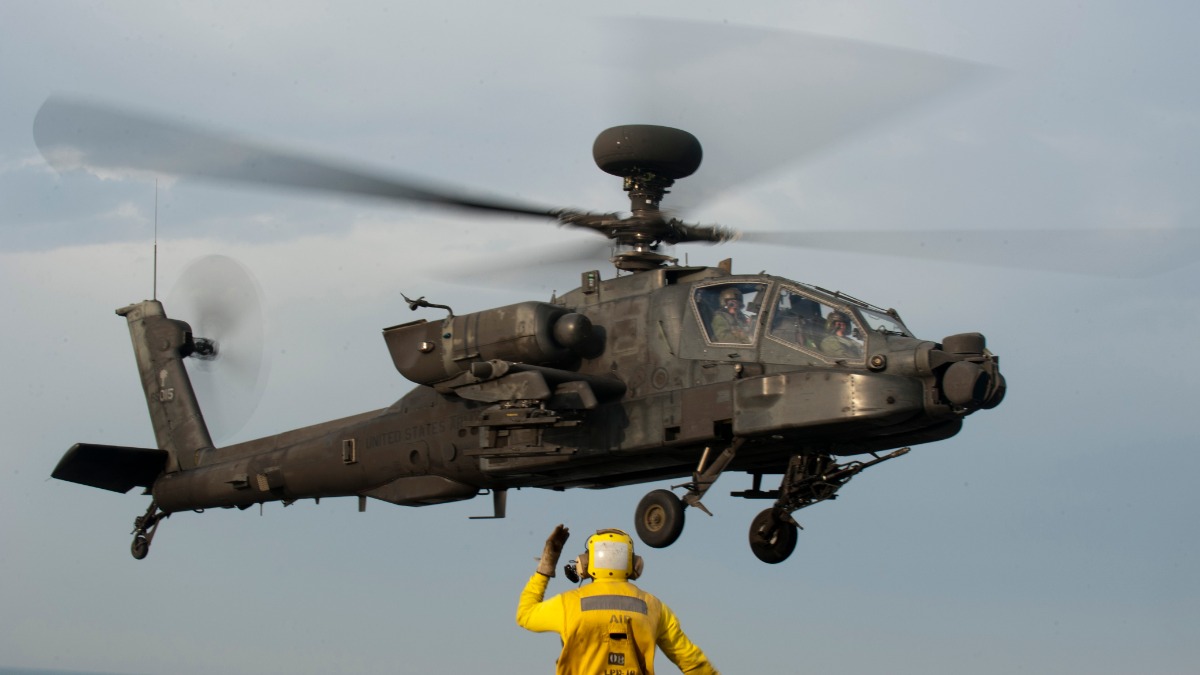
According to the BBC, the U.S. military confirmed it carried out strikes on Iranian military sites near the Strait of Hormuz early on Tuesday, June 9, 2026, targeting air defense systems, ground control stations, and radar sites. The operation was framed as a “proportional response” after an American Apache helicopter was downed earlier in the day.
Two crew members were rescued by a sea drone, marking the first public confirmation that the U.S. used this type of vessel in a real-world operation. Iran, however, hasn’t claimed responsibility for the helicopter incident, and U.S. officials haven’t clarified whether the drone attack was intentional or accidental.
Iran’s Islamic Revolutionary Guard Corps didn’t waste time retaliating
Within hours, the IRGC launched strikes on U.S. bases in Bahrain, Kuwait, and Jordan, hitting 21 targets in total. The IRGC claimed to have destroyed four sites, including an F-35 fighter jet hangar in Jordan, though the U.S. hasn’t confirmed any damage yet. Kuwait’s military reported intercepting “hostile aerial targets,” while Bahrain issued an air raid alert after Iranian attacks were repelled.
Jordan’s military said it shot down five Iranian missiles headed for the Azraq airbase, with no reported injuries or damage. The rapid exchange of strikes is raising tensions in an already volatile region. Iran’s foreign minister, Abbas Araghchi, took to X to warn the U.S. that “we will leave no attack or threat unanswered.” He also suggested that foreign forces near Iran’s borders are at constant risk, whether from human error, accidents, or crossfire.
Despite its defeats on the battlefield, the U.S. opted to test our determination.
— Seyed Abbas Araghchi (@araghchi) June 9, 2026
Our Powerful Armed Forces will leave no attack or threat unanswered.
Leave our region if you want to be safe.
History of the Persian Gulf has many chapters on dire fates of intruding outsiders. pic.twitter.com/O17GGtklxA
His message was clear: if the U.S. wants safety, it should leave the region. Meanwhile, Iran’s top negotiator in peace talks with Washington, Mohammad Baqer Qalibaf, posted a cryptic but pointed message. “We prefer the language of diplomacy, but we speak other languages far more fluently,” he wrote. “Break your commitments, and we’ll switch to what we speak best.”
We prefer the language of diplomacy, but we speak other languages far more fluently. Break your commitments, and we'll switch to what we speak best.
— محمدباقر قالیباف | MB Ghalibaf (@mb_ghalibaf) June 9, 2026
You ride the horse you saddled!
Trump’s response to the chaos has been a mix of optimism and threats. On Truth Social, he confirmed the two helicopter pilots were safe but insisted the U.S. “must, of necessity, respond” to the attack. He also claimed the U.S. is in the “final throes” of a peace deal that could wrap up in “two or three days,” with the Strait of Hormuz reopening immediately after.
But his tone shifted when addressing Israel and Iran, warning both countries to “immediately stop ‘shooting'” because they’re jeopardizing negotiations. “Peace is subject to ignorance or stupidity getting in its way,” he added, leaving little doubt about how he views the current escalation.
????? A zoomed in version of the footage appears to confirm it, the moment of impact on the U.S. Fifth Fleet base in Bahrain, caught on camera.
— Mario Nawfal (@MarioNawfal) June 10, 2026
Absolutely wild.
Iran promised a definitive response and this would be it, delivered to the most symbolic military address in the… https://t.co/KirMHeCuaq pic.twitter.com/4U5E4FLl6k
The timing of these strikes is particularly messy
It follows a recent flare-up between Israel and Iran. Just days ago, the two countries exchanged fire in their most serious escalation since an April ceasefire. Trump had publicly urged both sides to stand down, but the latest clashes suggest his calls for restraint aren’t being heeded.
Israel’s ongoing campaign in Lebanon against Hezbollah, an Iranian-backed group, is complicating peace efforts even further. Analysts say the back-and-forth strikes are eroding trust between Washington and Tehran, making a deal harder to reach.
Is self defence when you commit acts genocide and commit war crimes destroying people's water supplies not once but twice in one attack? All this for a helicopter Trump said didn't bother him.
— joekoethesword (@jckthesword) June 10, 2026
One expert, Trita Parsi of the Quincy Institute for Responsible Statecraft, noted that Iran’s swift and harsh retaliation signals a shift in its military doctrine. “They believe they have to respond proportionately, but very harshly and swiftly, against any American attack,” he said, according to Al Jazeera.
The goal, according to Parsi, is to prevent the US from establishing a “new normal” where it can strike Iran with impunity. But he also warned that each round of attacks chips away at confidence in diplomacy. “Their trust in the ability of reaching a deal is starting to diminish,” he added.
The economic fallout has been significant
Since the war began with U.S. and Israeli strikes on Iran in late February, global fuel and food prices have surged. The Strait of Hormuz, a critical shipping channel, has been effectively closed for days at a time, disrupting trade routes. If the current escalation continues, those disruptions can worsen.
Analysts say neither side wants a full-scale war, but the risk of miscalculation is high. As one reporter in Tehran put it, “Both sides would like to go back to negotiations, even though the Iranians say they don’t trust any American initiative with regards to peace.”
Hormuz carries 20% of global oil. Every escalation there reprices energy, rates, and risk assets simultaneously. The playbook is always the same — the outcome never is.
— Mind Math Money (@MindMathMoney) June 10, 2026
So where does this leave the region? Trump’s claim that a deal is imminent might be overly optimistic, given the latest strikes. The U.S. and Iran are locked in a cycle of retaliation, with each side framing its actions as defensive. Iran’s warning that foreign forces should leave the region if they want safety isn’t just rhetoric but a direct challenge to U.S. military presence in the Gulf.
The U.S. has made it clear it won’t tolerate attacks on its forces, while Iran has vowed to respond to any aggression. With negotiations hanging by a thread, the next few days could determine whether this conflict escalates further or cools down. For now, the Strait of Hormuz remains a flashpoint, and the global economy is holding its breath.
(Featured image: U.S. Navy photo by Mass Communication Specialist 2nd Class Dominique Pineiro)