WASHINGTON _Special counsel Robert S. Mueller III explicitly did not exonerate President Donald Trump of allegations that he tried to obstruct the Russia investigation, and found that his 2016 campaign "expected it would benefit" from the Russian effort to influence the election.
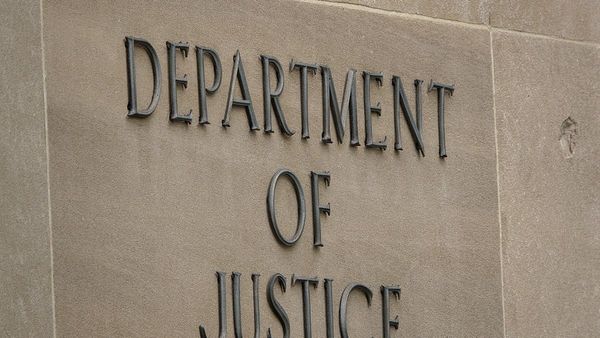
"If we had confidence after a thorough investigation of the facts that the President clearly did not commit obstruction of justice, we would so state," Mueller wrote in his report, which the Justice Department released in redacted form on Thursday.
"Based on the facts and the applicable legal standards, we are unable to reach that judgment," the report said.
Mueller did not conclude that the president committed a crime. Instead, in its 448 pages of legal analysis and supporting evidence, his report detailed "multiple acts by the President that were capable of exerting undue influence over law enforcement investigations, including the Russian-interference and obstruction investigations."
"The incidents were often carried out through one-on-one meetings in which the President sought to use his official power outside of usual channels."
"The President's efforts to influence the investigation were mostly unsuccessful, but that is largely because the persons who surrounded the President declined to carry out orders or accede to his requests," the report said.
The two-year investigation did not find evidence that Trump or his associates cooperated with Russian efforts to influence the 2016 election. It did, however, find that campaign officials wanted to capitalize on Russia's efforts to hack into and release Democratic Party emails.
"The campaign expected it would benefit electorally from information stolen and released through Russian efforts," the report said.
The report describes Trump's initial reaction to learning Mueller had been appointed on May 17, 2017, to investigate the potential links between his campaign and the Russians.
Trump was meeting that day with Attorney General Jeff Sessions, the attorney general's chief of staff and then-White House counsel Don McGahn. Sessions stepped out of the room to take a call from Deputy Attorney General Rod Rosenstein and returned to inform Trump that his deputy had tapped Mueller to launch the Russia probe.
Trump reacted with fury. "Oh, my God," he said, according to notes taken by Sessions' chief of staff. "This is terrible. This is the end of my presidency," he said. "I'm fucked."
"How could you let this happen, Jeff?" Trump demanded of Sessions, telling the attorney general that he had let him down and that he was supposed to have protected him.
"Everyone tells me if you get one of these independent counsels it ruins your presidency," Trump continued. "It takes years and years and I won't be able to do anything. This is the worst thing that ever happened to me."
The report's language about Trump's actions contrasted sharply with the more favorable gloss that Attorney General William P. Barr attempted to put on it a few hours earlier.
In a news conference before releasing the report, Barr repeatedly emphasized that the report found "no collusion" between any Americans and the Russian government during the 2016 campaign.
Barr did confirm that Russia sought to interfere with the 2016 election. His confirmation _ and the detailed account in the report _ contrasts with Trump's repeated statements that have questioned whether Russia was involved.
Last July, at his joint news conference with Russian President Vladimir Putin in Helsinki, Finland, Trump said he accepted Russian denials of any effort to influence the election.
"I have President Putin, he just said it's not Russia. I will say this: I don't see any reason why it would be," Trump said then.
But Barr's emphasis on "no collusion" will likely fuel criticism from Democrats that he has tried to shield the president. Barr also said he shared a redacted version of the report with the White House and Trump's personal legal team.
"The bottom line," Barr said, is that "after nearly two years of investigation, thousands of subpoenas, hundreds of warrants and witness interviews, the special counsel confirmed that the Russian government sponsored efforts to illegally interfere with the 2016 president election, but it did not find that the Trump campaign or other Americans colluded in those efforts."
The special counsel's office closely scrutinized contacts between Trump associates and Russians which contradicted repeated denials from the president that he had "nothing to do with Russia."
The contacts included efforts to build a Trump Tower in Moscow, a topic that the president's former lawyer, Michael Cohen, admitted to lying to Congress about.
However, the investigation did not establish that the contacts involved a conspiracy regarding the election. In fact, according to Cohen, Trump seemed to view the campaign as a boost for his business, instead of his business as a boost for his campaign.
Cohen told prosecutors that Trump viewed his White House bid as an "infomercial" for his properties.
The report details an extensive timeline of Trump's activities that sought to limit the investigation, beginning shortly after his election. He expressed concerns to his advisers that reports of "Russia's election interference may lead the public to question the legitimacy of his election," the report said.
Trump sought to influence the FBI's investigation of his former national security adviser, Michael Flynn, by asking then-FBI Director James B. Comey to consider "letting Flynn go," the report said, siding with Comey's account of a meeting that Trump has previously has denied.
On a weekend in June 2017, Trump called McGahn at home and directed him to tell Rosenstein that Mueller must be removed because he had conflicts of interest.
McGahn did not follow through on the order. He worried it would spark a potential "Saturday Night Massacre," reminiscent of the resignations of top Justice Department officials who refused to carry out President Richard Nixon's orders to fire a special counsel investigating Watergate. McGahn decided he would resign rather than follow through with such an order, the report said.
In 2018, when news reports recounted the episode, Trump pressured McGahn to deny the allegations. McGahn refused.
The president also asked a former campaign manager, Cory Lewandowski, to carry a message to Sessions that urged the attorney general to publicly announce that the Russia investigation was "very unfair" to Trump.
The president also met privately with Sessions in the Oval Office in October 2017 and suggested, according to notes taken by a senior adviser, that Sessions would be a "hero" if he withdrew his recusal from overseeing the investigation.
"I'm not going to do anything or direct you to do anything. I just want to be treated fairly," Trump told Sessions.
One factor in deciding whether the president obstructed justice, however, was that Mueller and his team did not establish that "the President was involved in an underlying crime related to Russian election interference," the report noted.
Mueller also pointed to several unique circumstances surrounding the investigation of Trump: He was president and in charge of the executive branch, and he conducted many of his acts in public.
"The evidence does point to a range of other possible personal motives animating the President's conduct," the report said.
"These include concerns that continued investigation would call into question the legitimacy of his election and potential uncertainty about whether certain events _ such as advance notice of WikiLeaks' release of hacked information or about the June 9, 2016, meeting between senior campaign officials and Russians _ could be seen as criminal activity by the President, his campaign, or his family."
In his news conference, Barr noted that Mueller did not reach a final "prosecutorial judgment" on whether any of Trump's actions amounted to illegal obstruction of justice. Barr repeated his own conclusion that they did not, saying that Trump had "noncorrupt motives" for opposing the investigation.
Prosecution of a charge of obstruction of justice generally requires proof that the defendant acted out of a corrupt intent. In Trump's case, "there is substantial evidence to show that the president was frustrated and angered by a sincere belief that the investigation was undermining his presidency," Barr said.
"As he said from the beginning," the attorney general added, "there was, in fact, no collusion."
House Democrats have feared Barr is trying to put his own spin on the investigation before the report is public.
"The attorney general appears to be waging a media campaign on behalf of President Trump," New York Democratic Rep. Jerrold Nadler, chairman of the House Judiciary Committee, said at a news conference Wednesday evening.
As Barr spoke Thursday, Nadler released a formal letter asking Mueller to testify.
"It is clear Congress and the American people must hear from special counsel Robert Mueller in person to better understand his findings," Nadler wrote on Twitter.
Barr said he has "no objection" to Mueller testifying.
The Mueller investigation has already spawned a series of legal and political threats that will continue to shadow Trump. Other federal investigations remain underway in several jurisdictions _ most notably New York _ and House Democrats have launched inquiries into Trump's finances, business dealings, relationships with foreign banks and other concerns.
Republicans are pushing the Justice Department to investigate alleged abuses in the early stages of the Russia investigation. Trump's legal team is also preparing to release its own counter-report on the Russia inquiry.
In the weeks since March 22, when Mueller filed the report, lawyers from the Justice Department and the special counsel's office have trimmed details involving secret grand jury evidence, classified intelligence, ongoing investigations and "peripheral third parties." Barr said the president did not assert executive privilege to keep any information under wraps.
The report, even in redacted form, provides a much wider window into the investigation than the four-page letter Barr gave to Congress on March 24.
Barr's letter said Mueller did not establish the existence of a criminal conspiracy between Trump's campaign and the Russian government.
The Russia investigation started as a counterintelligence probe in mid-2016, and it eventually examined Moscow's broader efforts to use social media, hack emails and influence American voters to depress support for Hillary Clinton, Trump's Democratic opponent for president.
It also looked into whether any of Trump's campaign aides directly coordinated with the Russian operation. The Foreign Intelligence Surveillance Court, which operates in secret, repeatedly authorized surveillance against a former campaign aide, starting before the election.
The probe led to criminal charges against 34 people, including some of Trump's closest associates.
Flynn admitted lying to federal agents about his conversations with the Russian ambassador during the presidential transition. Trump's former campaign chairman, Paul Manafort, was sentenced to 7 { years in prison for tax evasion, bank fraud and conspiracy charges related to his work as a political consultant in Ukraine.
Cohen pleaded guilty to lying to Congress about negotiations for a Trump Tower in Moscow. He was also ensnared in a parallel investigation into election-year payments of hush money to two women who said they had slept with Trump.
The majority of people charged by Mueller were Russian nationals who are unlikely to ever see the inside of a U.S. court.
They include a dozen military intelligence officers who allegedly hacked Democratic Party computers and released tens of thousands of emails through WikiLeaks during key moments in the campaign.
Also indicted was Yevgeny Prigozhin, an oligarch who has close ties to Russian President Vladimir Putin and allegedly funds the Internet Research Agency in St. Petersburg. A dozen employees of the organization were accused of spreading divisive and false content on social media.