Donald Trump has staged a sudden climbdown from his attempts to impose federal troops in law enforcement roles on Democratic-run cities, announcing on Wednesday that he was ending attempted deployments from Los Angeles, Chicago and Portland.
The unexpected shift came after justice department lawyers said they were no longer contesting a California court’s ruling that returned the national guard troops to the authority of Gavin Newsom, the state’s governor. It also followed a rare rebuke from the US supreme court, which blocked the White House’s efforts to deploy national guards in Illinois.
Trump attempted to paint the decision as temporary in a post on his Truth Social platform, vowing to redeploy at a later date and insisting the initiative had been a success.
“We are removing the National Guard from Chicago, Los Angeles, and Portland, despite the fact that CRIME has been greatly reduced by having these great Patriots in those cities, and ONLY by that fact,” he wrote.
“Portland, Los Angeles, and Chicago were GONE if it weren’t for the Federal Government stepping in. We will come back, perhaps in a much different and stronger form, when crime begins to soar again – Only a question of time!”
Yet there seemed little doubt that the latest move amounted to a retreat. Earlier on Wednesday, Newsom had hailed the justice department’s decision, announced in a filing with the ninth circuit court of appeals, backing away from its argument that Trump had a right to put state national guard troops under his authority indefinitely.
“This admission by Trump and his occult cabinet members means this illegal intimidation tactic will finally come to an end,” wrote Newsom, who vocally and vigorously opposed the deployments on the streets of Los Angeles.
In a statement on Wednesday evening, Newsom said he had directed California national guard leaders to “return state service members home to be with their families as soon as possible”.
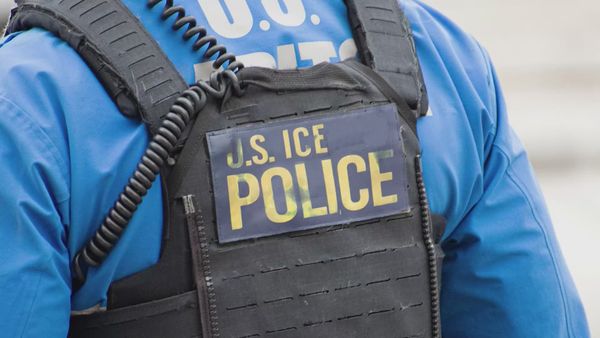
Trump initially ordered national guard members into the city last June in response to protests against raids conduced by Immigration and Customs Enforcement (ICE) agents. The deployment has been subject to a succession of legal challenges, with Newsom arguing that the situation did not justify the presence of federal forces and that Trump was exceeding his powers.
A lower court ruled earlier this month that Trump had seized control of the national guard members illegally and ordered them returned to state authority. The administration had originally contested that ruling.
Its change of tack amounted to the second setback in a week to Trump’s quest to federalize national guard units to quell displays of dissent against his highly contentious immigration policies, which he and other administration figures have depicted as violent riots.
Last week, the US supreme court delivered a rare rebuke by refusing to allow the administration to deploy national guards in Chicago – a move opposed by the city’s mayor, Brandon Johnson, and the governor of Illinois, JB Pritzker, who are both Democrats.
Trump’s announcement casts doubts on the future of national guard deployments in other Democratic-run cities, including Washington DC and New Orleans, where 350 troops were expected to arrive by New Year’s Eve.
Troops have been deployed in Washington DC since last August, purportedly to counteract a supposed “crime wave”. One national guard was killed and another seriously wounded after being shot by a gunman outside a metro station in the city on 26 November.
The incident led to an increase in the number guard members deployed in Washington, as well as an intensification of Trump’s anti-immigrant rhetoric after it emerged that the suspected assailant was an Afghan national who had been granted political asylum in the US. More than 2,000 troops have been deployed in Washington DC since August, with many being drafted in from at least 11 Republican-led states.
A federal appeals court ruled this month that the troops can remain while a panel of judges establish whether their deployment is legal. A lower court had earlier ordered that they be removed.