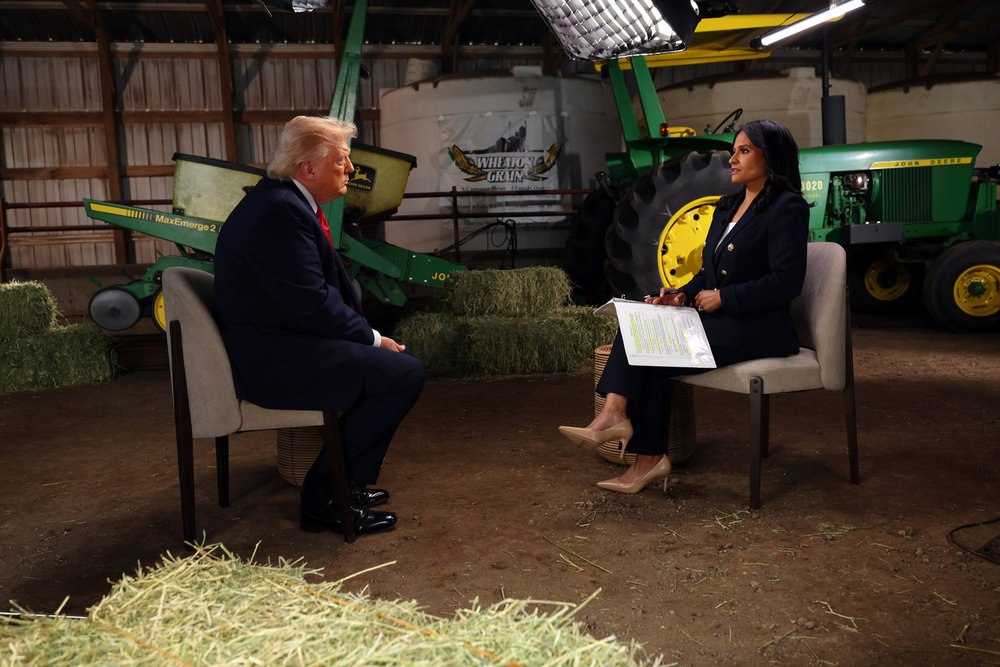
What began as a discussion of Iran, war and the economy ended with President Donald Trump accusing NBC’s Kristen Welker of being either “crooked” or “stupid” before abruptly ending a tense interview that had steadily deteriorated over the course of the exchange.
The interview, which aired Sunday on NBC’s “Meet the Press,” featured repeated clashes between Trump and Welker over election claims, the January 6 attack, a proposed compensation fund for people he says were victims of government “weaponization,” and his administration’s recent actions abroad.
The confrontation did not erupt all at once. Instead, it built over several contentious segments as Welker repeatedly challenged Trump’s assertions and pressed him to provide evidence for claims involving election fraud, January 6 prosecutions and alleged misconduct by federal officials.
At multiple points, Welker pushed back on Trump’s statements, telling the president there was “no evidence” to support some of the allegations he was making. Trump responded by dismissing the moderator’s objections, attacking the network and broadening his criticism to what he described as a dishonest national press corps.
The exchange grew particularly heated during a discussion about election integrity and a proposed “anti-weaponization” compensation fund. When Welker challenged Trump’s claims that elections in places such as California were being “rigged,” Trump responded by attacking both NBC and the moderator herself.
“You’re either crooked or you’re stupid,” Trump told Welker during one of the interview’s most combative moments.
As the argument continued, Trump accused NBC of being a “crooked” and “one-sided” network, insisted that journalists were ignoring evidence that supported his claims and argued that the media was contributing to the country’s problems.
“You want to straighten out your press,” Trump said before bringing the conversation to an end.
The tense interview adds to a long history of confrontations between Trump and television journalists, particularly in settings where interviewers challenge his claims in real time. Salon and other outlets have previously documented Trump’s combative exchanges with reporters and moderators, including incidents in which he has resorted to personal insults when pressed on disputed statements.
The interview also highlighted a growing tension between Trump’s preferred method of communication — direct messaging through rallies, social media and Truth Social — and traditional broadcast interviews that place political leaders in extended, unscripted exchanges with journalists.
NBC traveled to Wisconsin for the interview, which also faced interruptions caused by rain and technical issues. But despite those delays, the conversation continued for an extended period before ultimately breaking down amid escalating accusations, personal attacks and disputes over basic facts.
By the end, the headline was not Iran, the economy or Trump’s proposed compensation fund. It was the interview itself.