
The last time Oklahoma executed a prisoner, Clayton Lockett in April 2014, the triple-cocktail procedure unraveled into scenes that even a skilled horror film-maker would be hard pressed to emulate. Blood squirted all over the doctor jabbing at the inmate’s groin in a desperate attempt to find a vein, Lockett writhed and groaned on the gurney as he took 43 minutes to die, eyewitnesses were traumatised long after the event.
On Thursday, after an almost one-year hiatus, Oklahoma will once again step into the death penalty business with its first post-Lockett execution. Charles Warner will be the first of four prisoners scheduled to die in the state in quick succession through early March.
The department of corrections has spent $106,000 updating the death chamber ahead of Thursday’s spectacle in an effort to assuage public concerns after what happened last year. The state insists new monitoring equipment and extra training for the executioners will avoid any repeat tragedy.
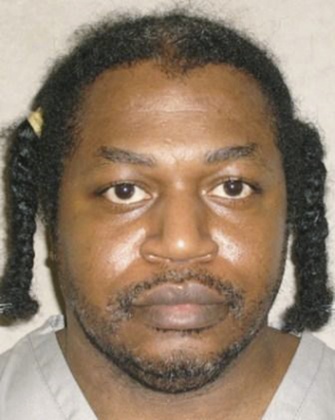
Despite having spared no expense, however, Oklahoma has opted to kill Warner with exactly the same drugs as it used with such spectacularly gruesome results on Lockett nine months ago. The prisoner, who was convicted in 2003 of raping and murdering his roommate’s 11-month-old baby, will be injected with three drugs in order – the sedative midazolam, the paralytic vecuronium bromide and potassium chloride to stop his heart.
Medical experts and lawyers specialising in the death penalty have expressed to the Guardian their astonishment that the state is sticking with a drugs protocol that is widely understood to be deeply problematic. The choice of lethal chemicals risks a prolonged execution for another death row inmate, which would be distressing for witnesses and the American people – and could inflict excruciating pain on Warner in violation of the US constitution.
Experts say they are suprised by Oklahoma’s decision to continue to use midazolam as the first of three drugs in the institution. Midazolam, which death penalty states started to deploy after other lethal drugs ran out in the wake of the European-led boycott of medical sales to US prison services, has been the common denominator in a spate of botched executions last year including in Ohio and Arizona.
David Waisel, associate professor of anaesthesia at Harvard medical school, explained that midazolam is a benzodiazepine, and unlike barbiturates that have traditionally been used in executions, do not put the individual into a deep state of unconsciousness. “It doesn’t cause anesthesia, and it has no pain-relieving qualities which could be critical when you administer potassium that burns intensely: at that point the prisoner could still be sensate.”
Lawyers acting for Warner petitioned the US supreme court on Wednesday calling for a stay of execution arguing that the use of a drug that could not be relied upon to sustain a coma-like unconsciousness was unconstitutional.
Megan McCracken, a lawyer with the Death Penalty Clinic at UC Berkeley school of law, said it was “very surprising” that Oklahoma had returned to midazolam. She said that given Ohio’s recent decision to abandon midazolam, Oklahoma’s position was “very concerning and frankly hard to understand”.
Both the other two drugs that Oklahoma is preparing to inject into Warner are also potentially problematic. Vecuronium bromide is a muscle relaxant that effectively paralyses the inmate, thus rendering the inmate incapable of speech or any other movement.
That has raised fears that if the execution goes wrong, as it has on numerous occasions in death penalty states within the past year, the prisoner will be unable to express any pain or distress. “When a paralytic is used, none of the signs of struggle are visible – they all become hidden from sight,” McCracken said.
The third drug in the cocktail, potassium chloride, is arguably the most egregious element of Oklahoma’s protocol on Thursday. It is used to cause cardiac arrest, but if the inmate is still conscious when it is administered, its impact, as McCracken put it, is like “a blow torch rushing through the veins”.
Most death penalty states have over the past few years moved away from the conventional triple-cocktail of lethal drugs precisely because of fears that prisoners could be subjected to unthinkable pain having been put into a paralytic state which prevents them from showing distress and makes them look serene. Oklahoma’s decision to continue the combination of paralytic and potassium has baffled experts who describe it as barbaric.
Writing for the Guardian, the Columbia University anaesthesiologist and lethal injection expert Mark Heath writes: “Whatever drug Oklahoma and other states decide to use to kill prisoners, they should abandon the barbaric use of paralyzing drugs entirely. If the state claims that midazolam will produce a smooth, peaceful, humane death, then they should be willing to allow witnesses and the courts to observe the process without the opacity of paralysis. If states can’t be confident that midazolam will produce a smooth and rapid death – and they shouldn’t be, given the experience so far – they shouldn’t be using it at all.”
Midazolam’s ongoing use has alarmed experts because it is relatively untested in execution settings – and most occasions where it has been used have not ended well. “You have to ask: how do we learn things in medicine?” Waisel said. “We do so either by repeating procedures many times, or by studying the effect of drugs. In this case we have done neither of those things. We don’t know what’s going on here – it truly is experimentation.”