- To access all of your local news, visit newcastleherald.com.au directly. Our home page is updated with the latest headlines from across the region and the nation.
- You can even stay up to date by clicking here and signing up for free to our newsletters.
- If you value local journalism, support us by subscribing here
- To download the Newcastle Herald app, click here
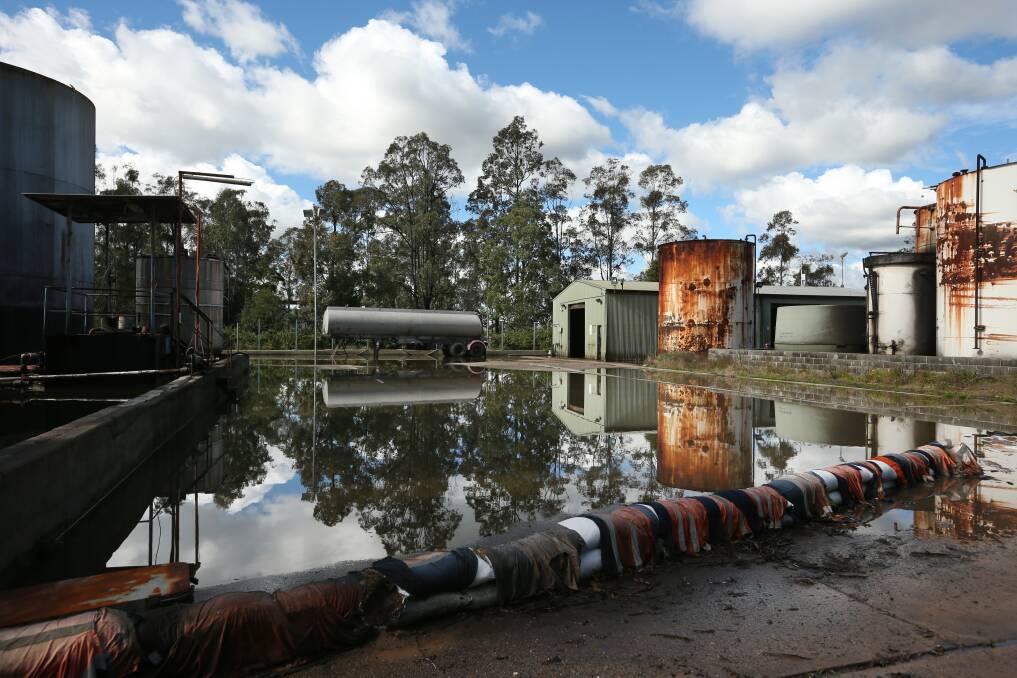
THE Hunter Region has a long history as an industrial powerhouse, but a history, unfortunately, with a consequential legacy of industrial contamination.
In many cases, the environmental damage created by our various industries - the steelworks, the Boolaroo smelter and the Hamilton North gasworks, in particular - began at a time when such pollution was seen as an unfortunate but acceptable cost of national progress.
The same cannot be said for the multi-chemical mess created on the Rutherford floodplain by Truegain.
This is a business that began in the modern era.
It is not legacy contamination.
It has been left by a company established specifically to deal with toxic waste, and to do so under the supervision of the NSW government and its dedicated environmental agency, the Environment Protection Authority.
Investigation:The Newcastle Herald's Truegain file
It was September 2016 when owner Robert Pullinger called in the liquidators to Truegain and another business on the site - Australian Waste Oil Refineries.
At the time, the Newcastle Herald reported that the EPA had issued 18 penalty notices in 15 years, and had won two prosecutions in the NSW Land and Environment Court.
By that stage, Hunter Water had already cancelled Truegain's discharge licences, believing that PFAS-type chemicals detected in its wastewater systems had come from the site.
Alarm bells, then, should have been ringing at well above the departmental level.
Toxic Truth: The Newcastle Herald's PFAS files
More than four years have elapsed since Truegain went into liquidation, and the site is still a contamination time bomb, as our reporting over time - led by Donna Page and Nick Bielby - has made clear.
It is true that the EPA has commissioned some investigations, but as we report today, the full extent of the damage to the environment, and to public health, remains unknown.
The Herald would like to believe the EPA has learned from its mistakes during the Orica hexavalent chromium controversy of 2011, when the authority was found sorely wanting despite the assurances it gave to the public.
If the NSW government is fair dinkum about Rutherford, it will reassure the public that the site will be quickly but thoroughly remediated, and not just in a "fill and cap" exercise.
It was done at Orica Botany Bay, and at Homebush Bay before the Olympics.
So it can be done at Rutherford.
ISSUE: 39,546