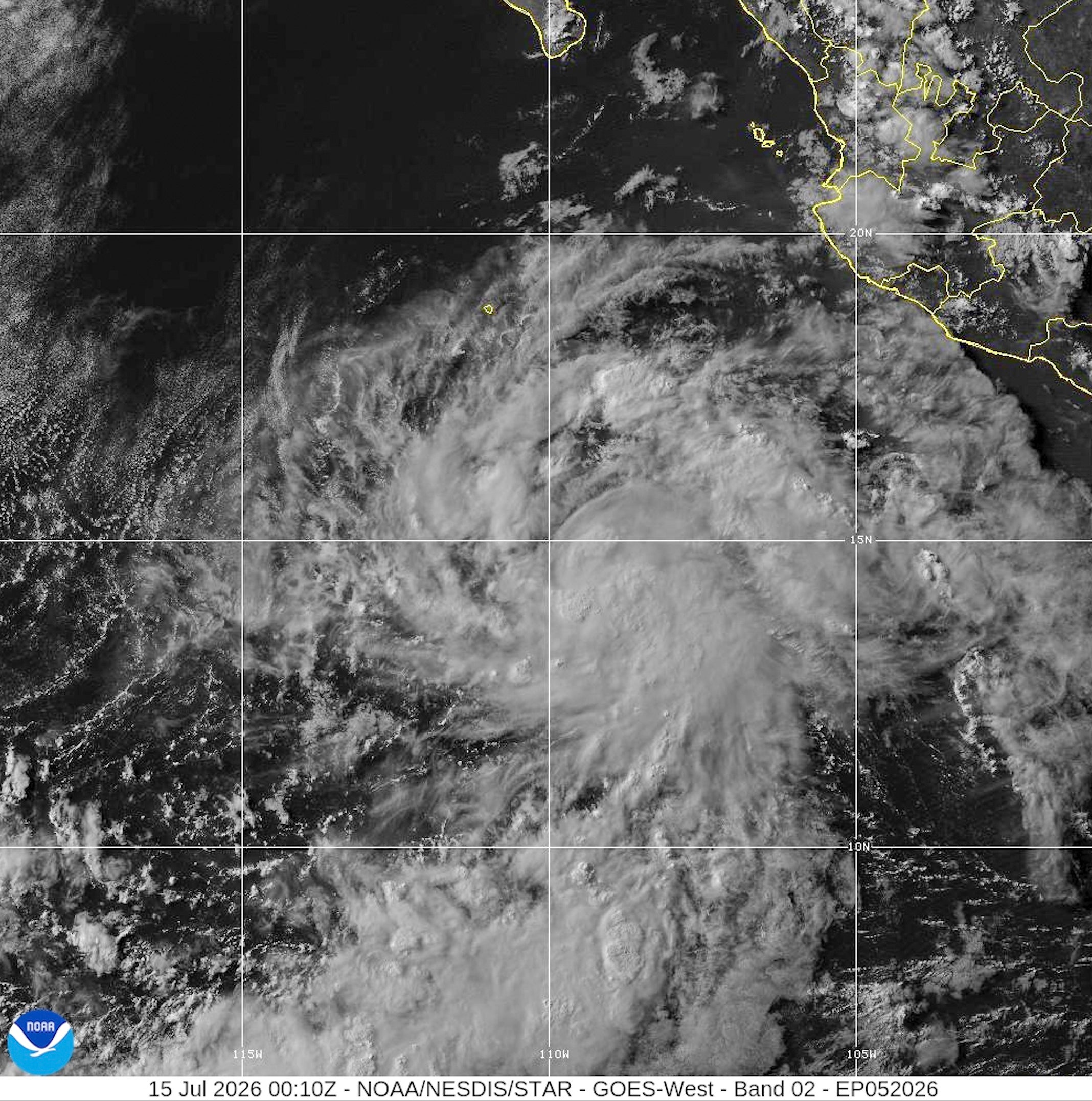
Tropical Storm Elida has formed in the Pacific Ocean, with forecasters confirming it currently poses no threat to land.
The National Hurricane Center (NHC) in Miami reported Wednesday that the storm's center was situated approximately 565 miles (909 kilometers) south-southwest of Mexico's Baja California peninsula.
Elida is currently generating maximum sustained winds of around 40 mph (64 kph).
Steady intensification is anticipated, with the NHC predicting Elida will reach hurricane strength by Thursday night and achieve its peak intensity on Friday.
No coastal watches or warnings are presently in effect.
The Atlantic hurricane season is forecast to be calmer than normal this year, while the eastern Pacific is bracing for a more active season, according to the National Oceanic and Atmospheric Administration.
This is attributed to El Niño, a seasonal climate pattern that typically suppresses Atlantic hurricane development while boosting activity in the Pacific.
An especially potent "super" El Niño is driving a 70 percent chance of above-normal activity in the eastern Pacific, threatening Hawaii and potentially the West Coast.
This natural warming of the equatorial Pacific, which significantly alters global weather patterns, has an 81% chance of reaching "very strong" status – the highest category – by fall, potentially ranking among the most intense El Niños since tracking began in 1950.
The most significant impacts, ranging from severe droughts to heavy downpours and intense heat waves, are anticipated to be felt primarily during the fall and winter months, meteorologists predict.
This El Niño, which only formed last month, has already progressed past the weak stage to moderate, showing no signs of slowing its strengthening trajectory, according to government forecasts.
Ocean temperatures in critical Pacific regions, indicators of El Niño's intensity, are at or near record highs for this time of year, partly amplified by human-caused climate change.
"It's pretty extreme," stated Emily Becker, a University of Miami scientist collaborating with the NOAA El Niño forecast team. "Not unprecedented, but very unusual."
Becker suggests this event could rival the 1997-1998 El Niño, an event the World Bank linked to 23,000 deaths from weather disasters, increased poverty in some nations, and government costs up to $45 billion.