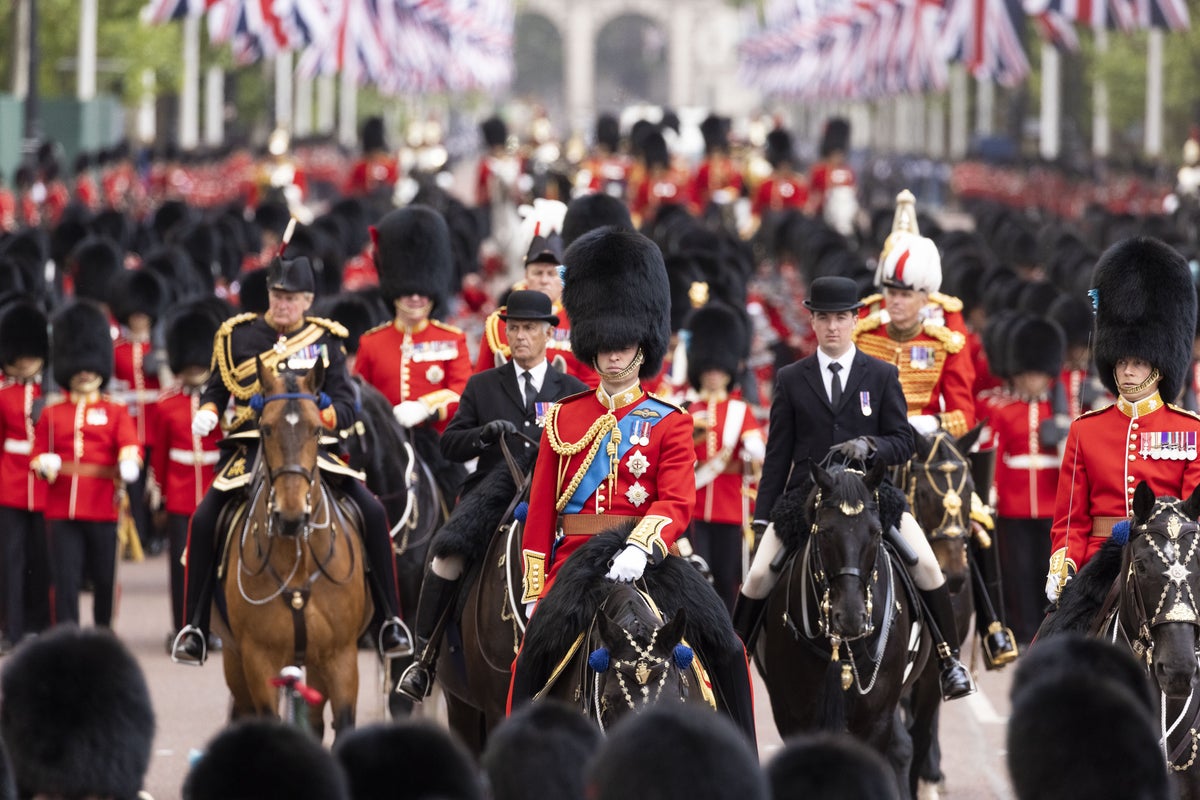
Trooping the Colour is a spectacle popular with tourists and a social event for military families, but it is a ceremony steeped in the practical necessities of warfare.
On Horse Guards Parade, the site where King Henry VIII once jousted, the colour or regimental flag of the 1st Battalion Irish Guards will be paraded in front of thousands.
The soldiers on parade are servicemen trained to fight but they have spent months perfecting their ceremonial duties which will be on display for all to see, especially the Queen, who is head of the armed forces.

The ceremony dates back to the days when knowing where your comrades were in the confusion of the battlefield was paramount, and the flags of leaders were a rallying point for their troops.
Each fighting group had its own distinguishing flag and from the 1,700 company colours were gradually replaced by battalion colours, but they maintained their role as a marker in the noise and smoke of conflict.
The flag was carried past the ranks of soldiers at the end of the day, so they would be reminded of their unit’s colour, and escorted to a lodging serving as the headquarters for the night, and in the morning it was carried with reverence to its place in the ranks.
A great importance was placed on the colours which came to represent the spirit of the regiment especially when they were battle scared, with rips or holes after an encounter with the enemy.

Originally, the parade was known as “Lodging the Colours” but it differs very little from the modern Trooping ceremony, and in 1805 the custom of Trooping the Colour to honour the sovereign’s birthday was first adopted but lapsed soon afterwards.
The ceremony was revived during the reign of King George IV and has continued since then.
The Queen celebrates her birthday twice a year – on April 21, her actual birthday, and during the summer with the Trooping the Colour ceremony also known as the Birthday Parade.
The decision to give the monarch two birthdays dates back to Edward VII who was born on November 9 but celebrated the anniversary in May and June as the weather was better during these months for outdoor events.
Subsequent monarchs had birthdays at more convenient times of the year, but the Queen’s father, King George VI, reintroduced the tradition which she has continued.