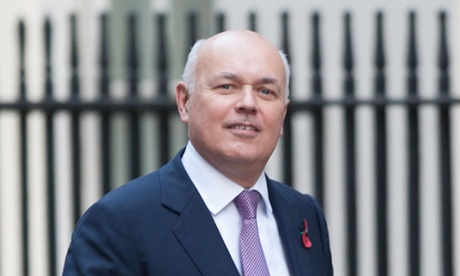
Afternoon summary
- Labour has accused Iain Duncan Smith, the work and pensions secretary, of yet again postponing his target date for the full roll-out of universal credit. In the Commons Rachel Reeves, the shadow work and pensions secretary, pointed out that that Duncan Smith told a committee last month that it would be fully rolled out by the end of 2018. But, at the bottom of a news release issued today, the Department for Work and Pensions says only that the “bulk” of the roll-out will be completed by 2019. Reeves said:
[This] just confirms that universal credit is rolling out at a glacial pace. It’s just another example of Tory welfare waste.
The Labour MP Glenda Jackson was even more critical. She said:
Does the secretary of state actually have as a principle that promises, like pie crusts, are made to be broken? Because every promise he has made at that despatch box with regard to the cost of implementing and rolling out universal credit has been broken. So is today’s semi-statement merely more porkie pies in the sky?
Duncan Smith defended his approach, saying that he deliberately wanted to roll the programme out carefully to allow time for mistakes to be ironed out.
-
Jeremy Hunt, the health secretary, has told MPs that he is one of those people who have visited A&E rather than wait for an appointment with a GP. Speaking in the Commons at health questions he agreed with a Tory MP who said patients wanted more flexibility. He went on:
I’ve taken my own children to an A&E department at the weekend precisely because I didn’t want to wait until later on to take them to see a GP and I think we have to recognise that society is changing and people don’t always know whether the care that they need is urgent or whether it is an emergency, and making GPs available at weekends will relieve a lot of pressure in A&E departments.
- Stephen Dorrell, the Conservative former health secretary and former chair of the Commons health committee, has announced that he is standing down at the election to take up a job as a health consultant with KPMG. (See 2.05pm.)
That’s all from me for today.
Thanks for the comments.
UPDATE: It’s worth pointing out that Glenda Jackson’s line about promises and pie crusts came from Mary Poppins. And perhaps Christina Rossetti too.
Updated
Here is some more reaction to Tristram Hunt’s speech.
From Brian Lightman, general secretary of the Association of School and College Leaders
My concern would be that effective partnership needs to be based on mutual trust and I don’t think you can coerce people into partnership. There are great benefits to partnerships and we would like to see more developing and to build on the very good practice that’s going on some areas. But we would have concerns about forcing it.
The business rate will certainly be a big driver of practice but what we would prefer to see would be independent schools and state schools working together to find the best ways of working together.
From Clare Collins, chair of the National Governors’ Association
I was really pleased to hear [Hunt] state that the independent sector can learn a lot from the state sector because that hasn’t come over anywhere and actually the state sector adds an awful lot of value in a way that is not often recognised.
From Alice Phillips, president of the Girls’ Schools Association
I don’t think Tristram Hunt can have the full picture. Partnership work goes on in every charitable school in the country and any attempts to impose a narrow criteria on schools could very well jeopardise the excellent work that’s already in progress.
The danger is that implementing this policy idea will waste more taxpayers’ money setting up yet another quango to police what is already being done. It’s ridiculous.
As Tristram Hunt should know, because he went to one, independent schools come in all shapes and sizes and their contribution to the government’s coffers, and the amount they spend on bursaries, far outweighs any cost.
Philip Hollobone, a Conservative, asks what evidence there is that UC is changing job-search behaviour?
Duncan Smith says people are doing many more job searches, and are going into work more quickly. That confirms his belief that people want to work, he says.
And that’s it. The session is over.
I’ll post a summary soon.
Peter Bone, a Conservative, says it is rare to have a secretary of state with so much passion about his subject. And so much ability too. Labour want UC to come in earlier because it is such a good idea, he says.
And he says it is good to see two able backbenchers on the opposition benches. That seems to be a reference to the two Ukip MPs.
Duncan Smith says the opposition is in amnesia. It has forgotten that it crashed the economy.
UC will deliver a better income and better support to claimants, he says.
Duncan Smith says UC will bring fraud and error down.
Updated
Duncan Smith says, when he was in opposition, he used to support a programme if he thought it was really good.
Updated
Labour’s Yvonne Fovargue says UC is being piloted in her area. There are reports that more single people are using food banks because of problems get their payments.
Duncan Smith says the problems are being sorted out. Jobcentre staff can advance payments if necessary.
Duncan Smith says Reeves’ statement was “miserable”. Labour hate the idea that the government is doing this. If they talked to claimants, claimants would tell them this was the best thing that could happen, he says.
Labour’s Sheila Gilmore says 61% of current claimants are under 24. They are the simplest claimants, she says. When will Duncan Smith admit there are some “very serious” problems with implementation?
Duncan Smith says Gilmore should be in favour of the DWP trying to roll this out properly.
It will benefit everybody, particularly those on low incomes, she says.
Julian Lewis, a Conservative, asks how UC will affect migration.
Duncan Smiths says UC is a different kind of benefit. So people who are out of work who come to the UK will not be able to claim it. Money will not go to their families, he says.
Margaret Hodge, the Labour chair of the public accounts committee, suggests that Duncan Smith is playing a political trick in making a statement one day before a National Audit Office report comes out.
Duncan Smith says he is only making a statement because Labour tabled a UQ.
Duncan Smith says people are now coming into jobcentres asking to go on UC because they have heard, via word of mouth, that it is good.
Labour’s Glenda Jackson says Duncan Smith treats promises, like pie crusts, as something to be broken.
Duncan Smith says it makes sense to roll this out slowly. This test and learn approach will in future be copied when other programmes are introduced, he says.
Dame Anne Begg, the Labour chair of the Commons work and pensions committee, asks Duncan Smith to confirm that only the simplest cases are on UC at the moment. There have been 20,000 claims a year. But there are 250,000 jobseeker’s allowance claims every month. How will UC be able to handle this volume?
Duncan Smith says, when claimants find their circumstances change, they stay on UC. So it is not true to say it is only dealing with the simple cases.
Duncan Smith is replying to Reeves.
He says 40,000 people have claimed UC. Some 20,000 have made the claim and received it.
Some people started a claim, but then went to work. So they never completed it, he says.
He says the DWP is now rolling out the digital process.
He says he revealed the new dates in a parliamentary question recently.
The outline business case covers the lifetime of the project, he says.
He says Labour claims to be in favour of UC in principle. But it has voted against it, and criticised it on every occasion.

Updated
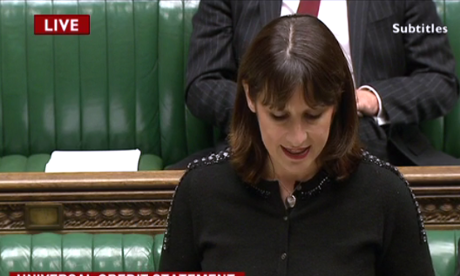
Rachel Reeves, the shadow work and pensions secretary, is responding to Duncan Smith.
UC is being rolled out at “a glacial pace”, she says. This represents Tory waste.
Labour supports it in principle. But the government is making a shambles of it, she says.
She says the government has not given details of how many families will start getting it.
Originally all job centres were going to start using it next spring.
But now it is just one in three, she says. And we don’t know when.
She says there was a new admission in the DWP press release this morning. Duncan Smith revealed that UC will not be completely rolled out until the end of the decade. It is right at the bottom of the release, she says.
Originally Duncan Smith said 1m people would be on it by 2014. Now it is just 1% of that.
She says Duncan Smith told the select committee recently that it would be rolled out by 2018. But now he is just saying that “the bulk” of it will be rolled out by then.
What does “the bulk” mean? Is this a new statistical term. What claimants will be left on it after 2018?
What are the administrative costs of this delay? Has the Treasury signed off the full business case?
Why did Duncan Smith tell the Today programme 40,000 people were on it, when the actual caseload is 17,850?
Will the extension of UC to families with children be on the new digital platform? Or will it be on the old system, which is inadequate?
Does Duncan Smith still think this is “on time and on budget?”
If Duncan Smith cannot give straight answers, people will think this is just adding to the legacy of Tory welfare waste?
Updated
Duncan Smith says 3m households are set to gain from UC.
The plans to deliver are on track, he says.
And the plans have been assured by the major projects authority.
He says he will deliver it under budget. It’s implementation cost has come down from £2.4bn to £1.8bn.
Iain Duncan Smith is making his statement now.
He says the government’s priority is the “safe and secure” delivery of universal credit (UC).
It is being extended to couples, he says. It is live in 81 job centres.
This careful expansion is the right approach. The department is avoiding the “big bang” problems of the past.
People on UC are spending twice as much time looking for work as before.
Updated
Iain Duncan Smith's statement on universal credit
Iain Duncan Smith, the work and pensions secretary, will be making a Commons statement soon about the latest universal credit roll-out.
He was not planning a statement. Labour tabled an urgent question, but this would have meant that David Cameron’s statement would have been delayed (UQs come before statements in the Commons) and so Duncan Smith offered a statement.
On the Today programme this morning he got quite tetchy when being asked by Mishal Husain about claims that universal credit was wasting money. He accused her of looking at the matter “in an utterly negative way”.
In a separate interview, he claimed that a forthcoming National Audit Office report would show universal credit was value for money.
I believe that any future [NAO] reports will show that not only does this produce value for money ... Right now it’s value for money; right now the programme, I believe, is value for money.
Updated
Stephen Dorrell, the Conservative former health secretary, and chair of the Commons health committee until this summer, has announced that he will stand down at the general election. After that he will take up a job as a health policy consultant with KPMG.
Tristram Hunt’s proposal has won the backing of Damian McBride, Gordon Brown’s former communications chief. McBride applauds “Hunty”, as he calls him, in a post on his blog.
I can’t see people buying the class war criticism over a proposition that seems so thoroughly reasonable, and yet Lib Dem and Green floaters will love it.
Lunchtime summary
- Tristram Hunt, the shadow education secretary, has said that private schools would have to compete with state schools at sport and debating or lose tax relief under Labour plans. As Patrick Wintour reports, in a Guardian article Hunt said he would withdraw £700m in business rates relief over the next parliament if private schools did not do more to improve the quality of education in state schools. He said private schools had been asked politely to cooperate with the state sector, with limited effect. (See 9.53am.)
- David Cameron has said that internet firms must do more to meet their “social responsibility” to act to prevent their networks being used for terrorism. In a Commons statement on the report into what the intelligence agencies could have done to prevent the murder of Fusilier Lee Rigby, he also announced that an extra £130m will be given to the agencies to “enhance our ability to monitor and disrupt these self-starting terrorists”. There is full coverage on our live blog.
-
Frances O’Grady, the TUC general secretary, has told a Commons committee that she has “grave concerns” about the proposed EU/US free trade deal, the transatlantic trade and investment partnership (TTIP). She told the MPs:
Around 80% of any benefits will come from the removal of non-tariff barriers, but there is growing concern about what might make up the remainder and whether it would be a levelling up or down of labour standards.
She also said that, if the TTIP led to the privatisation of health services, that would be “very difficult” to reverse. But Sean McGuire, Brussels director of the CBI, told the committee that the TTIP would lead to clothes such as jeans, as well as cars and other imported goods, becoming cheaper.
-
Mark Carney, the governor of the Bank of England, has told MPs that interest rates will rise more slowly than previously thought because of pressure from the global economy. As the Press Association reports, Carney said he expected that “the next move in policy is going to be an increase” but said that since the summer factors weighing on inflation including the international slowdown had changed the likely path of rates.
The combination of that means the cumulative tightening over the forecast period is likely to be less than previously thought.
And here’s a statement from the NASUWT teaching union on the Tristram Hunt proposals. Like the NUT (see 12.55am), it is broadly supportive without endorsing the specific details of the plan.
Mr Hunt’s speech highlights the fact that private schools already benefit from taxpayer subsidies and that they should have a role to play in contributing to meeting the needs of all children and young people ...
The public has a right to expect all political parties to be setting out clear expectations for all schools, including academies, free schools, voluntary aided or local authority maintained schools, to be working together effectively in the interests of all children and young people.
Whilst the independent sector retains a privileged tax and charity status it is incumbent upon schools in that sector to share their resources with other local schools.
Mark Beard, the head of University College School, the private school in north London where Tristram Hunt was educated, isn’t impressed by today’s speech from its Labour alumnus. “Isn’t it time for Labour to come up with some new, helpful initiatives rather than espousing what some might deem an offensive bigotry?” Beard told the Daily Telegraph.
You can read all today’s Guardian politics stories here. And all the politics stories filed yesterday, including some in today’s paper, are here.
As for the rest of the papers, here’s the PoliticsHome list of top 10 political must-reads, and here is the ConservativeHome round-up of all today’s political stories.
And here are two stories I found particularly interesting.
More voters believe that Ukip is most in touch with the views of the white working class than Labour is, according to a poll that will stoke fears over Ed Miliband’s ability to connect with his party’s traditional supporters.
The YouGov survey was conducted after Mr Miliband dismissed a frontbencher for a “disrespectful” tweet of a house draped in England flags with a white van parked outside. Asked which party was most in touch with the views of white working-class people, 21 per cent chose Labour and 27 per cent Ukip. The margin was even greater among white working-class people themselves, at 20 per cent and 29 per cent respectively.
However, the poll also dealt a blow to Conservative hopes of winning back support from Nigel Farage’s insurgent political force. The Tories hope to scare voters back into the fold with the warning, “Vote Nigel, Get Ed”. The survey found that only 22 per cent of Ukip voters believe that the party’s success would make it more likely that Mr Miliband will become prime minister.
[Farage] said that there was “no doubt it is men in battalions moving towards us” in areas where Ukip was not a known political force.
He said: “Women were being a bit more guarded, a bit more sensible.
“If you believe that men and women in life look at things differently, which I think probably is true - no doubt I will get hung for that - but women are a bit more cautious and tend to make fewer mistakes than men too.”
Updated
Mark Reckless, the new Ukip MP for Rochester and Strood, has just asked a question during health questions in the Commons. It was virtually impossible to hear it because he was being heckled so aggressively by Conservative MPs.
UPDATE: A colleague tells me Labour MPs were heckling too.
Updated
The Sutton Trust, a social mobility charity, has welcomed Tristram Hunt’s initiative, but called on all parties to go further. This is from Sir Peter Lampl, the trust’s chairman.
Our research has shown that by age 42 a privately educated student will earn nearly £200,000 more than one who is state educated, and that private school students are 55 times more likely to win an Oxbridge place than a pupil from a state school on free school meals.
Building and strengthening independent state school partnerships which we started with the government in 1999 can help break down these barriers and improve opportunities for pupils to access specialist teachers, good university links and first class sports facilities.
Whoever is elected in May should strengthen support for such partnerships and encourage sharing of best practice. It is important that the right infrastructure and evaluation is in place, as well as funding, if they are to work effectively.
However, we would like to see the parties embracing a much more radical step too and support a national Open Access scheme to enable 100 or more leading independent day schools to open their doors to all on the basis of ability rather than ability to pay.
Or, to be more precise, it focuses on what we don’t know. It accuses all three main parties of refusing to be open about the scale of public spending cuts, or tax rises, that will be needed.
This is from Matthew Whittaker, the Resolution Foundation’s chief economist.
Political parties have a point when they say that the uncertainty over the public finances makes it impossible to provide complete detail on their fiscal plans. But the gap between the scale of consolidation implicit in their plans and what the electorate has been told to date is just too large. The electorate shouldn’t be subjected to another largely empty fiscal debate like it was at the last election. Currently we are facing a candour deficit as well as a fiscal one.
This chart may (or may not) clarify things.

Here’s the Resolution Foundation’s press release. And here’s the full report (pdf).
In his speech Tristram Hunt compared the Independent Schools Council unfavourably with Fifa, in relation to its record on transparency. (See 11.10am.)
As the Telegraph reports, Barnaby Lenon, the ISC chairman, was equally complimentary about Hunt when they both appeared on the Today programme this morning. He accused Hunt of talking “patronising nonsense”.
I share with Dr Hunt his ambition to ensure that all pupils, whatever type of school they go to, can aspire to great things, but pointing the finger at independent schools is a 1980s view of education ...
Does Dr Hunt think that when Mr Chips from the independent schools drifts in to teach a bit of History at the local state school because his head has told him to under instruction from Dr Hunt that this is going to transform the relationship between state and private school? I think it’s patronising nonsense.
For the record, here are today’s YouGov GB polling figures.
Labour: 34% (up 1 point from YouGov on Sunday)
Conservatives: 30% (down 3)
Ukip: 18% (up 2)
Lib Dems: 6% (down 1 )
Greens: 6% (no change)
Labour lead: 4 points (up 4)
Government approval: -30 (down 8)
According to Electoral Calculus, this would give Labour a majority of 44.
Most of the key points in Tristram Hunt’s speech were released overnight, or featured in the Labour party briefing note put out this morning. But there were also a few fresh arguments worth flagging up.
-
Hunt said he was not interested in removing charitable status from private schools. This was not just because this had proved unworkable in the past, he said; it was also because that would increase divisions between the private and state sector.
We are not interested in becoming embroiled in the politics of removing charitable status.
Forget for a second that this approach has always failed - its real problem is a lack of ambition.
Down that road lies a narrow solution which in the end will only increase isolationism.
We want to end division not entrench it; break barriers down not impoverish either side.
-
He said that the fact that private schools were increasingly focusing on foreign pupils was an added reason why they should face the potential loss of tax breaks.
Some might argue that the expansion of English private schools into Singapore, China or Abu Dhabi represents an admirable flex of our soft power muscle.
But I think British taxpayers would have some pretty serious questions if it emerged they were footing the bill.
Subsidising the education of a privileged few here in Britain is one thing.
Asking the taxpayer to bankroll opportunity for the global plutocracy another matter entirely.
-
He accused the Independent Schools Council of not releasing enough information about what private schools are doing to help state schools.
Some might argue that private schools are contributing in all kind of ways to Britain’s education system.
Benefits that reach far beyond their own walls.
But it is difficult to say when the Independent Schools Council is so unforthcoming with its statistics.
Trust me, Sepp Blatter and co. need take no lessons in transparency from this lot.
And here are two blogs about Tristram Hunt’s initiative.
The private schools will argue that is an unacceptable level of state interference, some on the left will claim that it doesn’t go far enough and that abolition of charitable status or even of private schools themselves would be preferable.
I have sympathy with the latter view. If we weren’t starting from here, no one in their right mind would devise a school system in which parents who can afford to pay £12,000 per year per child for a day school place, and upwards of £27000 for a boarding place, would be able to buy their children this sort of privileged elite education.
However the realpolitik is that we live in a society whose upper echelons and media are still dominated by people who went to private schools and/or use them for their own children. Any more radical reform would probably prove too great a political time and energy trap, though it is worth noting that the route to Finland’s current stellar role on the world education stage started with abolition of selection and of fee paying schools.
Unpicking charitable status is also trickier than many might suppose. A tortuous legal battle between the independent schools and the Charity Commission over the last few years has left the issue of what constitutes public benefit unhelpfully vague.
So bypassing the Charity Commission altogether and using a mixture of rigorous accountability to ascertain eligibility for tax breaks is a less obvious, neater and easier to implement solution.
Tristram Hunt's plan for private schools - A Round-up of Twitter reaction
Here is some Twitter reaction to Tristram Hunt’s proposals.
From Sam Freedman, a former special adviser to Michael Gove and director of research at Teach First
Main problem with Hunt plan is that it assumes all private schools have things that state schools need/want. Which they don't.
— Sam Freedman (@Samfr) November 24, 2014
View on Hunt private school plan: end the tax relief; give the money to state schools; but don't create a hideous new partnership audit.
— Sam Freedman (@Samfr) November 25, 2014
Also to Telegraph types shouting "class war" + to Guardian types thinking it's a blow for socialism - it's 3% of fee income. Small beer.
— Sam Freedman (@Samfr) November 25, 2014
From Mark Ferguson, editor of LabourList
Labour is at its best when tackling entrenched and unaccountable privilege. Hunt’s proposals are in that tradition http://t.co/PYyOnWB15W
— Mark Ferguson (@Markfergusonuk) November 24, 2014
From James O’Shaughnessy, head of policy at Number 10 from 2010 to 2011 and now an education entrepreneur
1/ Now private schools cater for so many foreign children it's quite right for UK govt to get tough with them on tax break
— James O'Shaughnessy (@jamesosh) November 25, 2014
2/ But need to think about unintended consequences. If Labour privatises independent sector, ie moves it from charitable to company status
— James O'Shaughnessy (@jamesosh) November 25, 2014
3/ Then likelihood is that all bursaries, partnerships and other kinds of support will dry up. Cost to state of replacing them will be...
— James O'Shaughnessy (@jamesosh) November 25, 2014
4/ greater than benefits it gains from end of tax break. But much more significantly, being privatised will transform attitude of indy...
— James O'Shaughnessy (@jamesosh) November 25, 2014
5/ sector, making it much more business focused and aggressive in chasing market share. Will change its business model and go after mid-
— James O'Shaughnessy (@jamesosh) November 25, 2014
6/ -market share. Irony is that charitable status is main thing that's kept indy sector to 7% of the market cos it has no incentive to grow
— James O'Shaughnessy (@jamesosh) November 25, 2014
7/ With charitable status gone there are huge incentives to raise capital, set up new schools and try to grow market share. We know demand..
— James O'Shaughnessy (@jamesosh) November 25, 2014
8/ for indy schools far outstrips supply, so main consequence could be flight *away* from state sector of better off kids, with all the
— James O'Shaughnessy (@jamesosh) November 25, 2014
9/ negative effects for state sector that go with that. This is happening in lots of developing countries. No reason to think why a
— James O'Shaughnessy (@jamesosh) November 25, 2014
10/ privatised indy sector here wouldn't do the same. Biggest losers could be least well off cld denied exposure to better performing peers.
— James O'Shaughnessy (@jamesosh) November 25, 2014
From Emran Mian, director of the Social Market Foundation thinktank
Interesting that Hunt specifically says a few indep school bursaries not enough. As in HE, the juice may be in partnerships and outreach.
— Emran Mian (@emranmian) November 25, 2014
From Peter Preston, the former Guardian editor
49 years ago Labour lunching Public Schools Commission to force Eton et al to share facilities with state schools. Tout ca blinking change..
— Peter Preston (@PJPrest) November 25, 2014
From Hopi Sen, a Labour blogger and activist
Can't think of anything more reasonable than expecting a charity to behave like a charity. Totally support tax pressure on private schools.
— Hopi Sen (@hopisen) November 25, 2014
From Kevin Maguire, the Daily Mirror columnist
The modesty of private schoolboy Tristram Hunt's plans. Paddington Bear's a bigger class warrior http://t.co/VuL1ClQcLo
— Kevin Maguire (@Kevin_Maguire) November 25, 2014
From Tom Newton Dunn, the Sun’s political editor
Private schools must play their competitive sport against state schools, @TristramHuntMP announces. Good Labour mass appeal policy finally..
— Tom Newton Dunn (@tnewtondunn) November 25, 2014
From Alastair Campbell, Tony Blair’s former spin doctor
Stand by for shrieks of outrage from self-serving private school using media re @TristramHuntMP measured sensible move re private schools
— Alastair Campbell (@campbellclaret) November 25, 2014
From Ellie Reeves, a member of Labour’s national executive committee
Labour planning to get rid of tax breaks for private schools. Or we could just abolish them altogether. Along with grammar schools.
— ellie reeves (@elliereeves) November 25, 2014
From the Labour MP Simon Danczuk
What I proposed in August last year: Strip private schools of £136m in rate relief, urges Labour MP http://t.co/VJnW6jJ6NS
— Simon Danczuk (@SimonDanczuk) November 25, 2014
From the political blogger Guido Fawkes
If educating children is a public good it should either be tax deductible or, as it is now to some extent, at least tax sheltered.
— Guido Fawkes (@GuidoFawkes) November 24, 2014
Or rebate parents the average cost of a state education if they go private.
— Guido Fawkes (@GuidoFawkes) November 24, 2014
From Suzanne Evans, the Ukip deputy chairman
Miliband doing that 'point and tax' thing again: http://t.co/LR1W1Tq2q1 #KlassWar
— Suzanne Evans (@SuzanneEvans1) November 25, 2014
From Michael Heaver, a Ukip campaigner
Grammar schools and assisted places allowed poor kids to get on. Not crumbs off the table from private schools as Labour want.
— Michael Heaver (@Michael_Heaver) November 25, 2014
From George Monbiot, the Guardian columnist
Surely @TristramHuntMP should explain why private schools have charity status in the 1st place. If Labour had guts.it would simply revoke it
— GeorgeMonbiot (@GeorgeMonbiot) November 25, 2014
Tristram Hunt's plan to penalise private schools that don't help state schools - Details
Tristram Hunt has now released a briefing note with more extracts from his speech, and new details about how his proposal to penalise private schools if they do not help state schools will work.
Here’s the Guardian story based on what was released overnight.
And here are some of the new points.
-
Hunt will say that private schools should compete with state schools at sport and debating. This would be one of the conditions for private schools being able to continue to qualify for business rates relief.
It baffles me that we can have private schools loaning a sports pitch to the local comprehensive once or twice a year yet completely refusing to play them at football or opening up their halls and amphitheatres yet unwilling to engage in a debating competition.
Social enterprises such as Debate Mate have shown how rewarding and relatively easy it is to set up debate clubs in high disadvantage state schools. And it is hardly difficult to join the local sports leagues.
So I see absolutely no reason why private schools should persist with their exclusive private-only competitions.
We would look to include regular participation in competitive extra-curricular activities with state schools as part of this settlement.
-
He will set out the conditions for the schools partnership standard that private schools will have to meet if they want to continue to get business rates relief. This is from the briefing note.
Labour will legislate to make Business Rates Relief payable only when schools meet a tough new Schools Partnership Standard which will require them to:
- Provide qualified teachers in specialist subjects to state schools.
- Share expertise to help state school students get into top universities
- Run joint extra-curricular programmes where the state schools is an equal partner so children can mix and sectors learn from each other
-
He will say that he does not want to penalise private schools.
I realise that to some this may seem an unnecessarily tough test. But that is not because I want to penalise private education but because I want to make sure we break down the barriers holding Britain back.
I passionately believe we deserve an education system where the majority of young people enjoy the same access to excellence as the privileged 7 per cent; where disadvantaged pupils no longer feel any anxiety or insecurity at aspiring towards success because they feel success belongs to them; and where our children experience equality of opportunity rather than just learn it is one of our core values.
- He will say that he hopes private schools do meet the new standard, and that a Labour government does not need to collect the extra revenue from business rates (£700m over the course of the next parliament).
-
He will says the private school/state school divide is emblematic of “a country run for the benefit of the privileged few”.
There can be little doubt that Britain is an increasingly divided country. I want to talk about one of those sources of division within British life. A divide that has become emblematic of a country run for the benefit of the privileged few not the many. The divide between private and state education.
If we are to prosper as a country, we need to be a more equal country. If we are to make the most of the wealth of talent that exists in every school and every community, we need to give every child a chance.
And if we are to be a country which works for most people, we need to break down the divisions in our school system with concerted, collaborative and co-ordinated action from the entire English educational landscape - including the private sector.
- He will cite the fact that 41% of Team GB Olympic medallists as an example of how private school dominance covers sport, as well as universities and the professions. The figure comes from this Ofsted report (pdf).
-
He gives United Learning, a state school/private school partnership based around Walthamstow academy, as an example of the kind of partnership he is proposing.
Updated
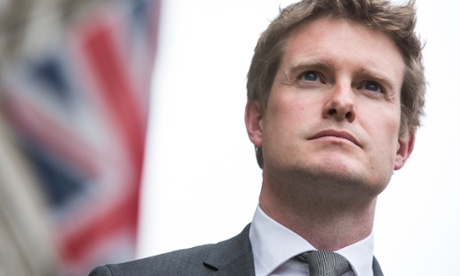
Tristram Hunt has previewed his speech with an article in today’s Guardian.
Here’s an extract.
There is unfinished business in this. “The public schools are saved,” reflected Rab Butler, 70 years ago, of his 1944 Education Act, “and must now be made to do their bit.” Ever since then we have been wrestling with just what “their bit” entails. It defeated even Anthony Crosland as education minister. “Now what are we going to do about those damned public schools?” he asked a group of heads in 1965. Before opting for the depressingly obvious. “I suppose we must have a royal commission, something like that.”
Labour has acted most effectively in bridging the public-private divide. When last in government, we scrapped the assisted place scheme to fund smaller infant class sizes, nationalised a number of private schools and urged the Charity Commission to take a much closer look at the public benefit activities of private schools. Thanks to opposition from the Independent Schools Council (ISC), that strategy collapsed in the law courts and since then the Tories have done nothing to breach this Berlin Wall in our education system.
In the wise words of the upper tribunal, adjudicating between the ISC and the Charity Commission, “these are issues which require political resolution”. Although private schools, including the one that I went to, educate only 7% of children, their students take up almost 50% of Oxbridge places ...
So Labour’s plan is this: we will introduce a School Partnership Standard requiring all private schools to form genuine and accountable partnerships with state schools if they want to keep their business rates relief. We will encourage each institution to reflect on the skills, traditions and educational needs of their locality, and then develop an action plan to deliver tangible reform.
We want to see more private schools running summer schools, sponsoring academies, assisting state boarding schools and assisting professional exchange. In fact, just the kind of public-private partnership already taking place at the United Learning Trust, with its mix of 38 academies and 13 independent schools successfully sharing cultural and sporting experiences, developing clusters to improve university access and supporting teacher development.
But we will also bring to an end the charade of those schools who think a spurious bursary scheme, hanging up some artwork or allowing access to gardens fulfils their social responsibility. It doesn’t.
It’s a heavy-duty day at Westminster, with the long-awaited report from the intelligence and security committee into the murder of Fusilier Lee Rigby coming up, Iain Duncan Smith talking about universal credit on the Today programme, and Labour’s Tristram Hunt announcing punitive proposals for private schools that do not do their bit to help state schools. But let’s with something a bit more fun - the Sun’s splash about the former Tory cabinet minister, David Mellor.
Unlike Ed Miliband, Mellor clearly feels no need to parade his deep admiration and respect for members of the British working class. The Sun has a story about a row he had with a taxi driver during which Mellor appeared to set a new standard for arrogant “Don’t you know who I am?” unpleasantness.
The full story is here, behind the Sun’s paywall, but here’s the Press Association version.
A former cabinet minister has said he regrets losing his temper, after being recorded launching an expletive-ridden tirade at a taxi driver following a visit to Buckingham Palace with his partner who had just been awarded a CBE.
David Mellor, a QC and former Conservative MP, called the cab driver a “sweaty, stupid little shit” during an argument about the route he wanted to travel on Friday.
Mellor, who had accompanied his partner, VisitEngland chairman Viscountess Penelope Cobham, to an Investiture ceremony with the Prince of Wales, was heard in a mobile phone recording given to The Sun.
He told the paper the driver, who is not named but is described as a 38-year-old from south east London, had provoked him.
“This man seriously provoked me and ruined a wonderful day,” he said.
“Once I had lost my temper, which I regret, he then secretly recorded me. I will leave the public to judge his actions.”
The paper reported that Mr Mellor accused the driver of not taking the quickest route to their destination in east London during rush hour.
During the audio Mr Mellor, who told the driver to “fuck off”, said he would name him and discuss the incident on his LBC radio show, which he co-presents with former London Mayor Ken Livingstone on Saturday mornings.
He also said: “You’ve been driving a cab for 10 years, I’ve been in the Cabinet, I’m an award-winning broadcaster, I’m a Queen’s Counsel. You think that your experiences are anything compared to mine?”
In response to the recording journalist Piers Morgan tweeted: “This tape is outrageous. David Mellor, you’re a loathsome snob. I hope London’s black cab drivers now boycott David Mellor. Looks like he could do with a few walks anyway.”
Tuesday's The Sun front page Shut up! You stupid, sweaty little git #tomorrowspaperstoday #bbcpapers pic.twitter.com/PnDKYuuSX3
— Nick Sutton (@suttonnick) November 24, 2014
Here’s the agenda for the day.
9.30am: Frances O’Grady, the TUC general secretary, gives evidence to the Commons business committee about the EU/US trade deal, the transatlantic trade and investment partnership (TTIP). The other witnesses are Sean McGuire, director of the CBI Brussels Office and David Babbs, executive director of 38 Degrees.
9.45am: Tristram Hunt, the shadow education secretary, gives a speech on private schools. As Patrick Wintour reports, he will say Britain’s private schools would lose £700m in tax breaks under Labour unless they agreed to break down the “corrosive divide of privilege” and do more to help children from state schools.
10am: Mark Carney, the Bank of England governor, gives evidence to the Commons Treasury committee. My colleague Graeme Wearden will be covering that on his business live blog.
11am: The intelligence and security committee publishes its report into the murder of Fusilier Lee Rigby. David Cameron will make a statement on the report in the Commons at 12.30pm. We will be covering this on a separate live blog.
As usual, I will be also covering all the breaking political news from Westminster, as well as bringing you the most interesting political comment and analysis from the web and from Twitter. I will post a summary at lunchtime and another in the afternoon.
If you want to follow me on Twitter, I’m on @AndrewSparrow.