Trinity-Mirror's terrible first-half figures are hardly a surprise. Nor is the response from its chief executive, Sly Bailey, and chairman, Sir Ian Gibson. By letting it be known that a nothing-ruled-in-nothing-ruled-out review is under way, they have stimulated the kind of speculation that has triggered a rise in the company's share price. How happy they must be to read the Daily Telegraph's headline Mirror titles 'may be sold' and The Times's Trinity mulls Mirror sale. That certainly helped to get the City's juices flowing and the stock price went north for once.
But it will only be a temporary respite unless Bailey and Gibson do something radical at a company which is looking increasingly forlorn. Its regionals division is suffering from perilous conditions in the advertising market. Meanwhile, its nationals look to be in even deeper trouble with slumps in both ad and circulation revenue.
So what will happen? Well, a couple of months ago, in my London Evening Standard column, I greeted Gibson's appointment as chairman by suggesting that there was no earthly logic to giving him the job unless it was to negotiate a sale. For the benefit of those who haven't had the chance to see my argument, it runs as follows.
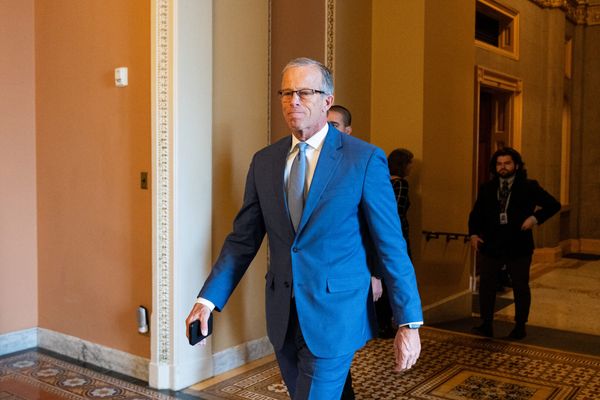
Gibson has no background in the media industry and no knowledge of the volatility of the newspaper market. He hasn't the slightest experience of the digital revolution now transforming global communications and, especially, its cataclysmic effects on print. But that didn't matter to Bailey, nor to the rest of the Trinity board. Their attention was drawn instead to the deal-making skills he had illustrated in his recent career. Until last year Gibson was chairman of BPB, a plasterboard manufacturer, and played the key role in the negotiations that led to its sale to a French company, Saint-Gobain. He was personally credited by shareholders with having secured a high price after rejecting several lower offers. Prior to that, Gibson was deputy chairman of the supermarket chain, Asda, where he was involved in its 1999 sale to Wal-Mart.
So Trinity knew they were taking on a takeover specialist with bags of City kudos. And note what he said on his appointment: "I am delighted to be… bringing my experience to the table as we explore further options for growth and the creation of shareholder value". Further options for growth! What growth? Trinity is a business in retrenchment. It is managing decline. True, it has some kind of digital strategy in terms of advertising sites. But its online editorial approach is hopelessly inadequate. I've been spending the past couple of months closely studying regional newspaper websites and I have to say that Trinity's network is nowhere near the best available. It is clearly stifled by a lack of resources and, worse still, its obvious one-size-fits-all approach clearly stifles local initiative too.
No, this is a company that has reached the point of no return. Bailey has done her best, I guess. But her best has not been good enough (and, in fairness, may never have been enough) to rescue a newspaper giant that, due in part to a troubled history, is crumbling before our eyes. Gibson will do well to obtain the £1.3 billion price some analysts believe it should attract.