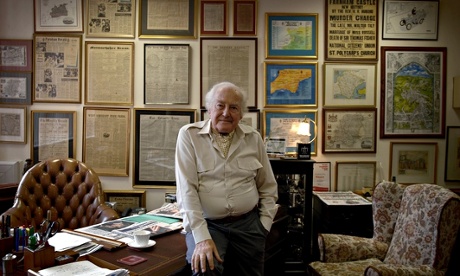
Tindle Newspapers remains convinced that there is an audience for newsprint. It has proved the point by launching new titles, refusing to close any and occasionally acquiring papers from publishers who cannot see any future in print.
Its founder, Ray Tindle, has also imbued his executives and editors with optimism about the future of newspapers. So it’s no surprise that the general manager of a Tindle paper, the Glamorgan Gem, should express her faith in local weekly papers.
But she did more than that, as HoldTheFrontPage reports. After meeting prime minister David Cameron at a No 10 reception, Caroline Attya, criticised publishers that have closed titles.
She is quoted as saying: “There is no need for the downfall for many of the newspapers that have been closed. They just needed honest managers who care about their experienced and enthusiastic staff.”
Attya’s comment comes in the wake of an announcement 10 days ago by Trinity Mirror that it is to close of seven print titles, including the Reading Post, which is to go digital-only.
So, are we to believe Trinity Mirror lacked “honest managers”? Not really. The difference between Trinity and Tindle is that the former is a public company required to return the best possible profit to its shareholders while the latter is a private company which, although profitable, does not have to maximise margins each successive year.
But there is another key difference. Trinity sees that the future is digital and wishes to engage with it while it still has print audiences loyal to its titles (aka brands) that can be encouraged to transfer to online journalism.
Tindle’s papers have websites, of course, but he is unsure that we are heading for a world without newsprint. So he is taking matters slowly, enjoying the rewards of print advertising revenue while remaining convinced of the virtues of hyperlocal news delivered in print.
Attya made that clear in saying: “We are owned by one of a rare breed of newspapers owners who still believe that keeping it local is the best formula. We still work in our own communities.”
Their distinct strategies illustrate the effects of digital disruption because no publisher is absolutely sure how to meet the challenge.
For the record, the Glamorgan Gem is a 30-year-old free weekly with an audited print distribution of more than 40,000 copies, plus an unspecified online audience.