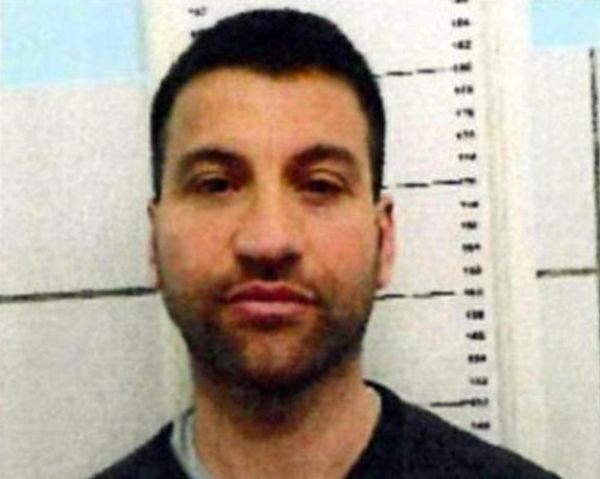
CHICAGO _ If the three Chicago police officers accused of covering up Laquan McDonald's shooting get their way, they will walk out of court this week cleared of all charges before their lawyers call one witness.
Shortly after the state rests its case, attorneys for former Detective David March, former Officer Joseph Walsh and Officer Thomas Gaffney are expected to ask Cook County Judge Domenica Stephenson for a "directed finding" _ arguing that the prosecution case is so weak she must acquit the officers immediately.
"The evidence is so lacking in this case, I submit this should be directed out," James McKay, March's attorney, said last week in his opening statement. "The state will not satisfy their burden of proof, your honor. They cannot. ... There is no evidence that these men conspired. There is no evidence of any agreement whatsoever."
Such requests are often made, but rarely granted. And the arguments are usually brief, dry and procedural.
But little about this case so far has followed the usual course of Cook County criminal trials.
The defense lawyers have made no secret of their disdain for the quality of the prosecutors' evidence, calling their theories "madness" and their arguments "disingenuous."
Over three days of testimony, prosecutors have laid out a meticulous case hinging largely on paperwork filed by the three officers after McDonald's shooting. The reports contain statements that directly contradict the infamous police dashboard camera video of the shooting, and prosecutors allege that each one is a building block in a blue wall meant to protect then-Officer Jason Van Dyke, who shot McDonald 16 times as the teenager walked away from officers with a knife in his hand.
"The case is clear, the case is straightforward, and it is concise," special prosecutor Patricia Brown Holmes said in opening statements. "It boils down to what the defendants wrote on paper versus what is shown on video."
The officers' attorneys say that any perceived inaccuracies in the police reports do not rise to the level of a crime and that no solid evidence has been shown of collaboration among the three to protect Van Dyke from scrutiny.
As such, arguments for a directed finding in this case are expected to be long and brimming with righteous indignation _ even though, in general, such motions are extraordinarily difficult to win.
In considering the request, a judge must, by law, view the evidence in a way that is generous to prosecutors.
"The standard (to win) is, in legalese, even in the light most favorable to the prosecution, they haven't met their burden of proof," said Jennifer Blagg, a defense attorney not involved in the trial. "So looking at the prosecution's case in the very best light."
For example, the two sides have painted vastly different portraits of Chicago police Officer Dora Fontaine, who testified that March attributed false statements to her in his police reports and directed her to fill out paperwork saying Van Dyke was injured by McDonald. The defense called her a liar, while the prosecution presented her as one of the few officers at the shooting scene willing to acknowledge the truth.
"The defense position is she's saying all this stuff just to save her own self," Blagg said of Fontaine. "In a motion for directed finding, how you would look at it is: She's coming forward and telling the truth. ... (With) everything in the best light for the prosecution, have they met their burden?"
Blagg was on the team of attorneys who won a directed acquittal for another Chicago cop accused of wrongdoing: former Detective Dante Servin, who was cleared of involuntary manslaughter charges in the 2012 off-duty shooting of Rekia Boyd.
In "directing out" the Servin case, Judge Dennis Porter indicated that Servin should instead have been charged with murder _ a circumstance likely unique to that particular case.
More recently, McKay, March's attorney, won a directed finding in October in the case of a former Chicago police dispatcher charged with shooting another woman in a road-rage incident. McKay successfully argued that the dispatcher fired in self-defense, winning an acquittal at the close of the prosecution case.
There are pitfalls to consider when trying arguing for that kind of acquittal, Blagg said. In particular, if the defense highlights too strongly the shortcomings in the state's case and then loses the request for a directed finding, prosecutors could put on rebuttal evidence later in the proceedings tailored to the defense's specific criticisms, she said.
"You have to think: OK, are we shooting ourselves in the foot by highlighting this?" she said.
It is far more common for judges to "direct out" cases in bench trials than in jury trials _ a likely factor in the officers' decision to put their case solely in Stephenson's hands.
Stephenson, a longtime prosecutor before becoming a judge, will have wide leeway in deciding. She could choose to acquit just one or two of the officers or dismiss some but not all the charges.
The defendants are charged with official misconduct, obstructing justice and conspiracy.
Discussions Thursday about whether certain emails between Police Department supervisors should be entered into the trial record turned into a de facto argument over the evidence of a conspiracy. The officers' attorneys seemed to preview parts of their expected request for a directed finding as they called the state's case flimsy and disingenuous.
"Where is the evidence of an agreement? It is the most important element for a conspiracy. There is no evidence whatsoever that there was ever an agreement at any time that night," McKay said Thursday.
Attorney Ronald Menaker won a motion for directed finding in 1999 while representing former prosecutor Robert Kilander during the DuPage 7 trial, a high-profile case in which seven law-enforcement officials were charged with conspiring to frame Rolando Cruz with the murder of Naperville schoolgirl Jeanine Nicarico.
"In most instances _ maybe 99 times out of 100 _ they are done pro forma and not argued at any length," Menaker said Friday. "But there are times when there is a meritorious issue that deserves considerable argument."
Kilander and co-defendant Patrick King were acquitted shortly after special prosecutors rested their case. Menaker and other attorneys successfully argued that no evidence existed that the men entered in an agreement to railroad Cruz or that they demonstrated any criminal intent.
The judge declined to dismiss five other co-defendants from the case at that time, but his decision to acquit Kilander and King dealt a significant setback to a landmark prosecution that alleged a 10-year-long conspiracy among prosecutors and police to send an innocent man to Death Row. The remaining defendants were acquitted at the end of the trial.
"Conspiracy cases are a tough road (for prosecutors)," Menaker said. "They have to prove there is an agreement between two people to enter into a conspiracy, and that's a difficult thing to do. I don't think I've ever seen a conspiracy case where two people sit down and talk about entering a conspiracy. The evidence is almost always circumstantial."
����
(Christy Gutowski contributed to this report.)

.png?w=600)