Four years ago England’s cricketers were enjoying a summer of rare success. The Test team were about to become No1 in the world for the first time since rankings began. The Twenty20 world championship belt was still on the mantelpiece. Even the much-maligned ODI side were en route to completing a clean sweep at the top of the ICC tree the following year. In some ways those few months stand as the zenith of England’s modern cricketing history, acme of the brutal, brilliantly-engineered professionalism of The Flower Years.
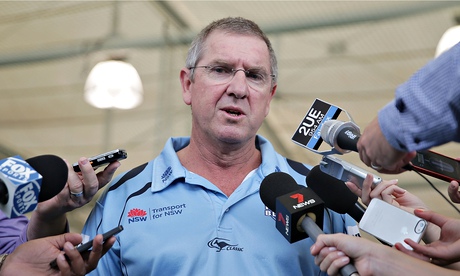
For Trevor Bayliss 2011 was also an interesting summer. England’s new head coach, the man charged both with reviving that level of achievement and recasting it as something more engaged and sustainable, was working as an estate agent in rural New South Wales.
It was, it must be said, only a brief stint spent flogging houses, an unplanned hiatus between leaving the Sri Lanka job and his appointment as the head coach of the Sydney Sixers. Nonetheless the journey from World Cup final coach to estate agent three months later is a remarkable, if rather overlooked biographical detail. One thing does seem certain given the sheer weight of warm words directed Bayliss’s way in the past month: England’s head coach will have taken something useful from the experience, if only perhaps the skills required to negotiate his own salary up from the initial offer made by Andrew Strauss – rejected by Bayliss – to a reported final figure of £400,000 a year.
What England are getting for their money will emerge only in time. It is impossible to find anyone with a harsh word to say about Bayliss, a remarkable achievement in any professional sport. But there is also a slightly opaque pitch to the universal praise. Brendon McCullum has called Bayliss a “champion fella”, Shane Warne “a ripper”. Riki Wessels says he’s “chilled”. Eoin Morgan, whose familiarity with Bayliss from the Kolkata Knight Riders raises an interesting current in England’s cross-format power politics, says: “He doesn’t talk a lot of BS, he gets straight to the point.”
Bayliss is old school. Bayliss is straight. Bayliss doesn’t rely much on the dreaded “data” (except, that is, when he does rely on data). If it is hard to get any real sense of detail behind the unanimous backslaps then perhaps this is the real nub of the Bayliss effect, a coach whose special power seems to be the ability to help his players become more not less like themselves.
One man who has shared more than purely sporting extremes is Mahela Jayawardene. He was captain of Sri Lanka and a fellow passenger with both Bayliss and Paul Farbrace during the terrorist attack in Lahore in 2009, where players and staff were saved from certain massacre by the bravery of the Pakistani policemen guarding their bus.
“He encourages a freedom for the boys on and off the field, for them to enjoy themselves and their cricket,” Jayawardene says of his former coach. “We had a lot of different personalities during his time in Sri Lanka and he handled all those guys well. One on one, he’s really good with players and understands them.
“He lets people express themselves freely. He doesn’t put restrictions on players – if you’re a good talent he’ll ask you to go and play freely – and gets the best out of them. That’s what good coaches do. That’s what he’s done with the Sri Lanka team, what he did with New South Wales. All those teams have talented players and England, I’m sure, have the same.
“A lot of the things he brought into the team were fun elements, allowing players to enjoy themselves, which in return led to a much more relaxed environment. Playing as a unit together is a big thing in his agenda. So I think the England boys will enjoy working under him.”
The notion of a broader perspective is a recurrent theme. Bayliss was born in Goulburn, New South Wales. He worked for a while as a handyman at a local naval base before establishing himself as an attacking middle order batsman at New South Wales, enjoying his best years between 1988-1990 when he scored a hatful of runs and was thought of, briefly, as an outside bet for national selection.
After which came life as an itinerant gun-for-hire coach, bringing with it an unprecedented range of global domestic trophies including the Sheffield Shield, the IPL, the Big Bash and the Champions League Twenty20. With Sri Lanka there were two losing limited-overs finals and a rise to a Test rankings high of second in the world.
The bare specifics of his role in all this tend to emerge only through a veil of characteristic understatement. “It doesn’t matter where you are around the world – you’ve got the same kind of characters in the team,” Bayliss said in 2011, while he was at Kolkata. “You’ve got your funny guys, your mad guys, your happy guys. It doesn’t really change from one team to the other.
“To actually coach the game is only a small part of it. These guys know how to play. It’s maybe a little reminder of what they were doing when they were playing well if they’re out of form. Otherwise it’s trying to create the right environment, a happy one and an honest one, where you allow the players to express themselves on the field and you don’t come down hard on them if they stuff up.”
It is perhaps typical Bayliss to suggest his main contribution is simply to keep the engine running. For all the hands-off schtick he does have a reputation as an intense and innovative tactician. In the IPL his use of the attacking spinners Sunil Narine and Brad Hogg was a notable success, along with an emphasis on athletic, aggressive fielding, an area in which Bayliss excelled as a player. Above all he is known for his planning and strategy in white-ball cricket, with a reputation for affecting the course of a match even during the “time-out” phase in the IPL and Champions League.
It is in the emphasis on dynamism and universal skills – “the best players are the best players in any format,” he has said – that the new coach’s interaction with England’s established certainties, the primacy of the Test team and the Test captain, promises to be most interesting. Bayliss knows Morgan from the IPL. He knows Sam Billings from a brief spell at Penrith but he will meet Alastair Cook for the first time on the pre-Ashes bonding trip to Spain.
It is a lack of professional familiarity that reflects both Bayliss’s primary involvement over the last few years in high-end white-ball cricket and Cook’s own very specific kind of batting brilliance. In the next few weeks the pair will hope to forge a similarly productive relationship to that enjoyed by Duncan Fletcher and Nasser Hussain, who also had not met before they were yoked together as captain and coach.
For now a common purpose awaits, and a common foe Bayliss knows better than his own charges, having coached nine members of Australia’s Ashes party at NSW. Not that there will be any doubt about his appetite for the fight. “He’ll definitely enjoy that,” Jayawardene says. “When we played Australia and he was coach he was really passionate about beating the Australians.”