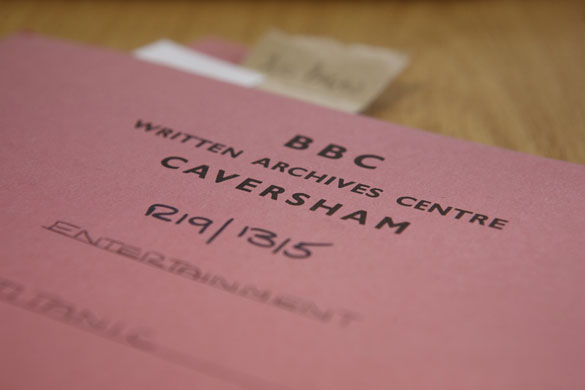
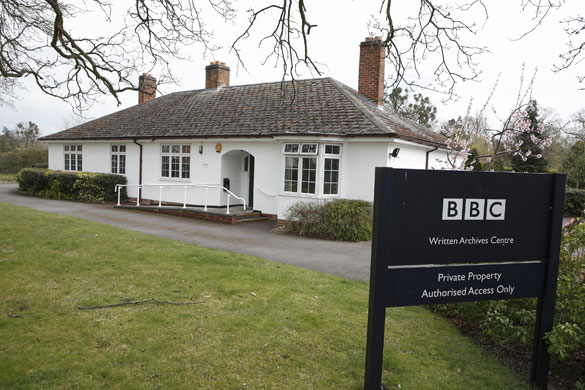
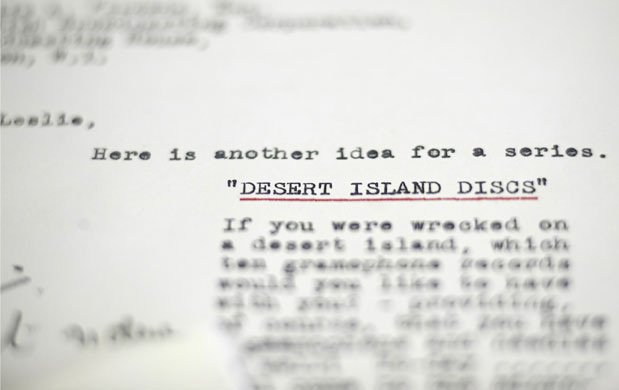
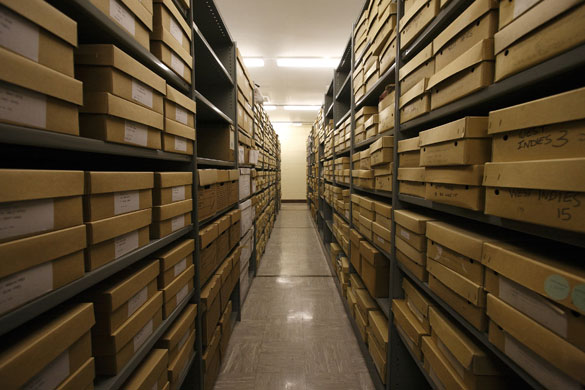
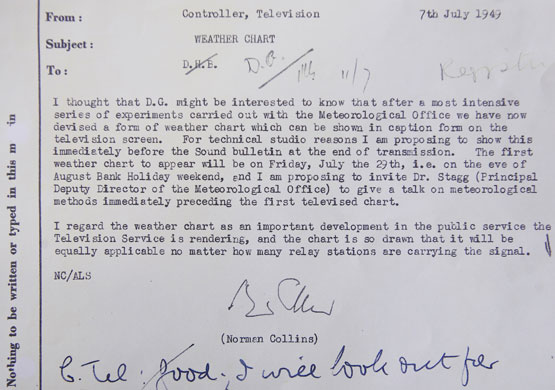
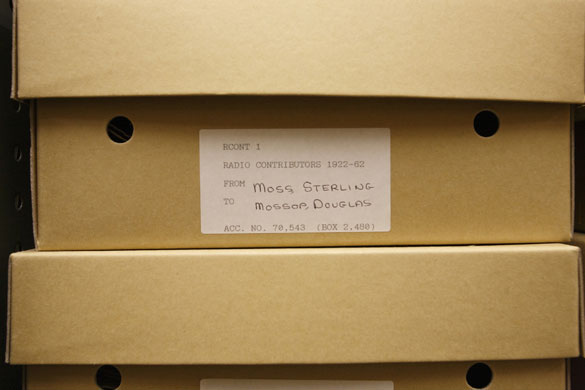
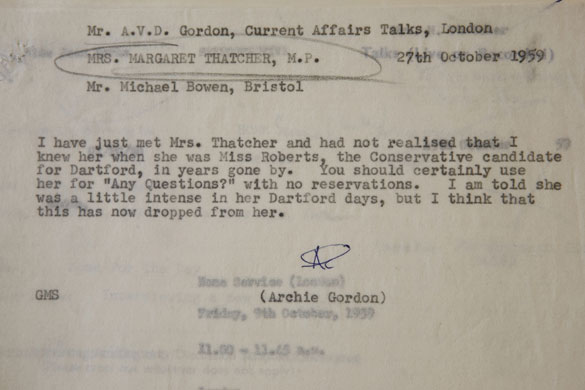
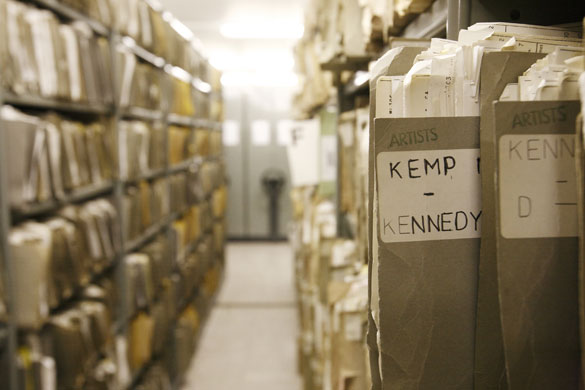
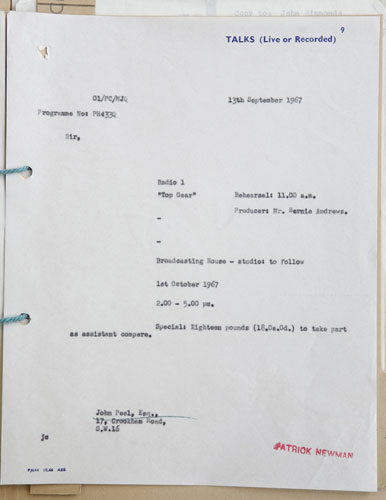
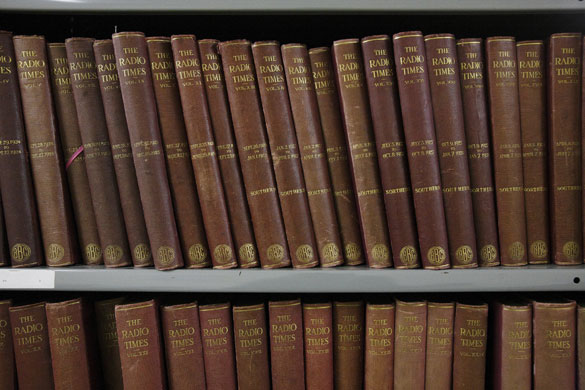
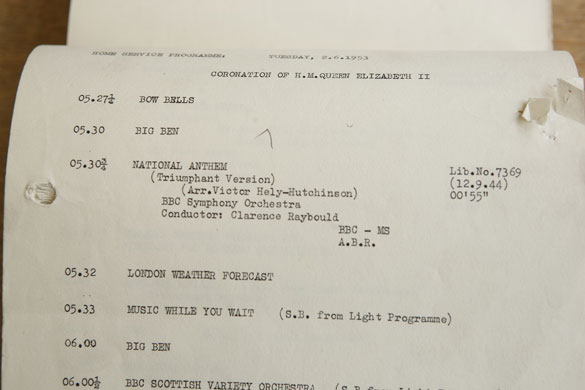
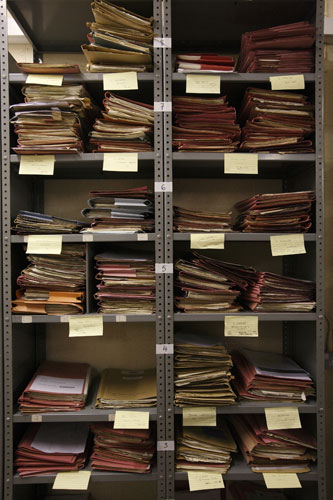
The BBC Written Archives Centre in Caversham, Reading, holds material relating to just about anyone who has worked for or contributed to the BBC since 1922Photograph: Sam FrostThe archive is held in a converted school building in the Caversham suburbs. Visits are limited to academic and professional research, but the BBC is working to digitise its records, and open them up to the public onlinePhotograph: Sam FrostA copy of the original letter letter from Roy Plomley in November 1941, proposing 'another idea for a series': Desert Island Discs. Plomley had been working as a radio broadcaster in the UK and France, but the beginning of the second world war forced him back to England in June 1940Photograph: Sam Frost
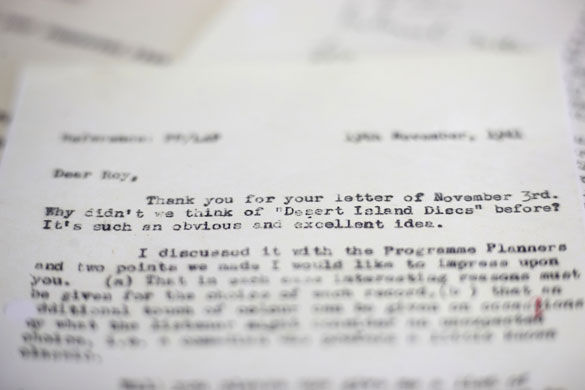
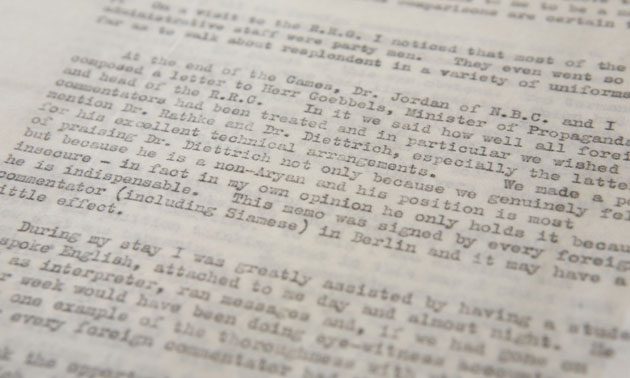
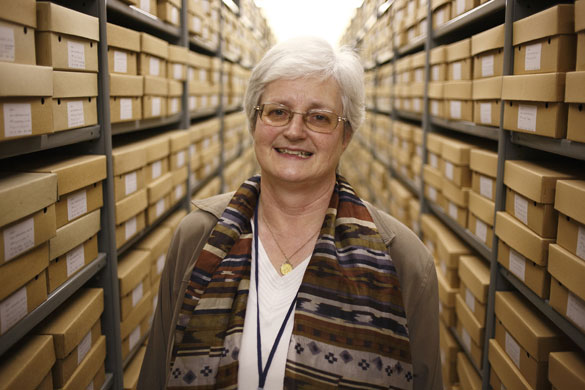
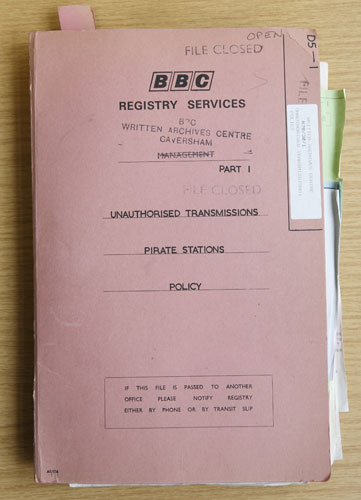
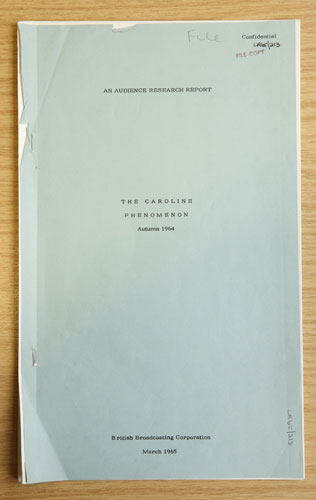
The reply from the producer Leslie Perowne to Plomley: 'Thank you for your letter of 3 November. Why didn't we think of "Desert Island Discs" before? It's such an obvious and excellent idea.' The first broadcast was two months later, on 29 January 1942, the first of what was to become the longest-running music programme in radio history. Plomley was the presenter until his death in 1985Photograph: Sam FrostThe deadline for digitising a suitable part of the material has been set for 2022, the 100th anniversary of the archive. Tony Ageh, the BBC's controller of archive development, says that the undertaking is 'rather like building the pyramids, because the people who are starting this will never see it completed'Photograph: Sam FrostA 1949 memo from the BBC controller of television, Norman Collins, to the director general, William Haley, mentioning the forthcoming first broadcast of a 'weather chart which can be shown in caption form on the television screen'. Collins saw it as an 'important development in the public service the Television Service is rendering'Photograph: Sam FrostA box containing files on contributors from 'Moss, Sterling' [sic] to 'Mossop, Douglas'. The racing driver Stirling Moss bought his first racing car at the age of 18 and went on to win the first British Grand Prix in 1955, retiring in 1962. Can anyone shed any light on Douglas Mossop?Photograph: Sam FrostThe first mention in the archives of Margaret Thatcher. In 1959, Archie Gordon, then head of current affairs for radio, sent this memo recommending her as a panellist on Any Questions?. 'I am told she was a little intense in her Dartford days,' writes Gordon, 'but now I think that this has now dropped from her'Photograph: Sam FrostThe BBC's archives total 4.5 miles of shelves. Ageh says it is 'an unprecedented record of the cultural, historical, and social life of a nation and of large parts of the world'Photograph: Sam FrostA copy of the first contract given to John Peel, on 13 September 1967. He was paid £18 'to take part as assistant compere' on an episode of his first BBC radio show, Top Gear (no relation)Photograph: Sam FrostPart of the complete run of Radio Times held at the archives. The listings magazine was first published in 1923, after an idea by John - later Lord - Reith to increase listener figures. The radio listings carried by newspapers at the time were felt to be too briefPhotograph: Sam FrostThe 'programme as broadcast' log for the BBC Home Service on the day of the Queen's coronation, 2 June 1953. The day began for the BBC at 05.27 (and a quarter). The Bow Bells lasted 2.75 minutes, followed by 0.75 minutes of Big Ben, and then the 'National Anthem (Triumphant Version)'Photograph: Sam FrostIn 1936, Tommy Woodrooffe was the BBC's main commentator at the Berlin Olympic games. The image shows part of a report by Woodrooffe on how the games went: 'We made a particular point of praising Dr Diettrich [a commentator for the Nazi broadcaster RRG] not only because we genuinely felt it, but because he is a non-Aryan and his position is most insecure.'Photograph: Sam FrostJacquie Kavanagh is the multimedia archivist at Caversham and has worked there for nearly 35 years. 'The archives are a fabulous source for socio-political history,' she says. 'They hold a mirror up to society and reflect back the decisions that were made at the time and what happened behind the scenes'Photograph: Sam FrostThe file containing documents relating to the BBC's policy towards pirate radio stations. The BBC Light Programme, which ran from 1945, was the corporation's answer to Europe-based commercial station Radio Luxembourg. Later ship-based pirates such as Radio Caroline and Radio London encouraged the BBC to launch Radios 1 and 2 in 1967Photograph: Sam FrostAn audience research document into the appeal of Radio Caroline. A 38-page report concluded that the station did not have a bigger audience than the BBC's Light Programme. It described a generation of 'Caroline addict' teenagers who thought the BBC was 'square and corny', identifying a demand for Radio 1Photograph: Sam FrostPigeonholes contain files in current use by researchers, saving time so they do not have to be replaced in the stacks between visits. Delights such as reworked lyrics for the opening sequence of Blackadder and a copy of La Bohème signed by Puccini have already been discovered - what other delights are waiting to be unearthed at Caversham?Photograph: Sam Frost
Sign up to read this article
Read news from 100’s of titles, curated specifically for you.