The federal government has applauded NSW and Victoria's responses to fresh COVID-19 outbreaks, while urging Victoria to allow its residents back home.
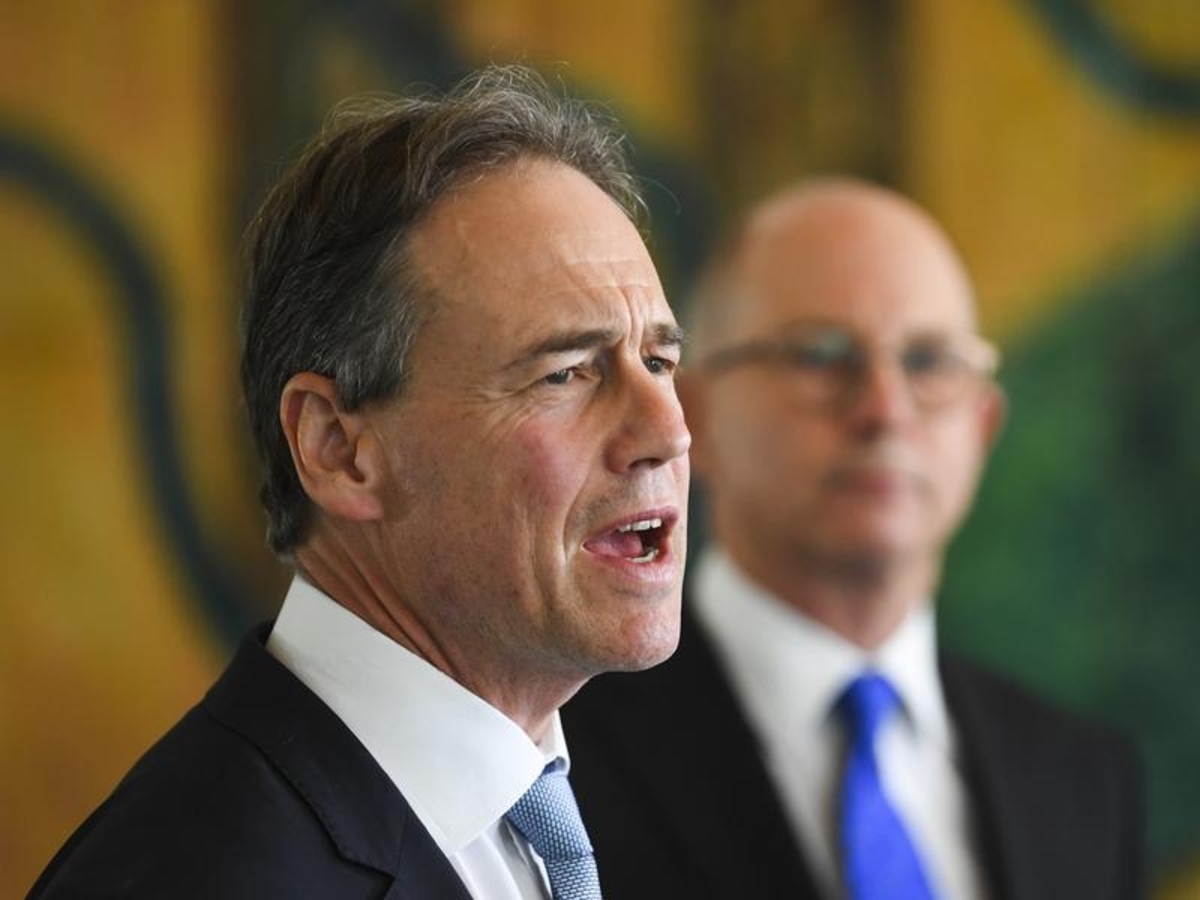
The recent outbreaks in NSW could have been on a "vastly larger scale" than the disastrous second wave in Victoria, federal Health Minister Greg Hunt said on Sunday, describing advice from Commonwealth Chief Medical Officer Paul Kelly.
With seedings at multiple venues across Sydney, a "potentially enormous event" could have occurred but for the extent and speed of the state's response and the capacity of its contact-tracing system.
Mr Hunt said Victoria was in a "much stronger place" with dramatically improved systems since the 2020 crisis.
"Although the times are challenging ... there is significant cause for hope in Australia," Mr Hunt said.
Amid controversy over border closures, Mr Hunt cautioned that any response had to have a compassionate element and bringing people home was part of government's role.
Victoria's border is now closed to all travellers from NSW, with some Victorian residents complaining that they are unable to make it home.
"We're confident that Victoria will work and find ways to bring people home to their home state," Mr Hunt said, adding Australia had no "domestic passports".
But he reiterated the federal government's position that border closures are a matter for the states.
The government is providing $10 million in funding to COVID-19-related trials from its Medical Research Future Fund's Clinical Trials Activity Initiative, Mr Hunt announced on Sunday.
The funded projects include a next-generation vaccine program being developed by the University of Melbourne, which would use a spike protein but not require ultra-cold transportation.
Other trials are looking at infection control, recovery from the virus, and aged care.
The government has now completed all the paperwork for the American Novavax vaccine and is ahead of schedule for its vaccine rollout, Mr Hunt says.
Meanwhile, holiday travel plans across the country continue to be thwarted as states and territories tighten their borders.
The ACT has shut out non-residents who have been in NSW's northern beaches, Greater Sydney, Wollongong and parts of the Central Coast unless they have an exemption.
Tasmania has barred anyone directly linked to the latest Victorian virus cases. It has also declared Greater Sydney and the Wollongong area as medium-risk zones, requiring travellers to quarantine on arrival, while those from Sydney's northern beaches are barred from entering.
Victoria reported three new cases of community transmission on Sunday, down from Saturday's 10 fresh cases.
Testing sites in Melbourne and surrounds have seen long queues as thousands returning from NSW rushed to get tested.
Victorian frontline workers were called out of holiday breaks to boost the state's testing capacity.
Victoria had gone 60 days without community transmission when the first few NSW-linked cases were reported on Wednesday.
NSW recorded eight new community cases on Sunday as face masks become mandatory for many indoor settings.
Western Australia has reimposed a hard border with NSW and Victoria.
The Northern Territory has barred entry for all Greater Sydney residents.
South Australia has re-established its hard border with NSW, along with a 100-kilometre buffer for border communities.
Queensland's border is closed to anyone who has been in Greater Sydney and surrounding areas in the past 14 days.
More than 50,000 Australians were tested for the virus in the past 24 hours.
Mr Hunt applauded the NSW and Victorian governments for providing a "comprehensive explanation" of the origins of the 11 locally acquired cases reported on Sunday.
No Australians were currently on ventilation or in intensive care because of COVID-19, he said.