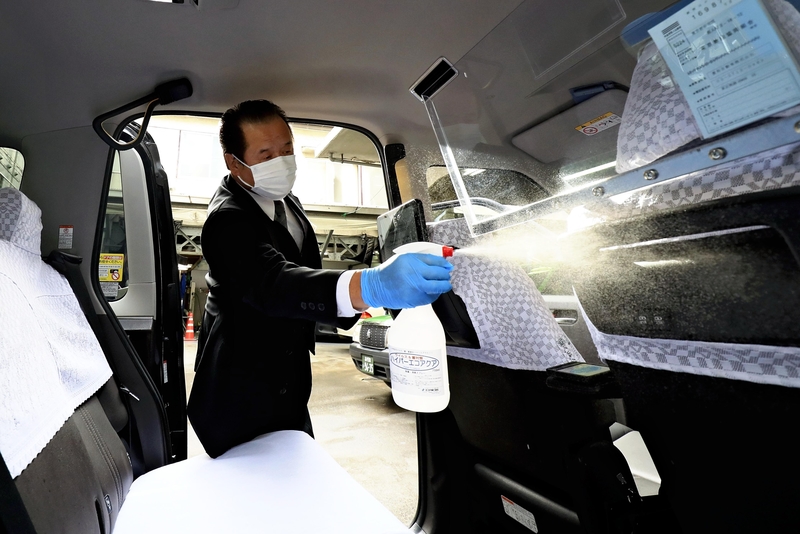
The outbreak of the new coronavirus has become more serious, with taxi drivers in Tokyo and Okinawa Prefecture confirmed as being infected, highlighting the risk of contracting the virus through daily transportation.
Transportation operators are focusing on implementing measures to prevent the virus from spreading through their services, while experts point out the importance of individual efforts, such as washing hands after traveling.
A taxi driver in his 70s living in Tokyo was found on Thursday to have been infected. He attended a New Year party in January, and the virus is suspected to have spread among participants during this event. Seven other participants were found on Saturday to have been infected, bringing the total of cases to 9 among those who were present at the party.
In Okinawa Prefecture on friday, a taxi driver in her 60s was found to have contracted the virus. She carried some of the passengers who were aboard the cruise ship Diamond Princess when the vessel called at Naha before it headed for Yokohama. Reportedly, about 15 people including her colleagues had close contact with her.
In the wake of these developments, taxi company Houwa Jidosha in Tokyo has started to distribute single-use vinyl gloves and alcohol disinfectant to all workers since Friday. The gloves are changed every time drivers take breaks.
Toto Motors Co., another taxi company in Tokyo, has urged drivers to always report if they or their family members show symptoms such as fever or cough.
"I thought a driver would be found to have been infected someday," said a 59-year-old taxi driver in Tokyo on Friday.
The driver said that as he often carries travelers from China, he wears a mask while driving and wipes his hands with disinfectant tissues after receiving bills.
Airlines are disinfecting planes after they are used for flights to China. According to the Land, Infrastructure, Transport and Tourism Ministry, all three Japanese carriers that are currently operating flights to China disinfect the cabin of the aircraft after the planes return and are parked in Japan. Japan Airlines, for example, focuses on disinfecting areas that passengers often touch, such as tray tables, armrests and toilet door handles.
Railway and bus operators are facing challenges as it is difficult to disinfect their vehicles frequently. The Tokyo metropolitan government's Transportation Bureau, for example, has installed disinfectants at sightseeing buses as passengers spend longer hours aboard.
"We operate a large number of buses and subway trains on precise timetables, making it difficult to disinfect all of them," an official said.
East Japan Railway Co. (JR East) has made it obligatory for station staff at Narita Airport and major stations such as Tokyo to wear masks, while also setting up disinfectants for use by passengers at Shinjuku and other major stations.
Tokai University Prof. Yasuhiro Kanatani called it "unrealistic" for transport operators to disinfect all their vehicles.
"It's important for individuals to take appropriate measures such as washing hands and gargling," he said. "There is no need to be overly concerned about the spread of infection within the country. However, it's necessary for everyone to raise their awareness about protecting their own, as the virus can make the elderly seriously ill."
Read more from The Japan News at https://japannews.yomiuri.co.jp/