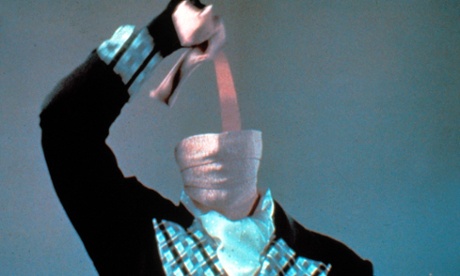
The possibilities open to a person rendered invisible have been well explored in the worlds of science fiction and philosophy, not to mention the minds of adolescents.
Now neuroscientists in Sweden have simulated the effect using virtual reality and found, perhaps unsurprisingly, that the sensation of being transparent makes people less anxious in front of a stern-looking crowd.
People who took part in the study wore virtual reality (VR) goggles that created the illusion of their body being invisible when they looked down. Scientists reinforced the effect by touching them with a paintbrush. Though their body was invisible, the participants could see and feel the paintbrush prodding them, convincing their brains that their bodies were there but totally see-through.
The findings will presumably shed light on the psychological impact of trying to get served at a trendy bar in any of the world’s major cities, but the scientists stress that it also revitalises a question raised by Plato almost two millennia ago on how the human mind would handle the power of invisibility, and the moral quandaries it poses.
Arvid Guterstam at the Karolinska Institute studied the effects of apparent invisibility in 125 volunteers who donned VR headsets. The illusion of invisibility was created by relaying images of the ground and empty space to the headset worn in the study.
When Guterstam touched the people’s bodies with a paintbrush, they sensed the contact and soon started to feel as if their body was invisible. “Within less than a minute, the majority of the participants started to transfer the sensation of touch to the portion of empty space where they saw the paintbrush move and experienced an invisible body in that position,” he said.
To test how strong the illusion was, the researchers pretended to stab at the empty space where people thought their bodies were. The pretend attacks caused the participants to start sweating as their anxiety rose.
The scientists then tested how people felt when they stood in front of a small crowd that was asked to stare at them. Those who felt they were invisible had lower heart rates and stress levels compared to when the VR set appeared to give them a mannequin’s body. The study appears in the journal Scientific Reports.
Henrik Ehrsson, a senior author on the study, said follow-up work would look at whether the sensation of being invisible affects people’s moral decision making. That would “ensure that future invisibility cloaking does not make us lose our sense of right and wrong, which Plato asserted over two millennia ago.”