Much has been made of the potential of the John Lewis model of employee ownership to transform the delivery of public services by freeing up entrepreneurial public sector staff.
There is a growing body of evidence to suggest employee-owned businesses are more sustainable and generate jobs more quickly than traditional forms of enterprise. They often enjoy lower rates of absenteeism, reduced staff turnover, lower production costs and higher productivity.
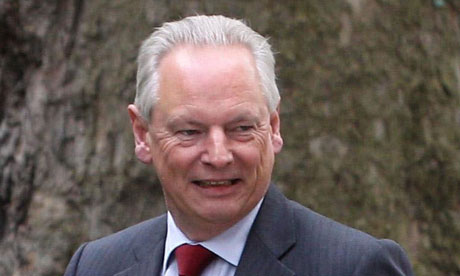
The vision announced by Cabinet Office minister Francis Maude a year ago was for 1 million public servants to be working in mutuals by 2015. But if the government is serious about introducing mutuals into public services on a grand scale, then action is required now. Some very pressing practical and commercial issues inhibiting the programme must be addressed.
The desire to encourage public service mutuals has been supported at regular intervals by a series of coalition policy initiatives: most recently in the policy update open public services 2012, which heralds the creation of an individual's legal right to choose their provider of public services; and another push for greater diversity of suppliers, including the establishment of more social enterprises by frontline public sector staff.
In the NHS the "right to provide" has seen the launch of a handful of large scale spin-outs by the provider arms of primary care trusts. However, the recent decision of NHS Gloucestershire to abandon the proposed transfer of 3,000 staff and services to a community interest company demonstrates the difficulties involved.
In local government there is increasing interest in the mutual model in areas as diverse as education support services, HR support, domiciliary care, libraries and youth services. The new "community right to challenge" in section 81 of the Localism Act 2011 is expected to go live shortly, providing a boost to mutualism in the local government sector. For the first time, this will give community groups, employees of the authority, parish councils and local charities the right to bid to take over local services.
In other areas of government, the first mutual "my CSP" is about to be launched for pensions administration and in probation services there is growing interest in spin-outs as the Ministry of Justice implements a purchaser-provider split. However, the much-vaunted mutual for public audit services, the DA Partnership, formed by former Audit Commission staff, proved to be a damp squib when it won only one of the 10 regional audit contracts up for grabs. This illustrates the difficulties faced by new spin-outs when forced to tender for contracts.
There remain some very practical obstacles to progress. Firstly, the attitude to risk among public servants. Although frontline staff may be keen to spin out their services, senior managers are often quick to pour cold water on their ideas. There needs to be a sustained programme of education and training to make the policy work. The disruptive innovators need to be nurtured, not neutered. Surely this is an area where an innovative partnership between commissioners and business schools could play a role?
Secondly, access to startup funding is very limited. The Cabinet Office announced a £10m fund in December 2011 as part of the mutuals support programme to back public service mutuals, but cash grants for startups to develop their initial business plans are very hard to find. Despite the emergence of Big Society Capital and the recent launch of lending programmes targeted at the social enterprise sector by the Royal Bank of Scotland and Deutsche Bank, new mutuals invariably lack a suitable trading history to meet funding criteria.
Thirdly, there is a requirement for business planning skills, effective human resource management and marketing, all of which may be lacking in teams of public service employees. Expecting frontline managers to develop their plans while still doing their day jobs simply will not work.
Francis Maude claims he is open to new models involving private providers. These could include joint ventures, or partnerships between employee mutuals and private sector partners. Private partners have skills in business planning, procurement, HR management systems and access to finance aplenty. A co-owned joint venture to deliver public services, bringing together public service employees and private sector partners, may harness the best of both worlds in a new form of partnership.
Fourthly, EU procurement rules continue to be an albatross round the neck of public service mutuals. Host authorities will find it difficult to award contracts to preferred in-house suppliers if the opportunity needs to be exposed to competition. The government sought concessions for new public service mutuals in the negotiations surrounding the new EU directive on public procurement; unfortunately none was forthcoming. Some commentators advocate the use of the so-called Teckal exemption, which allows public bodies to award contracts to entities which they control, but creating a wholly-owned subsidiary of a public body is at worst an artificial device, and in reality seems to fly in the face of the independence and autonomy required for a truly innovative service provider.
Finally, there is a lack of well-publicised shining examples. Public servants want to know that others have already trodden this path and been successful. Four of the early mutual pathfinder schemes have fallen by the wayside and the deal-flow appears to be nothing but a trickle. Government still has a better selling job to do on the benefits of mutualism and will ultimately need to actively manage the market and promote the opportunities to ensure a pipeline of successful projects which comes anywhere near the target for 2015.
Mark Johnson is managing director of TPP Law, a specialist law firm focused on public services. The firm has published a new edition of its Guide to Setting up a Public Service Mutual which can be accessed here.
This content is brought to you by Guardian Professional. To join the social enterprise network, click here.