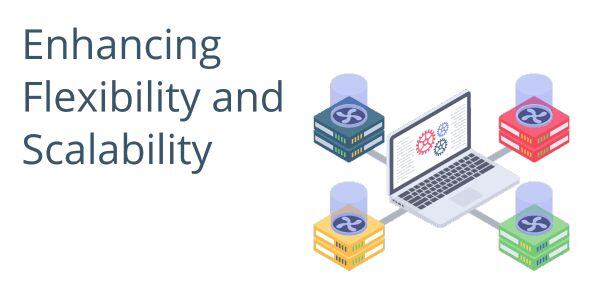
Why all businesses today need to be flexible, scale and innovate faster than any time before. Organizations must be rapid in adjusting and adapting to market changes and continuous changes in customer needs. As a result, there has been a tremendous shift in the way businesses approach their infrastructure, operations and technological investments. Among the most innovative, cloud computing completely transformed the business scale, type of business operation and delivery of services. With the cloud, businesses can now leverage unprecedented scalability and operational flexibility and lower costs, make their operations more efficient, and speed up time to market of new products and services all by moving away from traditional on-premises IT infrastructure.
Cloud computing allows businesses to use an amazing computational resource and storage solution, in addition to other advanced technologies, with a level of agility and flexibility that we never thought possible. Organizations no longer must rely on static; on site infrastructure they can dynamically allocate resources based on real time need. Cloud computing affords the kind of operational flexibility companies need the ability to scale up during peak demand, or to scale down to optimize costs in the quiet periods to remain competitive in a business environment where complexity and speed are the name of the game.
Scalability: Unlocking Business Growth Without Constraints

Perhaps the most important advantage that cloud brings to business is the ability to scale up or down quickly and with very little cost. In a traditional IT environment, companies would have to predict future resource needs and procure infrastructure with the money upfront that they’re not going to use for months, if not years. What this often led to was underutilized resources, which wasted money, and in some cases, insufficient infrastructure which limited growth when the demand would rise unexpectedly.
By providing on demand pay as you go resources, cloud computing eliminates these constraints. In this way, companies can utilize this extra computing power, storage, and network capacity when needed, without having to over or under provision your infrastructure. As an example, an e-commerce website that experiences a spike in traffic in a holiday sale can easily scale up resources to meet a sudden demand and then scale down later. It enables on demand scalability, which means that the businesses must pay for the resources they use, and that helps to optimize the cost.
Businesses also benefit from the comfort of being able to provide the ability of connecting with a global audience. Cloud services located on multiple data centers across the world mean they are able to quickly scale applications and services to serve a global audience. In other words, no matter how broad an organization's span of reach extends to, from one region to as many continents as possible, the cloud remains an ally to facilitate the infrastructure involved, providing an uninterrupted and undisturbed experience for end users wherever they may be. By spreading services across multiple availability zones, organizations can deliver high availability, minimize latency, and provide region specific services without the responsibility of owning and maintaining costly physical datacenter infrastructure.
Operational Flexibility: Adapting to Changing Needs in Real-Time
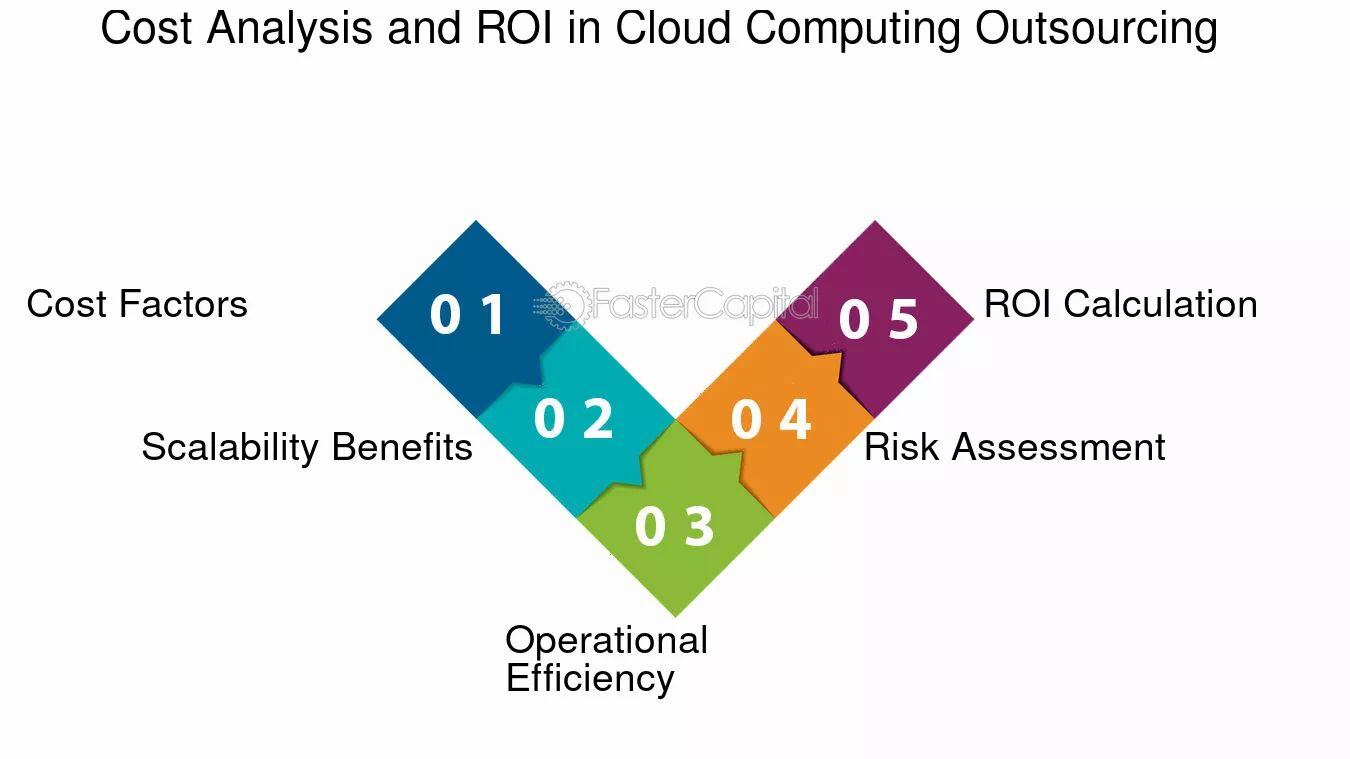
Scalability is an obvious first benefit to answer in this question, but the operational flexibility behind cloud computing is equally important to modern businesses. Historically, organizations depended almost entirely on physical hardware that needed to be physically installed, maintained and updated. However, the process of adapting IT infrastructure for faster growth, wider storage, new services, etc., used to be slow, costly and inflexible.
On cloud computing, business can deploy, update and manage applications and infrastructure much faster and with a great deal of flexibility. The great benefit of this flexibility is the speed by which we can change trajectory, or experiment with new ideas, without the fear of expensive failures. For example, when a business is testing new application or service, it can deploy that in cloud without paying for long installation time or upfront cost for hardware. In the event the application is performing in a manner that isn’t as expected, then it is possible to quickly decommission, and resources can be redirected to other priorities. The flexibility acts as an enabler to innovation as well as keeping your business nimble and responsive to market changes.
A very important part of operational flexibility is the ability to accommodate and integrate new technologies without much friction. From artificial intelligence to machine learning, data analytics to the Internet of Things (IoT), cloud platforms give businesses easy access to bleeding edge tools and technology that they might not otherwise be able to afford the capital requirement to run themselves. Under this circumstance, rather than having to invest into expensive infrastructure or specialized hardware, organizations can simply subscribe to cloud services which provides access to these advanced technologies and stay competitive and innovative with minimal risk.
Empowering Innovation and Collaboration Through the Cloud

The rise of cloud as an enabler of innovation has enabled organizations to create, test, and deploy new ideas at speed and with efficiency—accessing the infrastructure and the tools that would have been expensive, if not impossible, to obtain before. A variety of platforms provided by cloud services provide organizations access to build and deploy an application with no worries about underlying hardware and software layers. Businesses focus solely on designing their applications using Platform-as-a-Service (PaaS) offerings, allowing them to not need to worry about the infrastructure complexity. As a result, bringing new products and services to market speeds up while fostering a culture of rapid innovation.
Also, software on a service (SaaS) application have also changed the way of doing businesses. Organizations that subscribe to SaaS offerings can have ready-made solutions for everything from customer relationship management (CRM) to human resources management (HRM) to accounting and beyond. The service providers are constantly updating these applications so that businesses have the latest features and security patches without running the software themselves. On top of that, because businesses can scale how they use SaaS application after their needs, they can get what they need while paying for what they don’t need.
Cloud computing has also been transformative around collaboration. With workforces becoming more distributed and entire workplaces becoming global, critical is the need for seamless collaboration tools. Cloud based collaboration tools help employees work together in real time, no matter where they are working from. It not only increases productivity but also increases creativity and solving problems by enabling team members to share views and insights at the click of a button. Businesses that have access to shared resources and data in a centralized cloud environment can finally break down silos, enhance transparency and create a much more collaborative culture.
Harnessing Data and Analytics to Drive Business Decisions
Data has become one of the most valuable assets for business, to make decisions, understand the customer and to improve processes. Organizations can store, manage and analyze very large volumes of data with greater ease than ever than thanks to cloud computing platforms. Data lakes and warehouses are cloud-based storage solutions which allow organizations to bring all their data in one central location so that it can be easily accessed to be analyzed, reported and used for machine learning.
Additionally, cloud platforms offer businesses powerful data analytics tools with which businesses can gain actionable insights from huge data sets. Companies can run complex analytics and machine learning models on cloud infrastructure, and get hidden insights into customer behavior, market trends and operational inefficiencies. Then in turn these insights can be used in decision making, optimize marketing efforts, personalize customer needs and more. Organizations can use the scalability and power of cloud computing to refine and adjust strategies with live data, regularly and continuously.
Cloud Security: Mitigating Risks and Ensuring Compliance
With businesses moving their operations to the cloud, security remains a great concern. Distributed by nature and having a shared resource architecture, the cloud may not offer guarantees in terms of data privacy, access control and regulatory compliance. Even so, cloud providers have done some significant work on security and have created very strong protection mechanisms that are far in advance of what many organizations can do even with in premise solutions.
There are security techniques such as encryption, multi‒authentication, identity, and access management that cloud providers invest in and use to defend their infrastructure, that protects your data. They also monitor continuously and automatically deliver security updates to keep their systems immune to threat. What’s more, cloud providers adhere to any number of international security standards and regulations, like GDPR, HIPAA, and SOC 2, so customer data is handled with due care and maintained safely. It cuts down on the number of security requirements that businesses need to service themselves, so they can continue to focus on innovation and growth.
Sustainability and the Cloud: A Path Toward Green Business Practices

With heightened sense of the environmental impact of businesses, cloud computing represents a greener alternative to conventional on-premises data centers. Big scale data centers run by even bigger cloud providers are optimized for energy usage shrewd, relying on technologies like virtualization, load balancing, and server consolidation to cut down on power. Cloud providers can get the economies of scale and reduce overall energy usage comparing to each organization maintaining its own data center.
For additional benefits, cloud providers tend to contribute to green energy, since renewable energy is used to power their data centers thereby reducing their carbon footprint as well as promoting sustainability. Moving your business to the cloud can help your business reduce its own environmental impact and the global fight against climate change. Cloud adoption is becoming a divide among those who realize the cloud's environmental benefits and those who do not.
Conclusion: A New Era of Business Transformation
A new era of business transformation is here thanks to the cloud. With its scalability, flexibility and cost efficiency it gives companies what they need to remain competitive in today’s ever-changing marketplace. Efforts to empower innovation or achieve real time collaboration, harness the power of data analytics and guarantee robust security would have been deemed next to impossible had the cloud not been introduced. However, an increasing number of organizations are now moving to the Cloud, to unleash growth, agility and sustainability, as a means of future success in the digital world.