Today’s electricity system has provided Britain with reliable, stable and continuous electricity supplies for more than 100 years. We may have the odd hiccup in extreme weather conditions, but generally we can assume our electricity will be available when we need it.
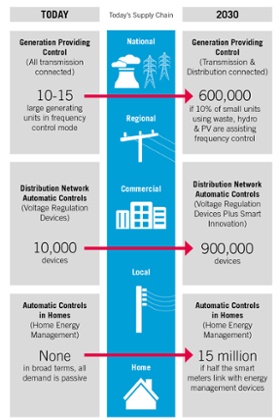
During the last decade the focus on our electricity system has become ever more acute. One of the key drivers for this has been the 2008 Climate Change Act, which introduced ambitious targets for decarbonisation. As a result the electricity grid is migrating from a traditional centrally managed operation to a much more complex system, comprising highly distributed generation, intermittent sources and new demands.
Decarbonisation requires new technologies
Decarbonisation means finding ways to replace our traditional reliance on coal-fired and gas-fired power stations with clean, low carbon and efficient energy sources. Renewable energy, community energy schemes, smart meters and electric vehicles will increasingly become part of our daily lives.
Much of our future electricity will come from variable sources such as wind farms and locally-connected solar panels. Consumers will become more savvy about opportunities to save money, particularly by avoiding using electricity at times of high market prices. And the electrification of heating and transport will lead to high and sustained power demands on the electricity network.
To make this future vision of energy attainable, all parts of the vision need to work seamlessly together. This means some strategic ‘heavy lifting’ technical work is needed behind the scenes to make sure the electricity system is up to the job. The challenge for the existing electricity system is that it simply was not designed to cope with the complex new technologies involved.
If cleaner energy is our goal then we must harness the ever-growing interdependencies with communications, data and automation that this evolution involves, while working in a commercial environment that spans businesses working in energy generation, transmission networks, distribution networks, smart home devices and smart cities.
Changes are already underway. The last decade has seen the beginnings of a period of rapid change in how we plan to produce, use and manage our electricity – including the realisation that we will need a step change in data, communications and intelligence.
A system architect is needed
The time has now come to consider how to ensure that these multiple new systems talk to each other seamlessly, so that we avoid failed IT projects, substandard services, or ultimately threats to the energy security that we all now take for granted.
Best practices in other sectors point to the need for a single agent or body – a system architect – to make sure all the new systems and technologies work effectively together within a liberalised market. Technical co-ordination is essential if we want to deliver the growing number of complex projects needed to offer cleaner energy sources while maintaining security of supply and avoiding spiralling costs to consumers.
Work is underway, led by the Institution of Engineering and Technology, to determine how other industries that manage complex systems have dealt with the challenge, looking at what the electricity sector can learn about technical integration. The electricity sector is by no means alone in facing big changes in its fundamental architecture. Mobile telecommunications, aviation, highways, healthcare and water already have a system architect, so there are a number of different models to look to for guidance. These models range from a staffed central authority to a series of committees populated by key industry stakeholders.
For the electricity sector, a system architect would provide systems engineering co-ordination and the glue between established parties, such as generators and network operators, and new entrants including renewables and community heating schemes.
Delivering effective systems engineering will also involve helping to inform government on the technical implications of policy decisions. This should include agreement on an achievable timeline for decarbonisation of the sector, and testing potential solutions within this timeline.
Balancing systems engineering and business innovation
Whichever model the electricity sector chooses, the biggest challenge to address will be finding the right balance between ensuring effective systems engineering at a time of massive change and increasing complexity, versus allowing the businesses forming the heart of the industry maximum freedom to operate and innovate.
Further discussions are needed with key parties, including today’s industry players, new service providers such as energy aggregators, and key vendors including white goods manufacturers in the UK and internationally. Importantly, analysis is needed to identify and evaluate the options, considering matters such as governance and funding, before we can definitively say which model is most appropriate for Britain’s electricity system. But what is already clear is that a system architect is the most cost-effective and long-term solution to ensuring ongoing energy security, while making sure a future decarbonised energy system can work effectively to deliver real benefits and value to energy customers.
For more information visit theiet.org/pnjv
Content on this page is provided and controlled by the Institution of Engineering and Technology, a partner of the Guardian Big Energy Debate.