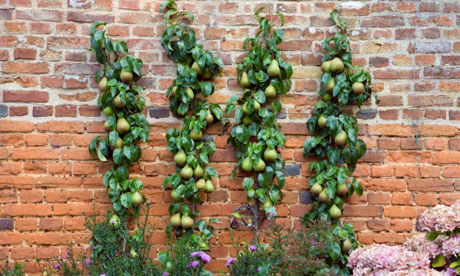
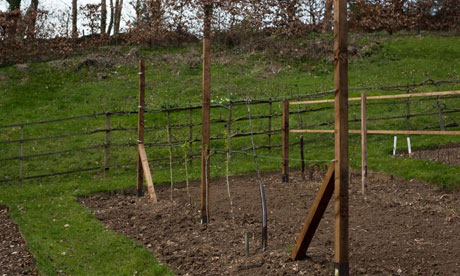
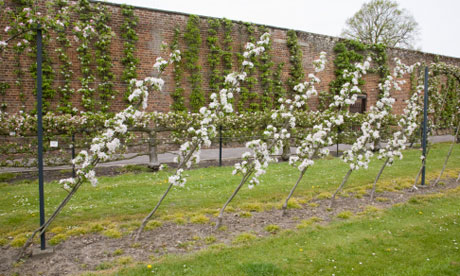
Single cordons like these pears are the simplest form of fruit tree training. Cordons are great for small gardens as they take up so little space.Photograph: Kate Gadsby/GettyNow is the ideal time of year for planting new fruit trees for training. Here apple 'Coeur de Boeuf' and redcurrants have been planted for cordons.Photograph: Anne Gilbert/AlamyCordons can also be grown at an angle, like these 'Rajka' apples. Photograph: Claire Higgins/Getty
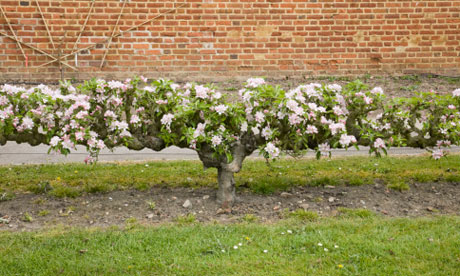
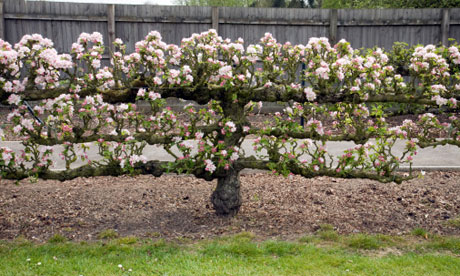
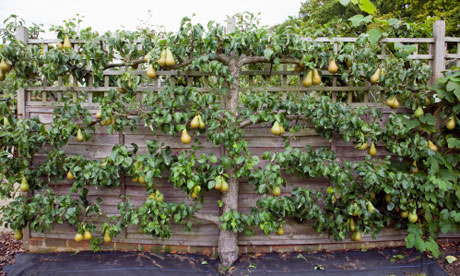
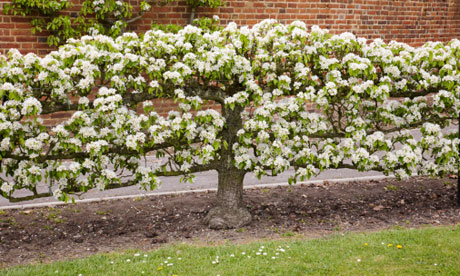
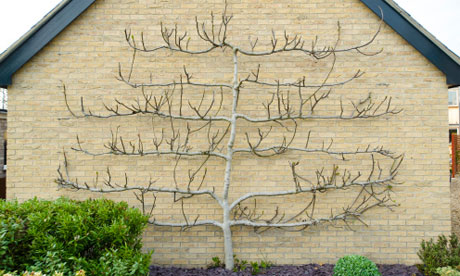
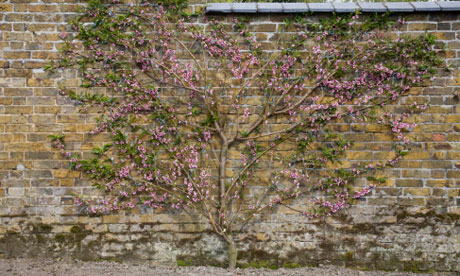
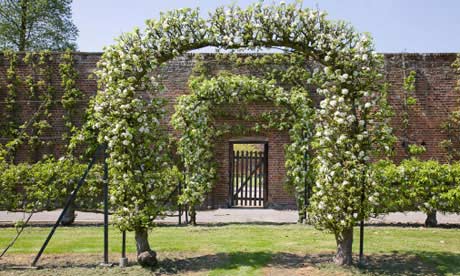
Gooseberries, blackcurrants, redcurrants and whitecurrants (pictured) are ideal for training against a shady wall.Photograph: Richtradition/AlamyStep-overs feature a short stem with two horizontal 'arms', low to the ground and are great for edging borders or creating boundaries, like this 'Merton Russet' apple.Photograph: Claire Higgins/GettyEspaliered apples can be trained against a sunny wall or grown freestanding, supported by a system of wires, like this variety, 'Rosemary Russet'.Photograph: Claire Higgins/GettyPears grown against in a sunny, sheltered spot will remain productive for many years. Here, the popular variety 'Conference' is espaliered against a fence.Photograph: Claire Higgins/GettyPears can also be espaliered freestanding with a series of supports, like this 'Doyenne du Comice' tree.Photograph: Claire Higgins/GettyAn espaliered fig tree is ideal for training against a sunny wall. Pictured in winter, this tree shows the tiered outline of an espalier-trained tree.Photograph: Howard Rice/GettyPeach trees can be protected from the disease peach leaf curl if trained against a wall, like this variety 'Rochester'. Photograph: Claire Higgins/GettyUse an archway of trained apples to frame a path or entrance.Photograph: Claire Higgins/Getty
Sign up to read this article
Read news from 100’s of titles, curated specifically for you.