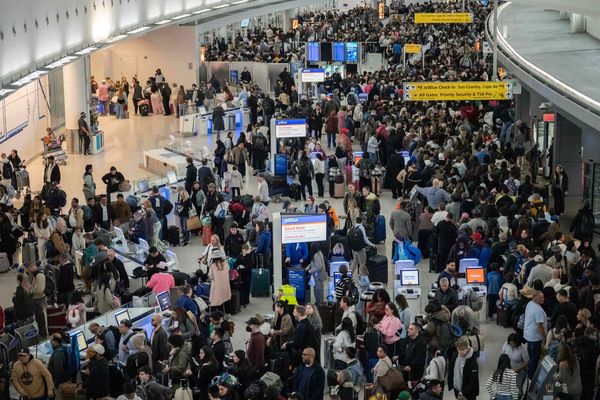
Finally, a late recovery has seen the FTSE 100 index close up 23 points at 7,184, a gain of 0.3%.
Goodnight! GW
Summary
Time for a recap
The US-China trade war continues to rumble on, worrying investors and fuelling concerns that the global economy is weakening.
Beijing has launched a fresh criticism of Washington, releasing a trade white paper which blamed US belligerence for the failure to reach a deal. It accused America of:
Resorting to intimidation and coercion, it persisted with exorbitant demands . . . and insisted on including mandatory requirements [that infringe on] China’s sovereign affairs in the deal.”
President Trump has hit back, insisting that his tariffs are bringing in billions of dollars of revenue without driving up prices.
Mexican restaurant chain Chipotle, though, has warned that Trump’s proposed tariffs on imports from Mexico would hurt profits or push up burrito prices.
Traders have also been jolted by reports that America considered imposing tariffs on Australia - a key ally - to prevent aluminium being dumped on the US markets.
Trump also took time out of his state visit to the UK to call for a boycott of CNN - seemingly unhappy that he couldn’t get Fox News at the US embassy.
Just arrived in the United Kingdom. The only problem is that @CNN is the primary source of news available from the U.S. After watching it for a short while, I turned it off. All negative & so much Fake News, very bad for U.S. Big ratings drop. Why doesn’t owner @ATT do something?
— Donald J. Trump (@realDonaldTrump) June 3, 2019
I believe that if people stoped using or subscribing to @ATT, they would be forced to make big changes at @CNN, which is dying in the ratings anyway. It is so unfair with such bad, Fake News! Why wouldn’t they act. When the World watches @CNN, it gets a false picture of USA. Sad!
— Donald J. Trump (@realDonaldTrump) June 3, 2019
Ah. You see the the problem is that Fox News broke UK broadcasting rules so many times they would’ve been fined if they hadn’t taken it off airhttps://t.co/zb3Y7q4zNQ https://t.co/uCQN1CkUzV
— Janine Gibson (@janinegibson) June 3, 2019
There are also fresh signs that global manufacturers are struggling.
In Britain, factory growth went into reverse in May for the first time since July 2016. Companies have stopped stockpiling goods, now that the immediate threat of a no-deal Brexit has faded. Some say that overseas companies are taking their business elsewhere as they adjust their supply chains.
Dave Atkinson of Lloyds Banking Group, warns:
It’s clear that challenges are starting to bite and we’ll all be monitoring the evolving situation in the coming months – from the escalating trade war between the US and China affecting the sector’s confidence to the fall in the volume of orders of UK manufactured goods domestically and globally.
Recent stockpiling, partly driven by the uncertainty from the UK leaving the EU, is also now impacting on new orders as businesses show caution in managing stock levels.
Eurozone manufacturing also had another bad month, with output shrinking again. Germany suffered the biggest fall in activity, with output and new orders both down.
America’s factories are also being dragged back, fuelling concerns that the trade war is hurting demand across the board.
Dow drops in tandem w/ US 10y yields as US manufacturing hits lowest level since Oct2016. ISM manufacturing index fell to 52.1 for May, compared to expectations for 53, lowest reading since Oct2016. US 10y yields now at 2.1%. pic.twitter.com/GyiPGOIxoQ
— Holger Zschaepitz (@Schuldensuehner) June 3, 2019
Updated
US stocks hit by weak factory data
Wall Street has now slid into the red, following the news that America’s manufacturing growth weakened last month.
The Dow Jones industrial average is now down 109 points, or 0.4%, as the early rally fizzles out.
U.S. Manufacturing Surveys: (ISM at its lowest level since Oct. 2016) pic.twitter.com/Eur2l96kOD
— Michael McDonough (@M_McDonough) June 3, 2019
Updated
America’s Institute of Supply Management has given a slightly more optimistic view of the US factory sector.
Its US manufacturing PMI, just released, has dropped to 52.1 for May, down from 52.8 in April.
That suggests stronger growth than implied by the rival (gloomier) Markit PMI, but is also ISM’s lowest reading since summer 2016.
U.S. MANUFACTURERS reported a further deceleration in business activity with ISM composite activity index slipping to 52.1 in May from 52.8 in Apr and 58.7 a year ago.
— John Kemp (@JKempEnergy) June 3, 2019
Growth is slowest since Aug 2016 pic.twitter.com/U5IQgSxyzE
Details of US ISM Manufacturing PMI better. Recall ISM equal weights five components. The drop was mostly due to weaker supplier deliveries and inventories index. New orders and employment managed to increase modestly.
— Renaissance Macro (@RenMacLLC) June 3, 2019
US manufacturing PMI hits 10-year low
Newsflash: America’s factory sector has grown at its weakest rate since the global recession a decade ago.
Data firm Markit’s US manufacturing PMI, just released, has dropped to just 50.5, from 50.6 in April. That’s the lowest reading since September 2009, and a level that is barely above stagnation.
Factory bosses reported that their output growth slowed, while new orders actually fell for the first time since August 2009.
The US trade was blamed by many firms, Markit says:
The headline PMI fell to its lowest level since September 2009 as output growth eased and new orders fell for the first time since August 2009.
Weak demand conditions and ongoing trade tensions led firms to express the joint-lowest degree of confidence regarding future output growth since data on the outlook were first collected in mid-2012.
🇺🇸 US Manufacturing PMI drops to lowest since September 2009, as new orders fall for the first time in nearly ten years. Business confidence weakens to joint-lowest in the survey history. More: https://t.co/Q2fuaXPApd pic.twitter.com/yrlj3vlQNw
— IHS Markit PMI™ (@IHSMarkitPMI) June 3, 2019
Uh-oh! Brazil’s factory sector has slowed to near-stagnation last month, another sign that global growth is weakening.
Brazil manufacturing PMI falls to 50.2 in May, lowest in 10 months. Sector activity virtually grinds to a halt and now on the cusp of outright contraction. pic.twitter.com/HHdKrDubML
— Jamie McGeever (@ReutersJamie) June 3, 2019
That follows the surprise contraction in the UK last month, and the ongoing weakness in the eurozone., and beyond...
UPDATE
— Jamie McGeever (@ReutersJamie) June 3, 2019
Global recession fears mount as manufacturing PMIs around the world confirm contraction:
South Korea
Japan
Taiwan
Malaysia
Russia
Poland
Turkey
Czech Republic
Italy
Germany
UK
Canada
All below 50.0
China
Spain
Brazil
All 3 stagnating and on the brink of contracting
Wall Street opens
The New York stock exchange has opened cautiously, as investors fret about the prospects of a deeper trade war.
The tech-focused Nasdaq dipped by 0.15%, adding to last month’s losses.
Alphabet (Google’s parent company) has shed 4%, following reports that it could face an antitrust probe from the US Justice Department.
The Dow Jones industrial average, though, has gained 65 points, or 0.26%, to 24,880.

Mexican-themed restaurant chain Chipotle has just undermined Donald Trump’s claim that his trade war won’t hurt consumers.
Mexican Grill Chipotle has sad that it could cover the cost of Trump’s proposed tariffs on Mexican imports by raising the cost of a burrito by around 5 cents.
The company also suggested (to Reuters) that a new 10% levy on goods from Mexico - such as avocados - could push up its costs by around $15m this year. That means Chipotle must choose between pushing up prices, or letting its profits suffer.
Chief financial officer Jack Hartung said a hit to earnings was one option, adding:
“We could also consider passing on these costs through a modest price increase, such as about a nickel on a burrito”.
A 5c price rise won’t make much impact on the cost of living (unless you’re really keen on burritos). But it does show how tariffs can drag on the economy.
Copper, another gauge of global growth prospects, has hit a five-month low today.
The price of a tonne of copper, traded in London, fell to $5,801 this morning, the lowest since early January.
Anxiety over the global economy are also driving investors into US government bonds.
This is pushing the price of Treasury bonds up, and driving down the interest rate on the debt. The yield on 10-year T-bills has now fallen to 2.1%, from over 3% last November.
That suggests investors are cutting their expectations for growth and inflation. Many now expect the US Federal Reserve to cut interest rates this year, rather than keep raising borrowing costs.
Never catch a falling knife? The #yield on 10-year US Treasuries is heading for 2% at warp speed! pic.twitter.com/CL8KEA0jBg
— jeroen blokland (@jsblokland) June 3, 2019
Mexico’s Ebrard: Mexican Officials Will Meet With US Trade Rep Lighthizer This Week
— LiveSquawk (@LiveSquawk) June 3, 2019
Mexican Foreign Minister Ebrard Says Mexican Officials Will Meet With U.S. Trade Representative Lighthizer And Acting U.S. Homeland Security Secretary Mcaleenan This Week
— Redbox Global (@RedboxWire) June 3, 2019
Mexico is pushing back against Donald Trump’s threat to impose tariffs on its goods unless it reduces migration to the US.
Marcelo Ebrard, Mexico’s foreign minister, is in Washington today. He’s told a news conference that such tariffs could be ‘counterproductive’.
Mexico’s US ambassador, Martha Bárcena Coqui, has also hammered home that message:
Mexico’s Ambassador to the US says slapping tariffs on the US could have counterproductive effect and will not stem flow of immigration. Mexico proposed to keep working with the US.
— Stephanie Dhue (@StephanieDhue) June 3, 2019
Mexico's US ambassador says tariffs are counterproductive, would hurt Mexico's economy and reduce its ability to stem the flow of migrants. pic.twitter.com/Ah7ZWnCogR
— Harry Horton (@harry_horton) June 3, 2019
Selling at the start of May would have been a good investment strategy this year....
Welcome to June!
— Shannan Siemens (@ShannanSiemens) June 3, 2019
May was a rough month:
Nasdaq (-8.7%)
S&P (-6.6%)
DOW (-6.4%)$AAPL (-17%) ~ the worst Dow performer in May.$MYL (-40%) ~ the worst S&P performer in the S&P. pic.twitter.com/L3HFslJsRz
European stock markets have recovered some of this morning’s losses, but are still in the red as lunchtime approaches.
The prospect of Mexico, and even Australia, being dragged into the US-led trade war continues to worry investors.
China’s attack on Washington over the weekend (blaming US ‘intimidation and coertion’ for the breakdown in negotiations) is also a worry. Wall Street is expected to drop when trading begins in 90 minutes.

May was a grim month for the markets, and June isn’t starting much better.
Rupert Thompson, head of research at Kingswood, explains how the latest trade conflict has worried the markets:
“Equity markets have retreated further and are now down some 6% in local currency terms from their late April high. In sterling terms, the decline has been cushioned somewhat by the weakness of the pound and is a more moderate 4%.
The escalation in trade tensions continues to be the main factor driving equities lower. Indeed, there was talk of China restricting exports of rare earth minerals and soybeans in response to the recent moves by the US against Chinese telecom companies. In addition, Trump out of the blue announced he was imposing tariffs on all Mexican imports until Mexico ‘substantially stops the illegal flow of aliens’.
But Thompson also hopes that Donald Trump and Xi Jinping can end the dispute, before the global economy really suffers:
“The best that can now realistically be hoped from the end-June G20 summit is that Presidents Trump and Xi agree to restart negotiations and postpone the tariff increases set to be implemented in July. Longer term, we still believe China and the US will reach some kind of agreement – not least because neither side will want to risk a recession.
With the Presidential election next November, Trump will have every incentive to reach a deal rather than risk triggering a downturn in the economy.
Gold hits two-month high amid trade angst

Back in the markets, the gold price has hit a two-month high as nervous investors scamper for safe places to put their money.
Spot gold has jumped 1% today, and just hit $1,317.6 a troy ounce. That’s its highest levels since late March.
Analysts are blaming the latest tensions in the trade war -- especially Donald Trump’s threat to impose tariffs on Mexican imports.
Analysts at OCBC Bank told clients:
The Mexican tariffs were probably the straw that broke the camel’s back.
“Tariffs on Mexico also showed that no country is safe from the US weaponising trade to meet objectives of the Trump administration, stretching the possibility of the global economy losing growth steam.”
China’s latest criticism of the US’s approach to the trade talks is also worrying the market, of course, driving people out of shares and into safer assets.
Updated
Trump bashes CNN
President Trump began his trip to London by settling down in front of the TV, before making the short trip by helicopter to Buckingham Palace.
Unfortunately, he wasn’t pleased to find himself watching CNN -- and has just bashed one of his least-favourite news channels:
Just arrived in the United Kingdom. The only problem is that @CNN is the primary source of news available from the U.S. After watching it for a short while, I turned it off. All negative & so much Fake News, very bad for U.S. Big ratings drop. Why doesn’t owner @ATT do something?
— Donald J. Trump (@realDonaldTrump) June 3, 2019
I believe that if people stoped using or subscribing to @ATT, they would be forced to make big changes at @CNN, which is dying in the ratings anyway. It is so unfair with such bad, Fake News! Why wouldn’t they act. When the World watches @CNN, it gets a false picture of USA. Sad!
— Donald J. Trump (@realDonaldTrump) June 3, 2019
Donald Trump would rather have watched Fox News, I suspect. Unfortunately (for him), Fox pulled its UK feed in 2017, after communications regulator Ofcom criticised its coverage several times.
Back in November 2017, Ofcom ruled that the Fox News programmes Hannity and Tucker Carlson Tonight breached impartiality rules covering British broadcasting. This related to its coverage of the Manchester Arena bombing, and Trump’s executive order that restricted travel to the US from seven majority-Muslim countries.
Full story: UK factory output shrinks on back of Brexit uncertainty
UK politicians are distracted by Donald Trump’s state visit, but they really should take a closer look at the downturn in UK manufacturing last month.
Our economics editor Larry Elliott says:
The government has been sent a warning signal that Brexit uncertainty is pushing Britain’s manufacturing sector into recession as the latest industry health check showed the weakest performance since the aftermath of the EU referendum three years ago.
Order books shrank rapidly after a period when businesses had been stockpiling goods in the run-up to the original Brexit deadline at the end of March, according to the regular monthly survey conducted for the Chartered Institute of Procurement & Supply by the research group IHS Markit.
The purchasing managers’ index – a closely watched guide to the strength of the manufacturing sector – fell from 53.1 points in April to 49.4 in May. A finding below 50 indicates contraction.
With the deepening global trade war adding to industry’s woes, Cips/Markit said it was one of the sharpest declines in the index in six and a half years.
More here:
Trump: Tariffs are working
Just in: Donald Trump has just accused China of subsidising its industries to help them cope with the trade war.
The US president, at the start of his state visit to the UK, tweeted:
China is subsidizing its product in order that it can continue to be sold in the USA. Many firms are leaving China for other countries, including the United States, in order to avoid paying the Tariffs. No visible increase in costs or inflation, but U.S. is taking Billions!
— Donald J. Trump (@realDonaldTrump) June 3, 2019
Unfortunately, most of those “billions” are coming from American firms, not Chinese ones, as they’ve been picking up the tab.
Late last month, the International Monetary Fund showed that the tariff revenue collected has been borne almost entirely by US importers. IMF researchers found that US and Chinese consumers are “unequivocally the losers from trade tensions”.
Some of these tariffs have been passed on to US consumers, like those on washing machines, while others have been absorbed by importing firms through lower profit margins.
Brexit stockpiling helped the UK economy to grow by a meaty 0.5% in the first three months of 2019. Today’s weak PMI report suggests growth may be rather slower in the current quarter, points out Markit’s Chris Williamson:
UK factories struggle as Brexit stock build impact unwinds: IHS Markit/CIPS manufacturing #PMI fell from 53.1 in April to 49.4 in May, below the 50.0 ‘no change’ level for the first time since July 2016. Q1 boost to economy will reverse/fade in Q2 https://t.co/YVp5iDGwcM 1/3 pic.twitter.com/tVOxXFwU9j
— Chris Williamson (@WilliamsonChris) June 3, 2019
We’ll have a clearer picture by Wednesday, when the Service Sector PMI is released (we also get the UK construction PMI tomorrow).
Lee Collinson of Barclays Corporate Banking says UK factories have fallen into a dip as Brexit stockpiling unwinds:
Manufacturers have been warning for some time that they are trying to navigate a number of headwinds, and the hard to predict Brexit negotiations have certainly made investment decisions more difficult, with falling car production indicative of the issues being faced.
It’s not all about Brexit though, with weaker global demand already taking a bite out of exports.
KPMG’s Stephen Cooper agrees that Brexit isn’t the only reason the UK manufacturing PMI has tumbled:
“Any potential benefits from the auto shutdowns [in April] have been outweighed with falling orders, high inventory levels - from previous stockpiling - and worryingly, a reported shift with some EU customers moving their supply chains away from the UK amidst continued Brexit uncertainty.
The global backdrop is also one of uncertainty - with trade wars, geopolitical events, automotive developments and Brexit – all of these factors are weighing on manufacturing in Europe and Asia and they are reflected in May’s readings.
Updated
Here’s Howard Archer, economist at EY Item Club, on this morning’s worrying fall in UK factory growth:
- On the export front, manufacturers are hampered by recently slower global growth. Global trade conflicts and tensions are also a concern for UK manufacturing exporters. On the positive side, the weakness in the pound may provide some help to UK manufacturing exporters.
- UK manufactures could be hurt by EU companies switching supply chains away from the UK. This may be countered though by UK companies switching their supply chains from the EU to the UK
- If the UK does ultimately leave the EU with a “deal” at the end of October manufacturers will clearly hope that this reduces uncertainty, boosts confidence and lifts business demand for capital goods as well as consumer demand for big-ticket manufactured goods.
There is one glimmer of good news amid the gloom -- half of the factory bosses interviewed by Markit expect output to be higher in a year.
Duncan Johnston, UK manufacturing industry leader at Deloitte, says:
“This month’s disappointing PMI figure of 49.4 is undoubtedly a combination of ongoing Brexit uncertainty and underlying macro and global trade factors. However, it is hard to unpick what has had the larger impact.
This backdrop of uncertainty is expected to continue for some months, but there is cause for optimism. Purchasing managers remain positive, with almost half expecting output to be higher in a year’s time and only 10% expecting it to be lower.”
Manufacturers: Clients are looking overseas instead
Make UK, which represents British manufacturers, says customers are taking their business elsewhere, driven away by Brexit worries.
Seamus Nevin, their chief economist, says this helped to pull manufacturing output down last month.
“The extent to which stockpiling was artificially boosting output earlier in the year is now clear with the PMI plunging into negative territory for the first time since the Referendum. Manufacturers are reporting export demand is weakening as customers look to buy goods from other countries which they once bought from the UK.
This is not only the case with European customers but also from countries in Asia with which UK manufacturers trade under the terms of EU free trade deals.
Nevin also points out that Europe’s factories are also slowing (see 9.32am for details), hit by the global slowdown.
“The weakness in manufacturing output in the UK is also clearly linked to what is happening in our main trading market, the EU. Eurozone PMI remained in negative territory for the fourth consecutive month with both Germany and Italy struggling as the global economic slowdown gathers pace.
“This is not a good time for our economy to be preparing to go it alone. Once again the data is showing a consistently downward trend and, in this context, continued political uncertainty at home can only make an already difficult situation worse.”
Britain’s factories could be heading into a recession now that they’re no longer scrambling to protect themselves from a cliff-edge no-deal Brexit.
Capital Economics fear that the stockpiling boost that supported manufacturing earlier this year has now faded.
The sharper-than-expected drop in the #manufacturing #PMI from 53.1 to 49.4 (consensus 52.0, CE 51.0) means that the index is now at its lowest level since July 2016 and suggests the sector will slip back into contraction as the boost from no deal preparations unwind. pic.twitter.com/zO0l9jCPNl
— Capital Economics UK (@CapEconUK) June 3, 2019
Duncan Brock, Group Director at the Chartered Institute of Procurement & Supply, is also concerned that Britain’s factories contracted last month:
With one of the fastest shrinking rates seen in six and a half years and the biggest drop since July 2016, straight after the referendum result, based on this result, there is the likelihood of more bad news to come.
“Supply chain managers voiced their deep anxieties over Brexit’s continuing impacts as some supply chains were re-directed away from the UK resulting in a drop in total new orders for the first time since October.
Clients from Europe and Asia were particularly reluctant to commit to new business across all sectors but the intermediate sector suffered the worst fall in seven years as the pipeline of work dried up. It has now become obvious that the stockpiling activities of the last few months were propping up the sector’s performance.
The UK factory sector was buffeted by ongoing Brexit uncertainty again in May, says Rob Dobson, dragging the PMI to a near three-year low.
He also fears that British manufacturing could continue to shrink in the comping months.
The trend in output weakened and, based on its relationship with official ONS data, is pointing to a renewed downturn of production.
“New order inflows declined from both domestic and overseas markets, as already high stock levels at manufacturers and their clients led to difficulties in sustaining output levels and getting agreement on new contracts.
Demand was also impacted by ongoing global trade tensions, as well as by companies starting to unwind inventories built up in advance of the original Brexit date.
UK manufacturing hit by Brexit uncertainty and trade war worries
Newsflash: Britain’s factory sector has suffered its worst contraction since the EU referendum almost three years ago.
Data firm Markit reports that new orders and employment both declined last month, hit by Brexit uncertainty and the knock-on impact of the US-China trade war.
Firms also reported that they have slowed their recent flurry of stock-piling, following the latest Brexit extension to the end of October.
Markit says:
New order inflows deteriorated from both domestic and overseas sources. New export business fell for the second month running and at the quickest pace in over four-and-a- half years. Manufacturers reported lower demand from Asia and Europe.
There was also mention of Brexit uncertainty, including clients diverting supply chains away from the UK, leading to lower demand from within the EU.
This pulled Markit’s UK manufacturing PMI down to 49.4 -- the lowest reading since July 2016, when factories were reeling from the Brexit vote.
That’s worse than the City forecast (of 52), and shows that the sector contracted in May.

That suggests that Britain’s manufacturing sector has weakened, which is a worrying sign for the wider economy.
Reaction to follow!
Updated
We have confirmation that Europe’s factory sector continued to struggle last month.
Data firm Markit has reported that its eurozone manufacturing PMI fell to 47.7 in May, down from 47.9 in April. That shows the sector is shrinking (as it’s below the 50-point mark showing stagnation).
Factory bosses reported that output and new orders continued their recent decline - a sign that trade war worries is hurting the European economy.
Germany - traditionally Europe’s powerhouse - suffered the sharpest contraction:

🇩🇪 Germany Manufacturing PMI at 44.3 in May, still near its lowest since 2012. Rates of decline in output and new orders eased, but employment fell at the quickest pace in almost 6.5 years. More: https://t.co/Tu4FGs4goa pic.twitter.com/pFAUepIa2s
— IHS Markit PMI™ (@IHSMarkitPMI) June 3, 2019
Updated

Britain’s smaller FTSE 250 index, is also having a bad morning - down 1% at 18,781 points.
Troubled outsourcing group Kier is doing some of the damage - it has slumped by 40% this morning to a 20-year low after issuing a profits warning.
Kier, which build roads and runs public sector services, says revenue growth is weaker than expected, knocking £25m off profits this year. In another blow, the cost of its restructuring programme has jumped by 15%.
Otherwise, energy firms and tech companies are among the top fallers on the mid-cap index, matching the moves on the FTSE 100.
The sell-off is deepening in London.
The FTSE 100 is now down 80 points, or over 1%, with only a handful of stocks defying gravity. Every sector has fallen, led by energy (tracking the oil price), technology (China concerns), consumer goods-makers and miners (recession fears).
Online grocer Ocado is the top faller, after being downgraded by investment bank Jefferies.
Morgan Stanley: Trade war could cause recession
Morgan Stanley has also warned investors that the US-China trade war could be worse than feared.
Its chief economist, Chetan Ahya, has warned that the global economy could slump into recession if president Trump expands the trade war to all Chinese exports.
Ahya wrote:
“My recent conversations with investors have reinforced the sense that markets are underestimating the impact of trade tensions.
Investors are generally of the view that the trade dispute could drag on for longer, but they appear to be overlooking its potential impact on the global macro outlook.”
Morgan Stanley sees a recession within a year if US-China Trade war gets worse. @EconomicTimes @business pic.twitter.com/dhEsdl5Ldl
— Nehal Chaliawala (@Nehal_ET) June 3, 2019
Wall Street giant Goldman Sachs has become more pessimistic about the trade war.
It now believes there’s a 60% chance that America imposes tariffs on ALL Chinese goods (currently around half, or $300bn per year, are exempt from the trade war). That’s up from 40% previously.
In a report issued last night, Goldman economists warn:
“Rhetoric in China has intensified... additional escalation looks likely from both sides, including tariff and non-tariff measures.”
FTSE 100 hits 2.5 month low
European stock markets have fallen in early trading, hit by trade war anxiety.
Britain’s FTSE 100 has shed 66 points, or 0.9%, to 7095, its lowest point since mid-March. China’s latest criticism of America’s trade war policy (see here) is hitting sentiment in the City.
The French CAC and Germany’s DAX have both lost 0.75%, adding to Friday’s losses (after America announced new tariffs on Mexican goods).
Neil Wilson of Markets.com says a combative speech by Chinese defence minister Wei Fenghe is also hitting share prices.
Global stocks were down by around 6% in May – can we get a better June? The runes are not looking great.
European shares are lower today as trade tensions continue to mount and investors exhibit greater fear about the global economy and the risk of recession. Asian markets were generally lower after a big selloff on Wall Street on Friday that saw the S&P 500 decline 37 points, or 1.32%, to finish at 2,752.06, below its 200-day moving average.
The trade war is not cooling down; in fact, it looks like the rhetoric is heating up and further escalation seems likely. China is raising tariffs on $60bn of US goods in retaliation for tariffs, coming up with its own blacklist of foreign companies, has accused the US of resorting to ‘intimidation and coercion’, and begun an investigation into FedEx. And the Chinese defence minister says if the US wants a fight, they will ‘fight to the end’. No end in sight, and the chances of a G20 détente are slim.
Investors are also reeling from the news that America considered beginning a trade war with Australia - a key US ally.
The New York Times reported that some of Mr Trump’s top trade advisers had urged the tariffs as a response to a surge of Australian aluminium flowing onto the US market during the past year.
Australian PM Scott Morrison has tried to calm nerves, saying his administration is “working closely with the US officials and the White House” on trade issues. That’s not a denial, though, that something has been threatened.....
Introduction: Beijing accuses US of intimidation and coercion

Good morning, and welcome to our rolling coverage of the world economy, the financial markets, the eurozone and business.
It’s a new month, but the same old issues. The markets are starting June as they ended May - with anxiety over US trade policy hitting asset prices and driving up volatility.
Over the weekend, Beijing stepped up its fightback against Donald Trump by accusing Washington of”intimidation and coercion”.
Vice Commerce Secretary Wang Shouwen blasted America’s decision to blacklist Chinese firms such as Huawei, saying:
“The China-US economic and trade consultations have been severely frustrated by the US tariff increases and [the US’s] abuse of export controls by including Chinese companies on the entities list.”
In a new white paper on trade, China blames the US government for the failure to reach a trade deal, claiming:
Resorting to intimidation and coercion, it persisted with exorbitant demands . . . and insisted on including mandatory requirements [that infringe on] China’s sovereign affairs in the deal.”
The white paper also lays out how the trade war between the two economic powers has backfired. Bloomberg has more details:
The paper contends that the trade actions have done serious harm to the U.S. economy by increasing production costs, causing prices hikes, damaging growth and people’s livelihoods and creating barriers to U.S. exports to China. In short, Trump’s tariffs aren’t helping, China concluded.
“It is foreseeable that the latest U.S. tariff hikes on China, far from resolving issues, will only make things worse for all sides,” according to the white paper.
And rather than backing down, China has just fulfilled its pledge to increase tariffs on $60bn of American good, in response to the latest US tariffs on Chinese goods.
Asian markets have reacted badly - Japan’s Nikkei has shed almost 1% today, with China’s Shanghai composite also dipping. European and US markets are also expected to open in the red, ahead of new healthchecks on their factory sectors today.
European Opening Calls:#FTSE 7131 -0.43%#DAX 11646 -0.69%#CAC 5168 -0.76%#MIB 19625 -0.89%#IBEX 8946 -0.65%
— IGSquawk (@IGSquawk) June 3, 2019
The oil price - a gauge of growth expectations - has taken a tumble too; Brent crude is now just $61.30 per barrel, the lowest since mid-February.
Global mkts have started the week on negative footing & oil extends slide as trade wars stoke global recession anxiety. Crude oil tumbled 16% in May. Shanghai copper at 2y low. Treasuries flat w/US 10y yield at 2.13%. Mkts price in 50% chance of Fed cut by Jul. Bitcoin at $8.6k. pic.twitter.com/C9ARFJriTS
— Holger Zschaepitz (@Schuldensuehner) June 3, 2019
Donald Trump’s threat to impose tariffs on Mexico late last week has hit investor confidence too.
Jim Reid of Deutsche Bank told clients this morning that it has increased the risk that America intensifies its trade dispute with Europe.
One of the additional worries would be that if the US has been so quick to escalate the trade war on these two countries [Mexico and China] the bar must be a bit lower to carry out a trade assault on Europe at some point in the future. Interesting times.
The latest PMI reports, due today, will show whether manufacturers took a big hit from the trade war last month.
The agenda
- 9am BST: Eurozone factory PMI report for May
- 9.30am BST: UK factory PMI report for May
- 3pm BST: US factory PMI for May
Updated