Wall Street close

So much for a late rally!
Stocks have subsided in the closing minutes on Wall Street, as a late bout of trade jitteriness ran through the New York Stock Exchange.
The Dow ended the day effectively flat (or just 4 points higher if you’re being precise), while the S&P 500 index shed 0.2%.
Investors will be keeping their heads down until the US-China trade talks resume in Washington tomorrow, closely followed by the likely imposition of more tariffs on Chinese goods (now the paperwork is in).
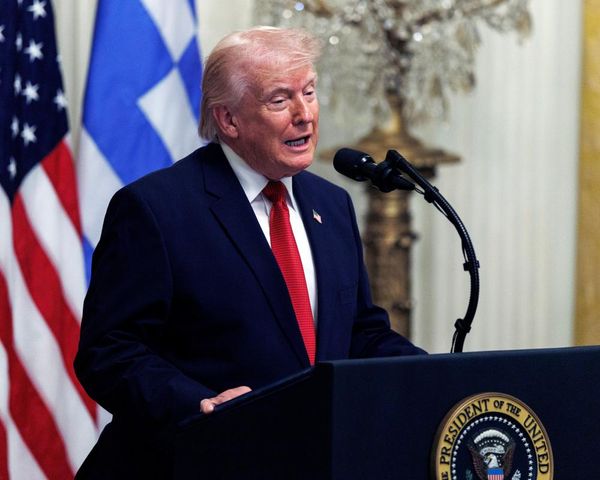
Donald Trump claims that China’s vice-premier Liu He wants a deal -- but the two sides don’t appear close to a breakthrough.
The overnight drop in Chinese exports might put more pressure on Beijing to make concessions, but they also don’t want to cave into the US. So there could be more volatility this week.
Until then, goodnight! GW
Every crisis is also an opportunity. So Goldman Sachs have drawn up a list of companies to consider investing in if the US-China trade war worsens.
They favour services companies over manufacturers, for the hard-to-argue-with reason that they use fewer imported good. So Alphabet (Google), Amazon and Microsoft should be relatively good investments.
Within the services sector, software companies, media and entertainment names, and retailers and banks, could be solid investment bets, they reckon. More here.
A late rally has pushed the Dow up by 145 points, or 0.56%, to 26,111.
That’s only a third of yesterday’s losses, though. With 30 minutes to go, there’s still time for a more vigorous rebound.
America is already charging higher tariffs than the rest of the G7 - thanks to the trade war with China.
This chart from City Index shows the impact of existing tariffs - and of raising the bar to 25% on Friday.
It also shows how taxing all Chinese imports (still a threat at this stage) would push the overall tariff rate at the US border up to 8%, a major burden.

City Index’s Ken Odeluga says such high tariffs would be “crazy”:
At just short of 8%, the weighted mean of tariff rates levied by the U.S. would be second only to those of Brazil, after Friday’s planned rise. That looks crazy.
Such incongruity is one reason markets do not appear to be taking this week’s events as seriously as the last flare up in the trade dispute; at least not yet.
It’s not clear how China would retaliate against the US, but Beijing does have options.
It can’t impose new reciprocal tariffs on $200bn of goods, for the simple reason that China only bought $179bn of goods from America last year (some of which already incurs tariffs).
But it could raise existing tariffs, perhaps targeting US agricultural imports such as soybeans.
It could also impose non-tariff barriers; restricting US company’s access to China’s economy, or making visas hard to come by.
Or it could launch a currency war, weakening the yuan to make Chinese goods more attractive to US buyers. That would cushion the impact of new tariffs.
Billionaire investor David Rubenstein remain hopeful that a trade deal will be done, by the end of the summer.
He argues that the US and China both want, and both need, a deal in an interview with Yahoo Finance.
Highlight: "Both sides want a deal and both sides [need] a deal," @OneCarlyle co-Founder David Rubenstein says about U.S.-China. "In any deal, there's always ups and downs. ... These are temporary kinds of ups and downs ... We still think China is a wonderful place to invest." pic.twitter.com/7hvklVAJUH
— Yahoo Finance (@YahooFinance) May 8, 2019
Wall Street is clinging onto some limited gains, as the afternoon session ticks on.
The Dow’s currently up 92 points, or 0.36%, at 26,057. United Technologies, the industrial conglomerate, is leading the risers with a 1.5% gain. Consumer focused groups like Walt Disney (+1.1%), Apple (+0.7%) and Nike (+0.9%) are also among the risers.
The S&P 500 and the Nasdaq are also up around 0.25%
China’s commerce ministry also expressed regret that America was preparing to raise tariffs, saying:
“Escalating the trade conflict is not in the interest of the people in both countries and the world.
China deeply regrets the move.”
However, Beijing hasn’t responded to US claims that tardiness and backtracking by China triggered the decision to hike tariffs on Friday .
China’s intervention shows the risks in the markets now, says currency expert Marc-Andre Fongern:
CHINA SAYS IT MAY TAKE COUNTERMEASURES ON U.S. TARIFF MOVE
— Marc-André Fongern 🇪🇺 (@Fongern_FX) May 8, 2019
CHINA'S COMMERCE MINISTRY SAYS WILL HAVE TO TAKE NECESSARY RETALIATORY MEASURES IF U.S. DECIDES TO RAISE TRADE TARIFFS ON MAY 10
...Utterly fragile environment currently as the chance of a deal shrinks significantly.
China: We’ll retaliate if US raises tariffs
Beijing has just fired a warning shot at Washington, ahead of tomorrow’s trade talks.
China’s commerce ministry has said it will take “necessary retaliatory measures” if the US raises tariffs on Friday (something which is already in motion, thanks to the draft notice published earlier).
In London, the FTSE 100 has closed 10 points higher at 7,271 points.
After yesterday’s rout, the London stock market was more subdued today - broadcaster ITV’s shares fell 6% after it reported a 4% dip in revenues, while tobacco firm Imperial fell even further after posting a drop in sales.
David Madden of CMC Markets says traders in the City are hunkering down ahead of the trade talks in Washington tomorrow.
Equity markets in Europe are largely mixed heading into the close. Uncertainty in relation to the US-China trade situation is hanging over the markets, and even though stocks are well-off their recent multi-month highs, some dealers are fearful the worst is still to come.
Trade talks between US and Chinese delegates will take place tomorrow and Friday, and until we have further details about the negotiations, we might see low volatility in stocks.
The White House Press Secretary, Sarah Sanders, has told reporters that China has given “indications” that it’s delegation is coming to Washington this week to seek a deal.
Not clear what those indications are, but they’re helping calm nerves on Wall Street.
Stocks jump to session high as White House's Sarah Sanders tells reporters that the U.S. has received an indication that China wants to make a trade deal https://t.co/dNKeFZcjkA pic.twitter.com/nofAuiT7Hs
— CNBC Now (@CNBCnow) May 8, 2019
Shares are pushing higher in New York, as traders welcome Donald Trump’s claim that China wants a trade deal.
The Dow is now 82 points higher at 26,047 points, rising from Tuesday’s one-month low.
Wall Street is calm in early trading.
After plunging by 473 points yesterday, the Dow is up just 9 points at 25,974.
US files notice to hike Chinese tariffs
Important news: The US Trade Representative’s office have filed the paperwork to hike the tariffs on $200bn of Chinese imports, a move that would deepen the trade war.
The document, signed by Joseph Barloon, general counsel to the Trade Representative, states that the tariff will rise from 10% to 25%, just after midnight on Friday morning.
This is exactly what Donald Trump tweeted would happen last Sunday, after the president concluded that China was moving too slowly and trying to reverse the progress made in recent negotiations.
The Federal Register notice also says a process will be set up to exclude certain products from additional tariffs.
The US Trade Representative officially filed the Federal Register notice to increase tariffs on $200 Billion of Chinese imports from 10% to 25% at 12:01am Friday Morning. #China #Trade #Breaking
— Edward Lawrence (@NewsEdward) May 8, 2019
Thousands of China-made consumer and industrial products, and chemicals, are affected by this move. The list runs from frozen yams and fresh figs to tobacco, gypsum, metal oxides, printing ink, metal tubes, tires, baskets, wool, hats, metal wire, furniture and buttons. They will soon be more expensive for US companies to import.
Currently, these products face a 10% tariff (imposed last September, when the trade war between Washington and Beijing was escalating).
A separate list of $50bn of imports are already taxed at 25%, leaving around $325bn of products free of tariffs (for the moment...)
Trump: China is coming to make a deal
Newsflash: US president Donald Trump has tweeted that China’s vice-premier Liu Hi is heading to Washington to “make a deal” on trade.
Trump also confirmed that Beijing has been trying to renegotiate the draft trade deal (as Reuters reported earlier today). He claims the Chinese administration was playing for time, in the hope that the Democrats win the 2020 presidential election.
The reason for the China pullback & attempted renegotiation of the Trade Deal is the sincere HOPE that they will be able to “negotiate” with Joe Biden or one of the very weak Democrats, and thereby continue to ripoff the United States (($500 Billion a year)) for years to come....
— Donald J. Trump (@realDonaldTrump) May 8, 2019
....Guess what, that’s not going to happen! China has just informed us that they (Vice-Premier) are now coming to the U.S. to make a deal. We’ll see, but I am very happy with over $100 Billion a year in Tariffs filling U.S. coffers...great for U.S., not good for China!
— Donald J. Trump (@realDonaldTrump) May 8, 2019
This may bring some relief to the markets -- investors will be reassured to hear the US president talking about a deal, rather than higher tariffs.
Liu He is expected to hold talks in Washington on Thursday and Friday.
Trump’s claim that tariffs have raised $100bn for America is incorrect, though. As tariffs are paid by the importer, they have actually cost American companies and consumers -- unless they managed to haggle prices down, or sourced products from non-Chinese suppliers instead.
Updated
UK trade secretary: We understand US frustration over China

Britain’s trade secretary, Dr Liam Fox, has warned that America can’t simply rip up the rules on trade.
Speaking on Sky News, Fox says he “understands a lot of the US administration’s frustration” about China.
He cites several issues:
- a lack of transparency over whether companies are private or state-controlled,
- the ‘forced tech transfers’ imposed on foreign companies,
- The subsidies paid to Chinese firms
- The ‘dumping’ of Chinese-made products in overseas markets at unfairly cheap prices
These issues, though, are best handled within international rules-based systems, Fox adds.
If we’re simply all allowed to do what’s in our own national interests, we’ll find we get a re-emergence of the barriers to trade that we’ve seen in previous times.
The liberalisation of trade, particularly since the fall of the Berlin Wall and the growth in trade since, should encourage us to liberalise further rather than impose restrictions.
Despite the market turbulence, ride-hailing company Uber is expected to float on the US stock market on Friday.
That will be a multi-million dollar bonanza for the company’s early investors. But Uber has hit a pothole; drivers are on strike today, protesting about pay and conditions and the fact they won’t get a fair share of the flotation.
Outside Uber headquarters in east London, waiting for protests to start. Union says thousands of UK drivers went on strike at 7am & logged off app; 'many thousands' joined in around the world. Main demands: a cut in commission drivers are charged by Uber and better fares per mile pic.twitter.com/EtVeOd6O2e
— Julia Kollewe (@JuliaKollewe) May 8, 2019
More here:
Bond trading magnate Jeffrey Gundlach, who runs investment firm DoubleLine, suspects that shares could fall further.
He told CNBC that neither side in the trade war is likely to back down, meaning the situation could escalate.
Gundlach warned:
“The market obviously doesn’t want increased tariffs, so it’s been kind of reacting to that.”
Gold hits three-week high

Investors have been piling into gold in recent days, a sign that they’re nervous about the markets.
Bullion has gained $6 per ounce to $1,290 today, its highest level since 15th April 2019.
Fawad Razaqzada, market analyst at Forex.com, says gold could push higher if the trade talks stall:
Given the corresponding sell-off in stock markets over the same period, gold’s positive response is almost entirely due to a rise in risk aversion, owing mainly to renewed concerns over US-China trade spat.
Pound hit by Brexit angst
Trade wars aren’t the only thing moving the markets today.
The pound has hit its lowest level of the week, following reports that talks between the UK government and the Labour party are close to collapse.
The ITV’s Robert Peston writes:
Labour’s negotiations on a Brexit pact with the Government may well be pronounced dead today - partly because the party is launching its EU elections manifesto tomorrow and would presumably need to say something about a possible pact other than “don’t know”.
To be clear, there are more talks between the two sides this evening. But those involved tell me they have no expectation a breakthrough will be seized from the jaws of futility.
Labour Brexit talks with government 'near collapse', writes Robert @Peston https://t.co/ViV4yGO1Wc pic.twitter.com/AAh0Qxozgf
— ITV News (@itvnews) May 8, 2019
This has helped to knock half a cent off the pound, which is now hovering around $1.301 against the US dollar.
Both America and China’s economy would suffer if Donald Trump delivers on his threat of higher tariffs on Chinese imports.
So says Cailin Birch, global economist at The Economist Intelligence Unit, who also remains hopeful of a “limited” trade deal by next month.
She writes:
The breakdown of US-China talks and a further escalation of tariffs would cause erase between 0.2 and 0.5 percentage points from both Chinese and US GDP, depending on the severity of the new tariffs. As a result, we continue to expect US negotiators to work hard towards a deal. One week ago, the US team dropped an issue that had previously been at the core of its demands--an end to commercial cyber theft by Chinese firms--presumably in an effort to get a deal over the line.
Mr Trump’s move to lash out at China may reflect his frustration that a deal still hasn’t been secured, even after the US dropped some of the more controversial issues from the agenda. The US team will likely use this threat to increase the pressure on China in the coming round of talks. We maintain our view that a limited deal will be reached by early June that will prevent a further escalation in tariffs, but which will fail to address some of the major issues in the US-China rivalry, particularly cyber theft. As a result, we expect trade and diplomatic tensions to re-emerge at a later date.
Some perspective: despite this week’s losses, America’s Dow Jones industrial average is still up 11% since the start of 2019.

The tech-focused Nasdaq is up 20% from the lows of late December, while European stocks are 12% higher. Britain’s FTSE 100 is lagging, though, with a 7% gain this year.
Updated
Wall Street is expected to post fresh losses when trading begins in around three hours, on top of yesterday’s rout:

European markets hit five-week low
European stock markets are on the slide, as worries over the US-China trade war gnaw away at traders.
The Europe-wide Stoxx 600 index has dropped 0.4% to its lowest level since the first of April.
In London, the FTSE 100 has now lost 28 points (on top of the 120 surrendered yesterday) and is trading at 7,230, its lowest since late March.

Reports that China backtracked on some of its trade pledges (see here) has worried the City, especially with the likes of UBS suggesting nervous investors should cash out of the market.
Craig Erlam of trading firm OANDA says markets are in “risk aversion mode” as tehy brace for America to impose new tariffs on China on Friday.
The breakdown in talks has really caught the markets off-guard. It seemed a deal was just widely accepted and basically priced in.
Now we’re left wondering whether it will happen at all and what impact more tariffs will have on the global economy and markets. The next few days could be massive.
Reuters: China backtracked on trade pledges
Heads-up: Reuters has got to the bottom of why relations between China and the US suddenly deteriorated last weekend.
They’re reporting that Beijing backtracked on a series of pledges agreed with US negotiators, by taking a red pen to a draft trade agreement.
This ripping up of the draft deal enraged the White House, prompting Donald Trump to tweet that tariffs on Chinese imports will be hiked to 25% on Friday (a move he’d long been threatening).
Here’s a flavour of the Reuters report (online here):
The diplomatic cable from Beijing arrived in Washington late on Friday night, with systematic edits to a nearly 150-page draft trade agreement that would blow up months of negotiations between the world’s two largest economies, according to three U.S. government sources and three private sector sources briefed on the talks.
The document was riddled with reversals by China that undermined core U.S. demands, the sources told Reuters.
In each of the seven chapters of the draft trade deal, China had deleted its commitments to change laws to resolve core complaints that caused the United States to launch a trade war: theft of U.S. intellectual property and trade secrets; forced technology transfers; competition policy; access to financial services; and currency manipulation.
"China reneged on a dozen things, if not more ... The talks were so bad that the real surprise is that it took Trump until Sunday to blow up"
— Jesse Cohen (@JesseCohenInv) May 8, 2019
We're definitely raising tariffs on Friday. #TariffMan $SPY $SPX $ES_F pic.twitter.com/gXcw36KRYI

One of China’s top state-controlled newspapers has issued a “don’t panic” notice to readers.
An editorial in The People’s Daily today insists that China has “complete confidence” in its ability to ride out the trade tensions with the US.
It says:
China has complete confidence to face all possible difficulties and challenges in the China-U.S. economic and trade consultation process, which is why China has always been able to maintain its composure.
As these calming words were printed, deputy premier Liu He will have been packing his suitcase ready to fly to Washington for trade negotiations on Thursday and Friday.
Unless Liu plays a blinder, America seems likely to hike tariffs on $200bn of Chinese imports (chemicals, machinery, food and consumer goods) on Friday.
In an encouraging sign, German factory production has picked up, despite trade tensions.
Industrial output in Europe’s largest economy rose by 0.5% in March, with manufacturing and construction both stronger than in February. Production of construction goods jumped by 1.1%.
That’s a timely boost for Berlin; yesterday, the EC halved its growth forecast for Germany this year, to just 0.5%.
Nadia Gharbi of Swiss bank Pictet says it suggests next week’s German GDP report for the first quarter of 2019 could be solid (following two quarters of stagnation).
🇩🇪 German industrial production was up by 0.5% m-o-m in March, beating expectations (-0.5%).
— Nadia Gharbi (@nghrbi) May 8, 2019
Within industry:
-Manufacturing: + 0.4% m-o-m
-Construction: + 1.0% m-o-m
-Energy: +0.3% m-o-m
(1/n) pic.twitter.com/KGdbMjHbjV
Overall, IP was up by 0.5% q-o-q in Q1, providing a strong signal for next week’s advance Q1 GDP report (2/n) pic.twitter.com/k7bA6hfbvM
— Nadia Gharbi (@nghrbi) May 8, 2019
After yesterday’s slides, European stock markets are bobbing nervously this morning.
The FTSE 100 is 3 points higher, having shed 120 points yesterday in its worst day since March. The Europe-wide Stoxx 600 is up 0.1%.
UBS: Investors should consider cutting risk now
Investors should brace for significant volatility in the next few months, says Mark Haefele, chief investment officer at UBS Global Wealth Management.
And if they don’t fancy a bumpy ride, they should consider getting out now....
Haefele told clients this morning:
We recommend not making major changes in portfolios at this stage, and staying invested. But given that only the president himself knows how far he thinks he can let the market fall, or growth slow, before harming his chances for reelection, we should prepare for potentially significant volatility ahead.
If investors don’t think they can stomach it, it would be better to reduce risk, or hedge positions, now.”
China’s CSI 300 benchmark index has closed at its lowest level since 8th March, a two-month low.
Jim Reid of Deutsche Bank says traders are bracing for fresh tit-for-tat retaliations between Washington and Beijing:
Overnight markets in Asia are trading in a sea of red (a bit like Anfield last night)....
As of right now, China’s top trade negotiator Liu He is still due to travel to Washington tomorrow to meet with Lighthizer and Mnuchin. The suggestion is though that China is planning retaliatory tariffs immediately after the US increases theirs.
JP Morgan’s CEO Jamie Dimon reckons there’s an 80% chance that the US and China will reach a trade deal - but probably not this week.
In a Bloomberg interview, Dimon said Trump’s pledge to hit China with more tariffs had spiced up the situation:
“Now we have this whole kind of little bump in the road.
Sometimes his tweets don’t pan out to be as bad. I don’t think they’ll get the deal done by Friday.”
It’s been a roller-coaster few months for Chinese investors, even before today’s losses.
After surging by over 20% in early 2019, the Shanghai index has now been sliding for the last two weeks. Trade war jitters, and fears that Beijing may slow its stimulus measures, have combined to spook investors.
#China's stock market down again! Shanghai Composite Index down more than 11% during the last 10 trading days. pic.twitter.com/tzYqKxInog
— jeroen blokland (@jsblokland) May 8, 2019
Updated

All the major Asia-Pacific stock markets are in the red again today, dragged lower by trade war anxiety.
Japan’s Nikkei shed almost 1.5%, falling by 321 points to 21,602 by the Tokyo close.
Stocks in China were also slammed, sending the Shanghai Composite index down 1%.

Traders will have been shaken by the heavy losses on Wall Street yesterday, and the prospect that this week’s trade negotiations flounder.
Analyst Stephen Innes says investors had been complacent that a trade deal would be reached. Not any more!
The sudden shift in the U.S. trade policy is beginning to look less like a tactic to extract further compromises from China, as it now seems the U.S. administration is hell-bent on applying more punitive tariffs which could upend the negotiations all together especially if President Trump decides to impose a flat 25 % across all Chinese products.
This shift is challenging the markets baseline case, which was positioned for a trade deal. So, over the past 24 hours, there has been a significant sentiment shift as some investors hedge into safe-haven assets while some are falling by the wayside while the balance is opting for the sidelines. But one thing that is for sure, Equity investors are getting more uncomfortable by the hour.
Here’s some early reaction to the Chinese trade data:
🇨🇳#China trade data: Global demand struggling as exports -2.7% YoY, imports +4% YoY China domestic demand picking up. But all eyes on trade negotiations...mkt could be under pricing probability of deterioration in CH/US talks=final conclusion could be pushed out=⬆️uncertainty pic.twitter.com/Hoz5DoXIP9
— Eleanor Creagh (@Eleanor_Creagh) May 8, 2019
#China's #exports unexpectedly fell in April, matching tepid macro numbers like the German Manufacturing PMI, as #imports unexpectedly rose. pic.twitter.com/fh3uLgMmLj
— jeroen blokland (@jsblokland) May 8, 2019
China's seemingly weak Apr trade data still reflects a global problem. E.g. phone exports continue to weaken while related imports upward the supply chain remain sluggish. Agriculture import goes up - why April? pic.twitter.com/FIN0wmr1J3
— Pavel Xu (@pavel_xu) May 8, 2019
Today’s trade data also shows that China’s trade surplus with the US rose to $21.01bn in April from $20.5bn in March.
Chinese surplus shrinks as exports fall
China has suffered a surprise fall in exports, creating fresh concerns that the global economy is weakening.
New figures from the customs administration show that chinese exports fell by 2.7% year-on-year in April, new figures from the Customs Administration show. Economists forecast a 3% rise, so this shortfall implies weaker demand for China-made goods than expected.
Chinese imports rose in April, though, by 4% compared with a year ago. That partially reverses a 7.6% decline in March.
Overall, China’s trade surplus for the month shrank to $13.84bn, down from 32.65bn in March.

Julian Evans-Pritchard, senior China economist at Capital Economics, fears China is being buffered by weaker global demand, on top of the trade clashes with America.
He told clients:
“Even if a last-minute deal is struck this week to avoid further tariffs, the downbeat prospects for global growth will probably mean that export growth remains subdued.”
Introduction: Markets roiled by trade war

Good morning, and welcome to our rolling coverage of the world economy, the financial markets, the eurozone and business.
Global stock markets are enveloped in a deepening gloom over the prospect of a deeper trade war between the US and China.
Donald Trump’s threat to hike tariffs on $200bn of Chinese goods on Friday, and then impose tariffs on all Chinese imports, is fuelling volatility, and pushing equities sharply lower.
Last night the US stock market had a bumpy rise; the Dow shed 473 points in its biggest one-day slide since January. At one stage it was down over 600 points, as every share suffered (Boeing and Apple were among the top fallers).
That followed chunky losses in Europe, where the FTSE 100 lost 120 points or 1.6% as it slumped to a one-month low.
Asian markets are looking troubled today too. Japan’s Topix has hit a six-week low, shedding 1.5%, and there are losses in South Korea (-1%) and Australia too (more on that shortly).
European Opening Calls:#FTSE 7252 -0.12%#DAX 12083 -0.08%#CAC 5390 -0.12%#MIB 21179 -0.19%#IBEX 9219 -0.17%
— IGSquawk (@IGSquawk) May 8, 2019
The sell-off comes as China’s vice-president, Liu He, flies to Washington for another round of talks with US officials. Trump’s belligerence has dampened hopes of a deal this week.
Naeem Aslam of Think Markets says the threat of higher tariffs on China is the dominant force in the markets today.
Asian trading session has been feeble as a result of this and European markets are picking up the momentum where they left off yesterday. Major US benchmark indices also closed lower yesterday and the US futures are not looking pretty as well. If no common ground is established between the US and China, these worries would crush the markets and this could easily intensify the sell-off.
However, market participants still firmly believe that a deal is the final outcome.
The agenda
- 7am: German industrial production data for March
- 9.15am: Bank of England deputy governor Dave Ramsden speaks at the 12th Annual European Post Trade Conference
- 12.30pm : ECB president Mario Draghi speaks at the Generation Euro Students Awards in Frankfurt
- 3.30pm: US weekly oil inventory figures
Updated