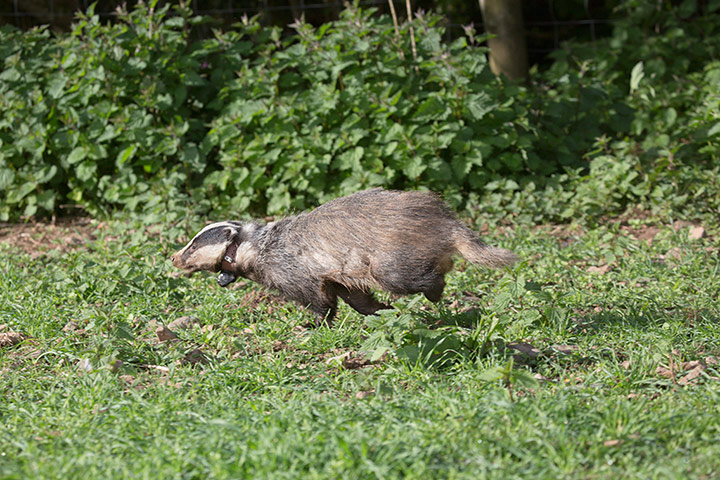
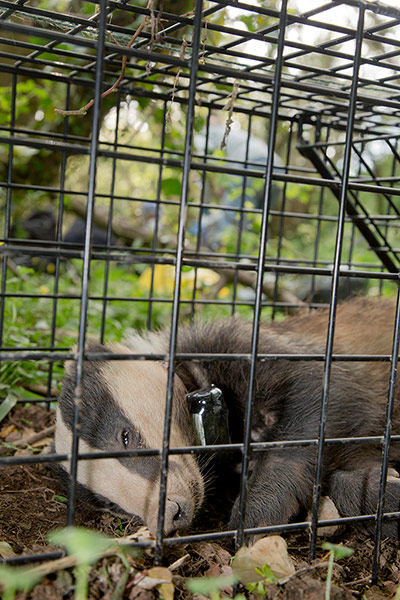
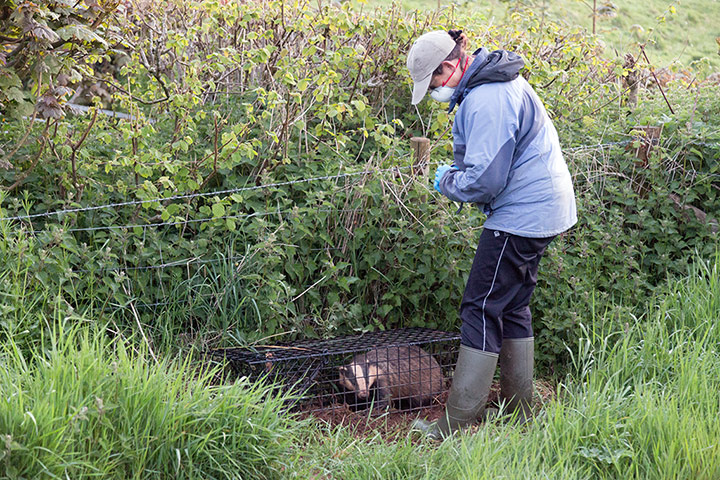
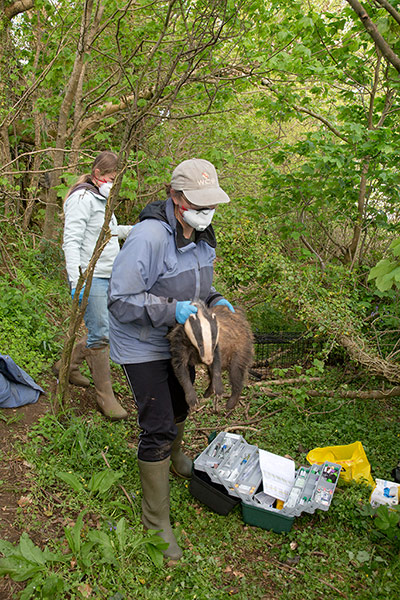
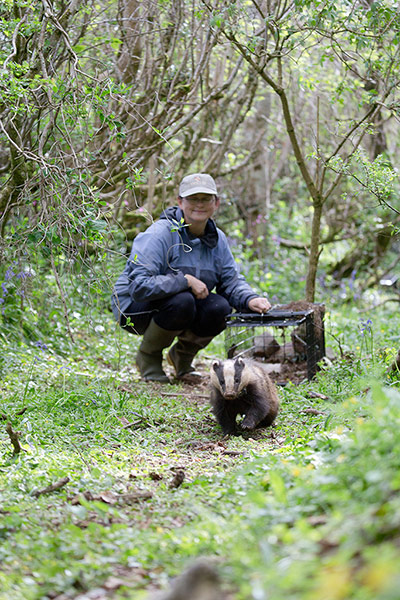
The pilot culls in Somerset and Gloucestershire may begin at any time. Ministers and the National Farmers Union insist it is a necessary part of TB control. Most scientists and animal rights campaigners say the cull is an expensive distraction from vaccination and cattle control measures and could make TB worse by scattering badgersPhotograph: David Chapman'We don't know how badgers and cattle transmit tuberculosis between them,' says Prof Rosie Woodroffe, from the Institute of Zoology. She is using electronic collars to study interactions between badgers and cattle on farms in CornwallPhotograph: David ChapmanFirst, the badgers have to be trapped, lured into the cages by peanut and treacle bait. Trapping only takes place in good weather, so the badgers do not get cold while waiting to be releasedPhotograph: David Chapman
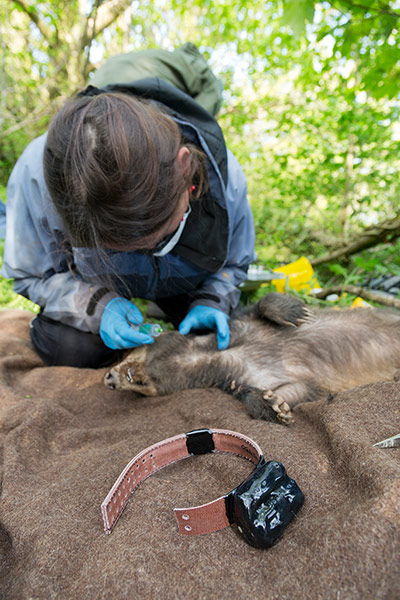
The badgers are anaesthetised then tested for TB. Collars are fitted to both the badgers and the cattle, so their interactions can be tracked and checked against cattle TB records. Better understanding will allow farmers to take effective measures to prevent contact between the animalsPhotograph: David ChapmanWhether most TB transmission is from badgers to cattle, or the reverse, is unknown. Prof Woodroffe's research is taking place on both diary and beef farmsPhotograph: David ChapmanAfter the anaesthetic wears off, the badgers are released and return to their underground settsPhotograph: David Chapman
Sign up to read this article
Read news from 100’s of titles, curated specifically for you.