Tokyo owes much of its development as a major city to the water transportation network centered on Tokyo Port. That important link can be seen at "Exhibition Room of the Tokyo Waterfront Area" at Tokyo Minatorie, a facility in Koto Ward, Tokyo, where hands-on exhibits help teach the history and technology of water-based transportation.
At the beginning of the 18th century, Edo (present-day Tokyo) was among the largest cities in the world with a population of more than 1 million.
Waterways called horiwari formed the infrastructure for the distribution of goods. Cargo brought in from all over the nation was delivered to the nooks and crannies of Edo through horiwari.
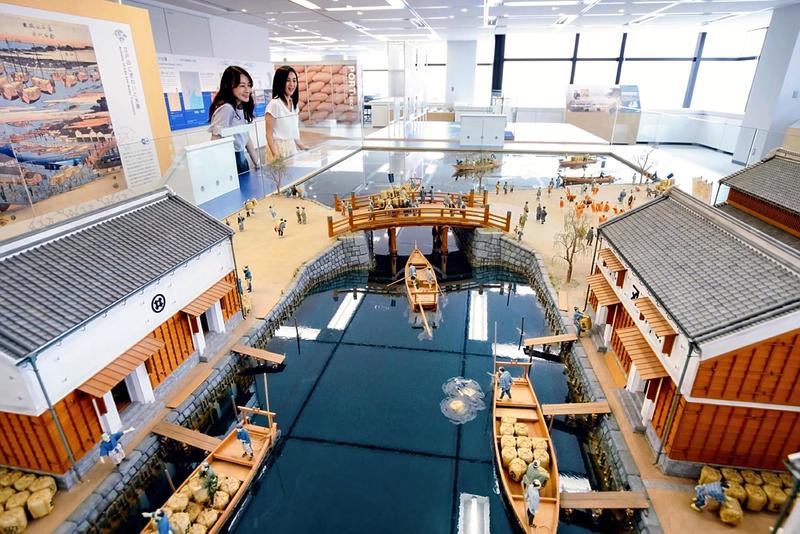
One of the highlights of the time was the "competition" between cargo boats aiming to become the first to bring fresh sake brewed in the Kansai region to Shinkawa (present-day Shinkawa, Chuo Ward), which was lined with sake wholesalers. The winners are said to have been rewarded with prizes and privileges.
Upon entering the exhibition room, the first thing the visitor sees is a diorama of vessels known as shinshu bansen ("fresh sake boats") that have arrived at Shinkawa.
In the display, a boatman and others gather happily, waving a banner that identifies them as the first to arrive, while elsewhere a crewman has fallen into the river while unloading cargo. It is an amusing exhibit expressing the festive mood of the mischievous Edokko, the denizens of Edo.
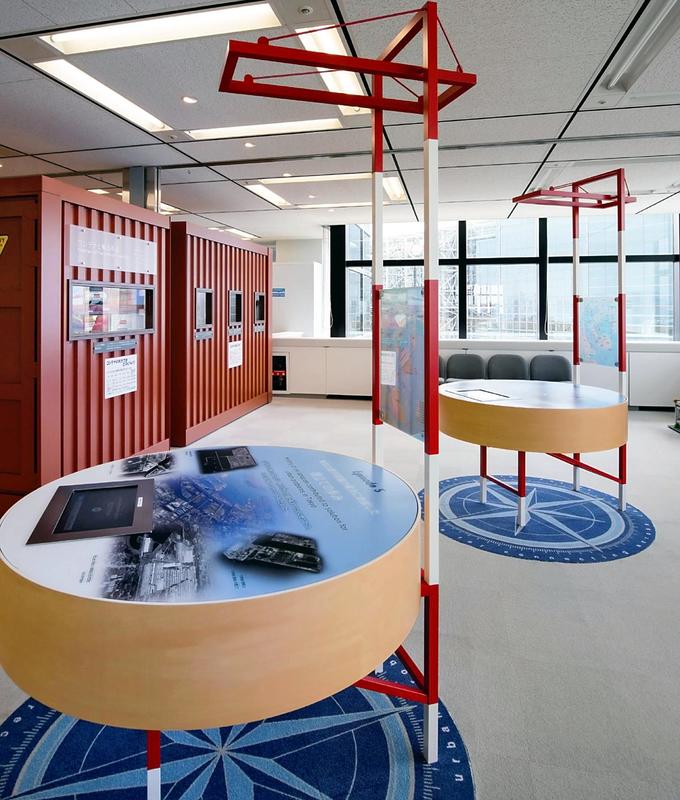
The Tokyo waterfront area, which developed amid such a light-hearted atmosphere, was gradually expanded by reclaiming land from the bay. Visitors can learn about the history of Tokyo Port through an abundance of resources, such as an exhibit showing the transportation of relief supplies and evacuees after the Great Kanto Earthquake of 1923, and the opening of Tokyo Port for international trading in 1941.
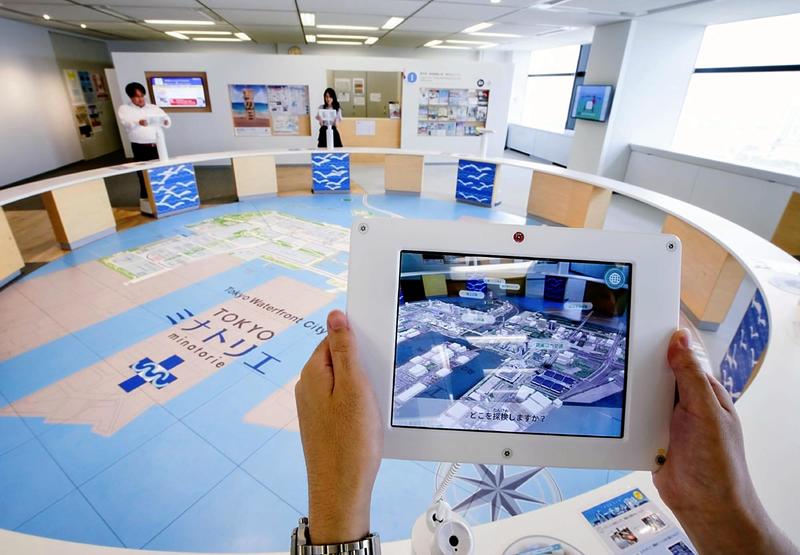
Awaiting the visitor after the exhibits is one of the main attractions of the facility -- a virtual exploration of the port-development process using augmented reality (AR) technology. Provided with a special tablet, the visitor can be taken to spots that normally can't be observed, such as the cockpit of a crane that moves cargo, or the underground infrastructure that supplies electricity.
"Very often, I see parents who brought their children here being the ones who actually enjoyed it the most," said Yukihisa Kawashima, manager of the general affairs section of the Tokyo Port Promotion Association, which manages the facility.
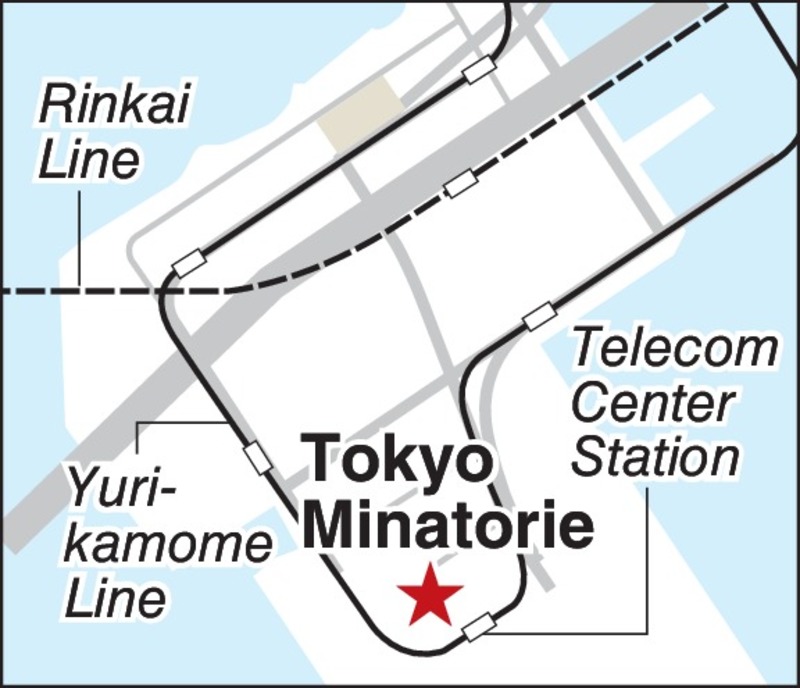
Spurred by Tokyo's hosting of the 2020 Olympics and Paralympics, the waterfront area is undergoing further redevelopment. It might be a good idea to learn about the history of the area ahead of the big event.
-- Tokyo Minatorie
Opened in 1996 as Tokyo Minatokan, name was changed to Tokyo Minatorie at reopening in April 2017 after extensive renovations including enhancement of video technology. Provides scenic view of port from 100-meter-high observation points. Attracts about 30,000 visitors a year, including schoolchildren on study field trips.
Address: 20th floor Aomi Frontier Building, 2-4-24, Aomi, Koto Ward, Tokyo
Open: 10 a.m.-6 p.m. on Tuesday, Wednesday, Thursday and Sunday.10 a.m.-9 p.m. on Friday, Saturday and the day before national holidays (Closed Monday)
Admission: Free
Information: (03) 5500-2587
Read more from The Japan News at https://japannews.yomiuri.co.jp/