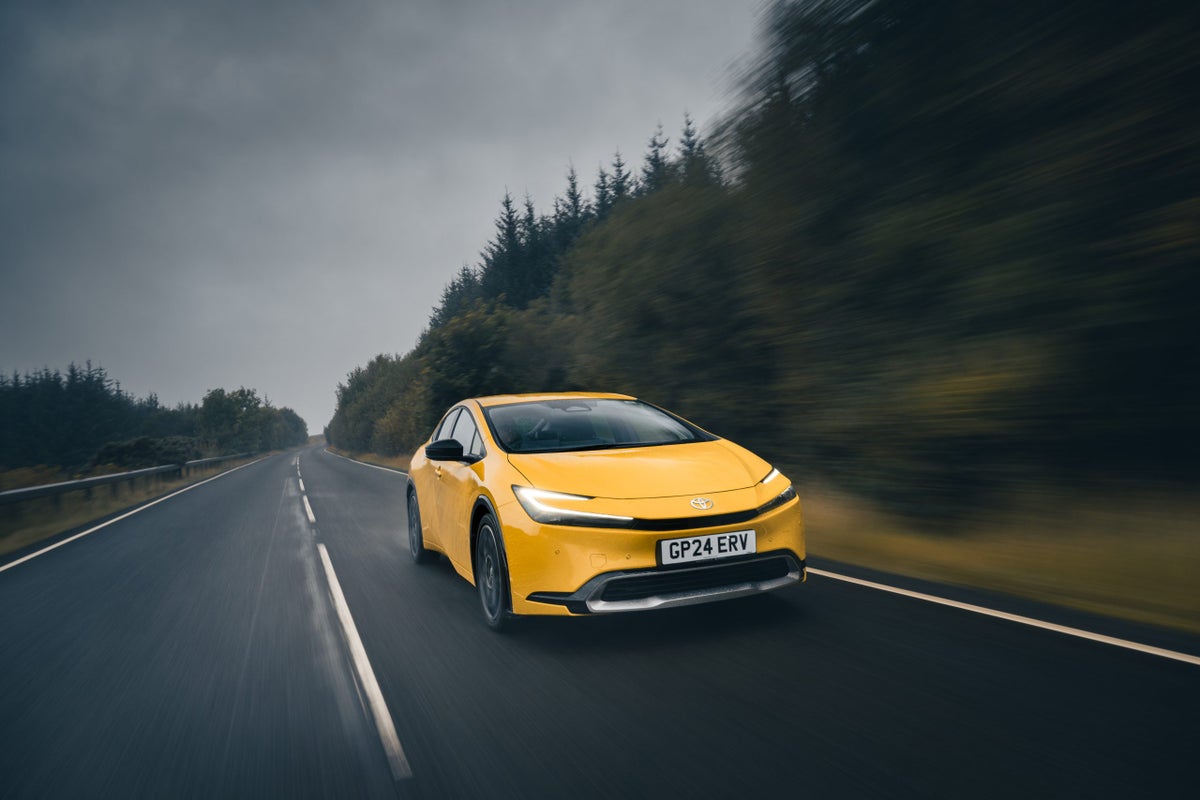
The Toyota Prius was the world’s original hybrid. First introduced in the 1990s, it boldly combined a petrol engine with an electric motor and small self-charging battery. It introduced us to the idea of a car that can switch into EV drive at slow speeds or when you lift off the accelerator.
Sure, critics pointed out, the actual EV driving range appeared minimal, but factor in how frequently the engine could shut down overall, and it was still able to deliver big improvements in fuel efficiency. The Toyota hybrid system kept on improving with each new generation, and Toyota later introduced a plug-in hybrid Prius, with a larger battery giving a much larger pure EV range.
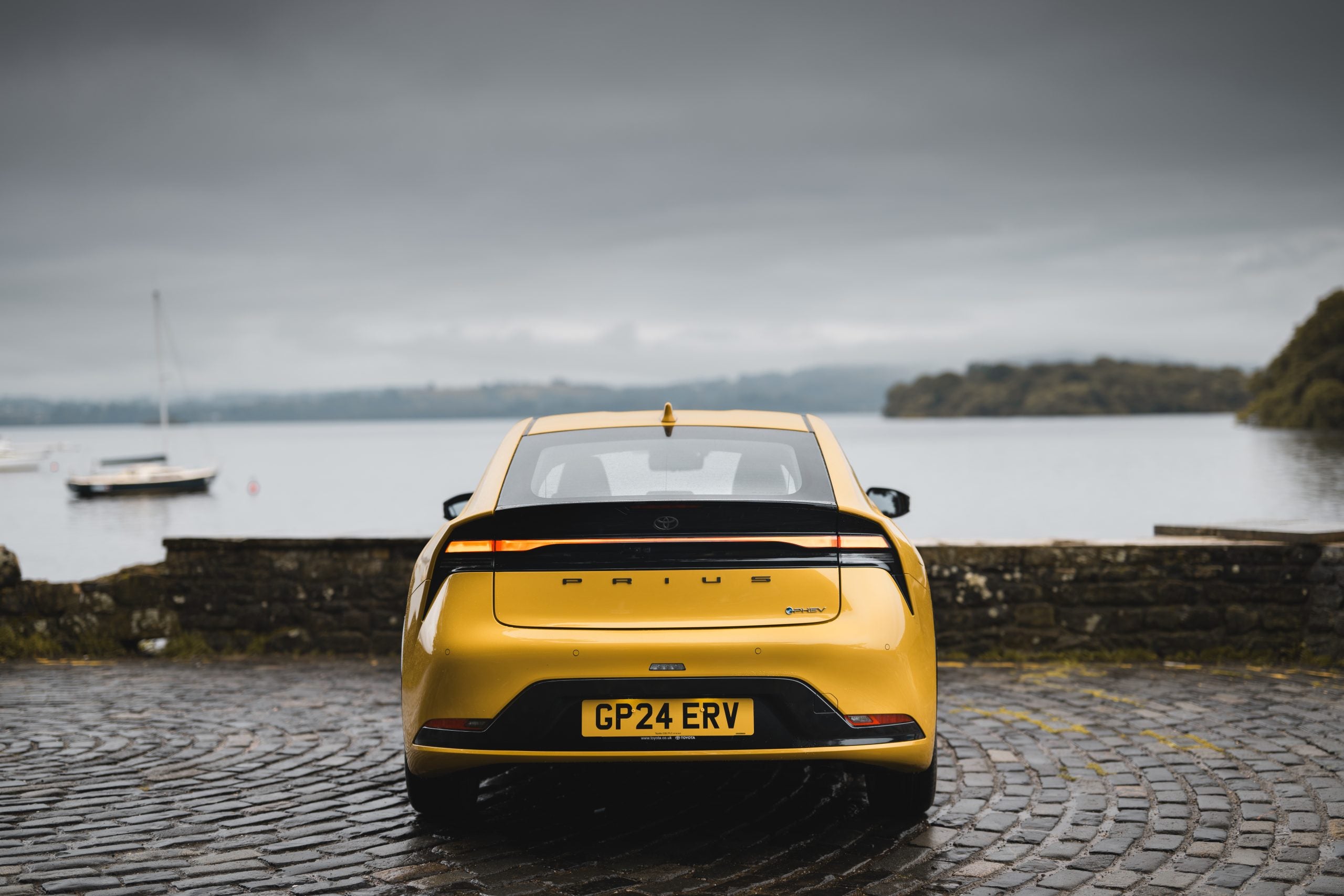
With the latest model, it’s combined all this with genuinely striking design. The Toyota Prius is no longer a quirky-looking model, but a genuinely head-turning piece of design that’s extremely futuristic. The shape has been created to be as wind-cheating as possible, with the idea of improving efficiency not just in EV mode, but in hybrid drive guise too.
With more than five million Toyota Prius sold worldwide, it’s a car that heralded a hybrid revolution. Does the latest model continue this trend in the plug-in hybrid arena?
How I tested
I’ve driven the Toyota Prius on both sides of the Atlantic, first in sun-soaked California and then for a more real-world week in rainy Britain.
Toyota Prius: From £37,895, Toyota.co.uk
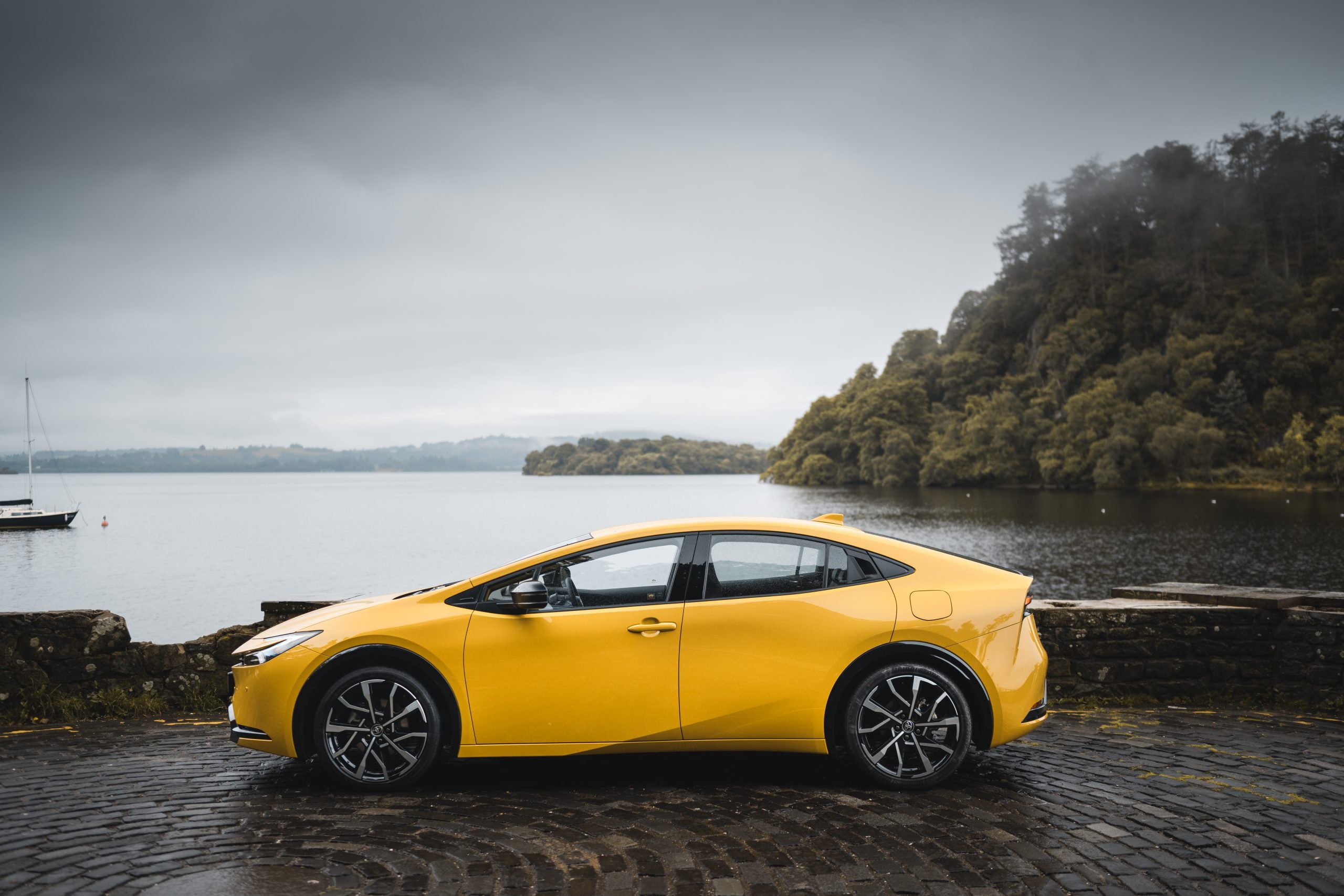
Independent rating: 7/10
Toyota Prius Specs
Battery, range, charging, performance and drive
The Toyota Prius Plug-in uses the latest evolution of the famous Toyota hybrid system. There’s a 2.0-litre four-cylinder engine, that doesn’t have a turbocharger but does run on the efficient ‘Atkinson cycle’ for maximum efficiency. It’s paired with Toyota’s e-CVT gearbox and has a more powerful electric drive motor.
All this tech makes for punchier performance than any Prius before it. With a total system output of 223hp, 0-62mph acceleration takes just 6.8 seconds – as fast as a sporty hot hatch. It feels lively too, although it does have to run in hybrid mode, with electric motor and engine combined, to deliver maximum performance. You’ll notice the familiar Toyota hybrid ‘single gear’ effect, with the engine humming away noticeably, but this is less noticeable in everyday driving.
The battery has a 13.6kWh capacity. On 17-inch wheels, Toyota says this gives a 53-mile EV range, dropping to 44 miles on 19in wheels. You won’t see quite such a range in reality, but the car’s overall efficiency means it’s still decent. Charging is a bit slow, though; even with a wall box, Toyota quotes four hours to reach 100 per cent charge, due to the weedy 3.3kW onboard charger. There’s no DC rapid charging functionality.
I found overall fuel economy, with battery and petrol power combined, to be outstanding. The engine is really efficient and the aerodynamic design means it slips through the air with little effort, even at speed. It even has an energy-saving heat pump as standard. You won’t find it hard to record some amazing overall economy figures, showing the power of that wind-cheating shape.
The latest Toyota Prius is an appealing car to drive, with more dynamism than earlier iterations. Its eco-focused tyres perhaps don’t have the most grip around, particularly in 17in guise, but it’s still assured and tidy. The ride is generally smooth too, although again, this is dependent on wheel size, with 17in wheels being comfier than 19in.

Interior, practicality and boot space
The Toyota Prius has a very modern feel inside, with a low-slung, open-plan dashboard built around two screens. There’s the familiar central touchscreen, plus a novel head-up-style display in front of the driver. The steering wheel is set relatively low (although it can still obscure the instrument panel), and packed with buttons. It’s a little overwhelming at first, but the idea is to reduce the need to take your hands off the wheel.
It is very robust and well-built inside, with that Toyota ‘made to last’ feel. Some rivals may have more opulent-looking trims and materials, but the Prius still feels good quality. The retention of physical buttons for the climate control is a welcome touch. Only the stubby little gearlever takes a bit of getting used to, but you’ll soon get the hang of it – including flicking back into ‘B’ mode to get extra battery-boosting energy regeneration when you lift off the accelerator.
The aero design means the Toyota Prius has a very raked windscreen design. You’ll have to watch your head as you step in and out, and this can mean the windscreen pillars get in the way when you’re trying to peer out at junctions. The sleek design also eats into rear headroom, which may see even average-sized adults bumping their heads against the roof. There’s plenty of legroom in the rear, at least.
Boot space is compromised too. The Toyota Prius has a high boot floor and a swept-back hatchback, resulting in just 273 litres of boot space. The shallow layout isn’t the best for piling in suitcases, although the boot opening itself is very large, which will help you with the necessary boot Tetris.
Technology, stereo and infotainment
The Toyota Prius has a sleek-looking 12.3in touchscreen running the latest Toyota Smart Connect+ multimedia system. This has a premium, almost Lexus-like appearance, with crisp graphics and a user-friendly interface. Cloud-based sat nav is standard, along with MyToyota connected services via smartphone app. There’s wireless Apple CarPlay and Android Auto.
Cleverly, the onboard navigation can help enhance fuel economy in everyday driving. It can identify when uphill sections are approaching and prepare the hybrid system in advance, and automatically increase regenerative braking to maximise energy recovery. Toyota says it can become increasingly effective at this as it gathers more data about the driver’s style.
The standard setup is a regular six-speaker setup. We’re used to higher-grade Toyotas offering premium JBL sound systems either as standard or as an option, but that’s not the case here. It might be due to Toyota’s desire to place the top-spec Excel grade below the £40,000 ‘luxury car tax’.
Prices and running costs
The Toyota Prius Plug-in is competitively priced to be comparable with leading rivals such as the Volkswagen Golf eHybrid. Prices start from £37,895 for Design grade, and Toyota often seems to run special ‘electrified savings’ taking a further £1,500 or so off the price. The Excel version costs from £39,995, and has extra equipment – but, due to its larger alloy wheels, a smaller EV range and worse fuel economy.
The latter is likely to be relative, mind – both Toyota Priuses will serve up excellent real-world economy, thanks to the sheer efficiency of the design. The economy achievable when in hybrid mode really sets it apart from many other plug-in hybrids, which can be compromised in terms of economy when running with a discharged battery. This will pay dividends in terms of running costs.
Toyota currently offers an excellent 10-year warranty for those who regularly have it serviced at a Toyota dealer (this includes the plug-in hybrid battery too), while the overall reliability of the firm’s cars is legendary.
Toyota Prius rivals
FAQs
How long does it take to charge?
Using a wall box, Toyota says the Prius will take around four hours to reach a full charge.
How much does it cost – is it worth it?
Toyota Prius prices start from £37,895. This is comparable with its rivals, although some of them do offer a notably larger pure EV range.
Does Toyota replace batteries for free?
The Toyota Prius has an impressive 10-year, 150,000-mile battery warranty. This can be extended up to 15 years with an annual hybrid health check at a Toyota dealer.
Why trust us
Our team of motoring experts have decades of experience driving, reviewing and reporting on the latest EV cars, and our verdicts are reached with every kind of driver in mind. We thoroughly test drive every car we recommend, so you can be sure our verdicts are honest, unbiased and authentic.
The verdict
The latest Toyota Prius is a car transformed, from being the world’s most commonplace Uber, into a genuine head-turner with sleek futuristic design. It’s good to drive too, but the battery can’t match the range of the plug-in hybrid leaders.