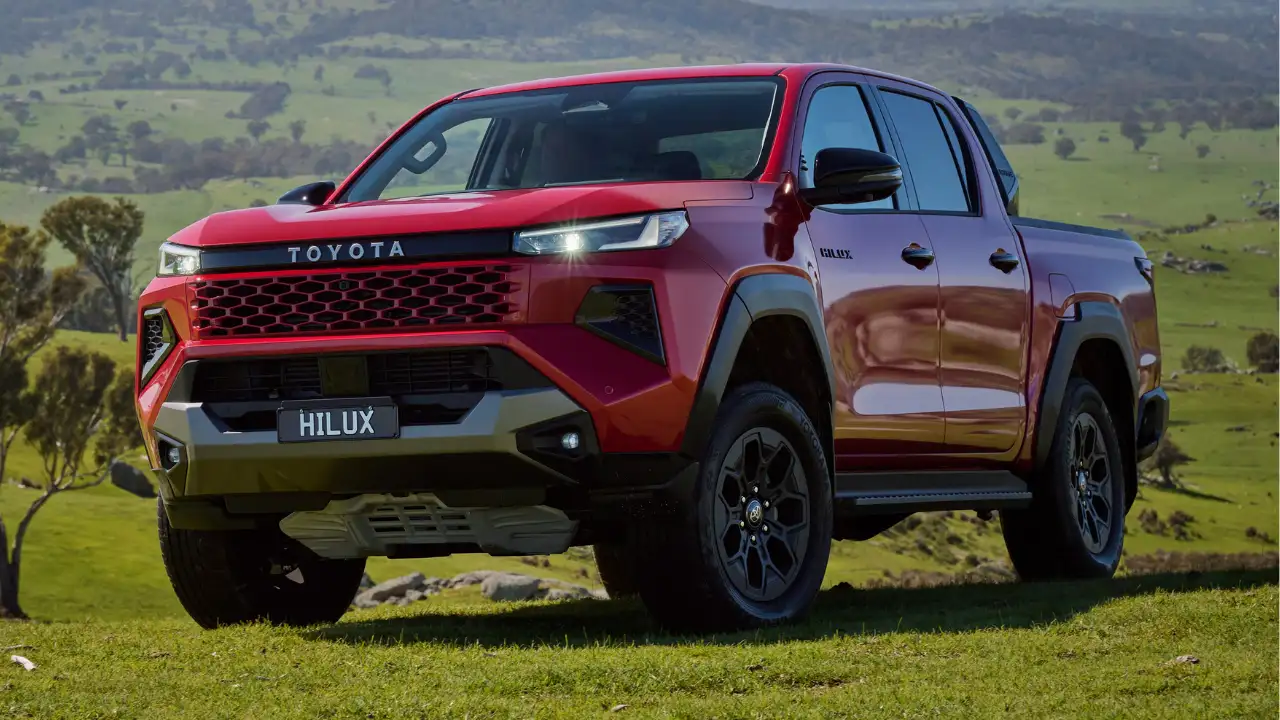
Toyota Kirloskar Motor is set to launch the next-generation Toyota Hilux pickup truck in India on July 28, 2026. The ninth-generation Hilux, which made its global debut in November 2025, will arrive with a comprehensive exterior redesign, a revamped interior and updated features.
The current Hilux is priced from Rs 28.5 lakh (ex-showroom) and is available in STD, High and Black Edition variants. With the arrival of the updated model, prices are expected to increase by around Rs 1 lakh. The new Hilux is also likely to be offered in a simplified two-variant lineup.
Updated exterior design
The new Hilux will continue to be based on Toyota's IMV ladder-frame architecture, retaining the body-on-frame platform used by the outgoing model.
The India-spec version is expected to mirror the global model. At the front, the pickup truck features a body-coloured honeycomb grille replacing the existing large hexagonal unit, slimmer LED headlamps, a redesigned bumper and a skid plate.
The side profile is expected to remain largely unchanged, apart from newly designed alloy wheels. At the rear, Toyota is likely to introduce a revised bumper and LED tail-lamps, while the traditional badge could be replaced with 'Toyota' lettering.
Revamped cabin and feature list
Inside, the Hilux is expected to receive a redesigned dashboard with dual 12.3-inch displays, a new steering wheel and an updated centre console with physical controls.
The expected equipment list includes a 360-degree camera, six airbags, dual-zone climate control, ADAS, powered and ventilated front seats, along with other features.
Engine and mild-hybrid system
The next-generation Hilux is expected to retain the 2.8-litre four-cylinder turbo diesel engine producing 204 hp and 500 Nm of torque.
Transmission options are likely to include a six-speed manual gearbox and a six-speed torque converter automatic. The pickup is also expected to continue with a 4x4 system featuring a low-range transfer case.
Toyota is also expected to pair the diesel engine with a 48V mild-hybrid system, similar to the setup available on the Fortuner Neo Drive variant.
The system includes a belt-integrated starter generator and a lithium-ion battery to provide smoother low-speed performance, improved fuel efficiency and quieter engine starts. It is also expected to support regenerative braking and an auto start-stop function, which switches off the engine while idling to reduce fuel consumption and emissions.