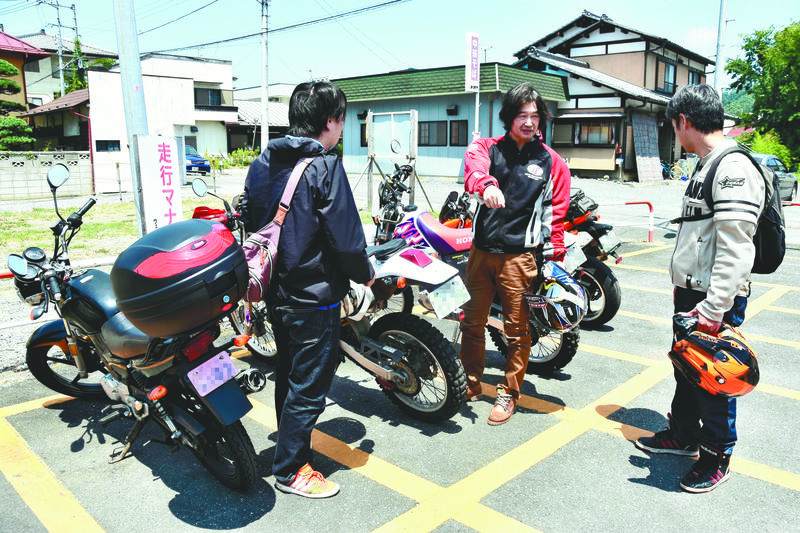
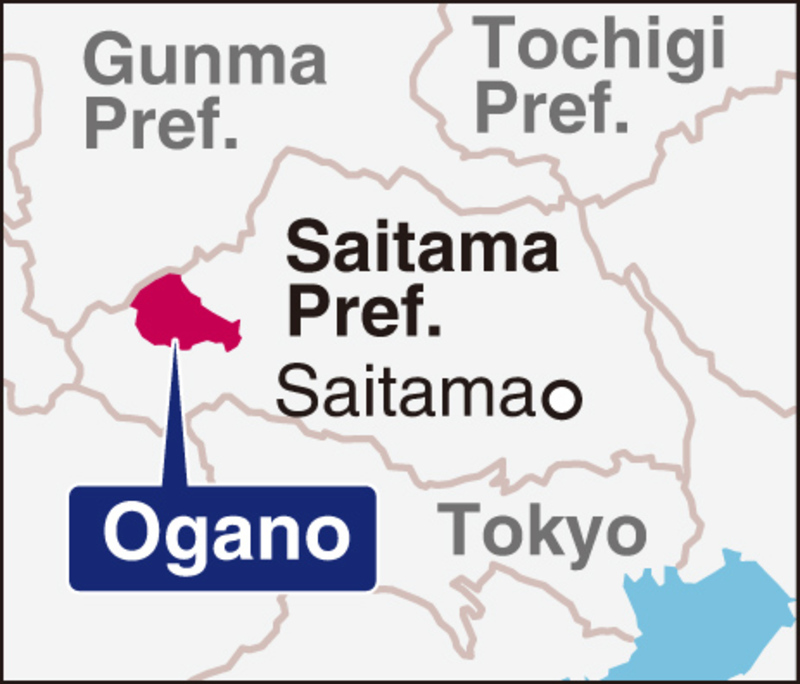
OGANO, Saitama -- A array of place names appeared on the license plates of a row of motorcycles in about 10 motorcycle parking spots in Ogano, Saitama Prefecture, in early August. There were bikes from Nagano, Shonan, Tama, Omiya and elsewhere.
Company employee Yoshio Fujimaki, 51, had spent 4-1/2 hours getting to the town from Miyota, Nagano Prefecture, with a coworker. "Ogano has many free parking spots, which are not seen in other municipalities, and I feel the town is friendly to riders," Fujimaki said with a smile. He said he visits Ogano two or three times a year.
National Highway Route 299, which has nice curves and ups and downs, runs east to west through Ogano. For residents of the Tokyo metropolitan area, about 100 kilometers away, it is possible to make a day trip to the town.
Thanks to the favorable geographical conditions, the town of Ogano is enjoying popularity as a place for touring, and many motorcycle riders visit the town from across the nation on weekends. However, Ogano was not very attractive to riders more than 10 years ago.
Ogano was turned into a "motorcycle town" after its 2005 merger with the village of Ryokami. Looking for development ideas, it focused on riders, who were an "existing resource." In 2007, the town became the first municipality in the country to embark on a town development project focusing on motorcycles. The town constructed roofed parking lots exclusively for motorbikes in two locations, while creating a map showing information about parking lots and hazardous spots as well as restaurants, hotels and other issues. In addition, the town turned the word "OGANO" into a motorcycle-shaped logo, with the two O's representing the front and rear wheels.
Subsequently, a volunteer group "Welcome Riders Ogano" took over the project in 2010 when subsidies from the Saitama prefectural government expired. Akira Yoshida, 64, the representative of the group, is a designer hailing from the town. "I could not silently watch the town decline," he said. Now, the project is funded by membership fees from over 30 corporations and groups and more than 60 local residents, plus subsidies from the town office. They hold motorcycle driving lessons six or seven times a year, and local residents offer first aid training courses, among other activities.
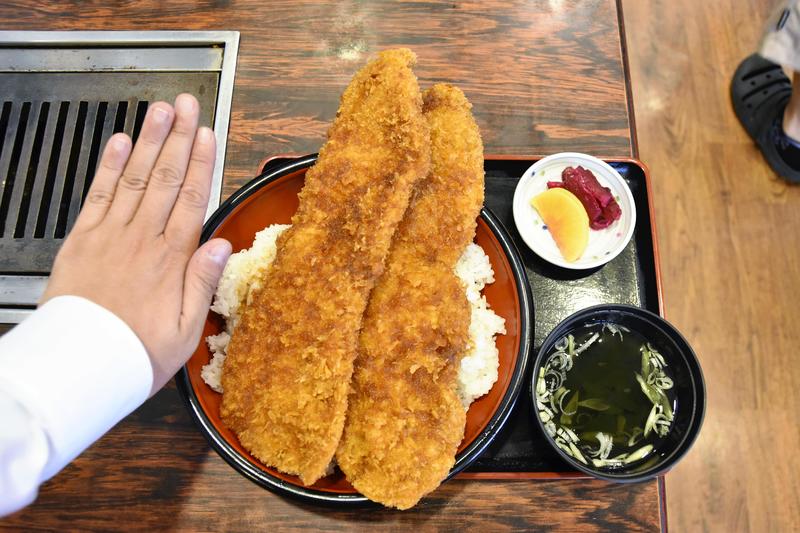
One of the charms that attract riders is waraji katsudon, which is said to originate in the town. It is a bowl of rice topped with a pair of pork cutlets that look like waraji, or straw sandals. The cutlets are dipped in salty-sweet sauce, breaded and fried. For big eaters, the restaurant Todaimon added mega-waraji katsudon to its menu along with the launch of the town development project. The dish is so popular that about 300 people visit the restaurant on a busy day, according to the restaurant.
"The number of customers has increased five times on weekdays and more on weekends. While the town's population has been declining, riders coming to the town are giving a boost," Akiyoshi Fujimoto, the owner of the restaurant, 45, said.
When walking in the town, you will find the "OGANO" logo at many stores and restaurants. Restaurants, gas stations and other organizations participating in the project offer such services as free drinks for riders. The Katoya Yohinten clothing store sells about 20 items using the logo, such as hats and stickers. "Many riders visit my store as repeat customers," Satoru Kato, 55, the president of the clothing store, said.
It has been 12 years since the project started. Now, Ogano is nationally known as the "motorcycle town." According to a traffic survey by the Nishichichibu commerce and industry association, the daily number of motorcycles running through the central part of the town tripled from 73 in 2008 to 216 in 2018. "Steadfast efforts by the entire town are spreading and bearing fruit," an official of the association said.
However, the town's population has declined by about 17 percent from a decade ago. How to link the town's popularity among motorcyclists with regional employment is an issue.
"We'd like to seek the possibility of making the town a motorcycle manufacturing base in the future. We want to make use of the attractiveness of motorcycles to keep the town alive," Yoshida said.
2,500 fatality-free days
At first, some Ogano residents opposed attracting riders.
"We had complaint calls saying such things as, 'Motorbikes are dangerous' and 'They make loud noises,'" Tatsuya Suneya, 61, an official of the town office who was involved in the launch of the project, recalled. Even so, he strongly believed that the project would bring benefits to the town someday.
There were concerns over more traffic accidents due to an increase in motorcycle and other traffic. However, on Aug. 13, the town achieved its 2,500th day without a fatal accident, since October 2011.
Ogano, a town with a long history
Ogano is located in the northwestern part of Saitama Prefecture, with its residential area nearly in the center of the Chichibu Basin. The town has a long history, and is said to date back to a place called "Kokanogo" that is recorded in "Wamyosho," a Japanese dictionary compiled in the middle of the Heian period (from the late eighth century to the late 12th century).
The town is famous for Ogano Kabuki, which started about 200 years ago in the Edo period (1603-1867). One of its characteristics is that local residents do all the work for each kabuki play, such as serving as actors, playing gidayu music and taking background roles.
Of geological interest, sedimentary layers of the prehistoric Chichibu bay and marine mammal fossils within the town and other places were given national natural monument status in March 2016. The town had a population of 11,814 as of Aug. 1.
Read more from The Japan News at https://japannews.yomiuri.co.jp/