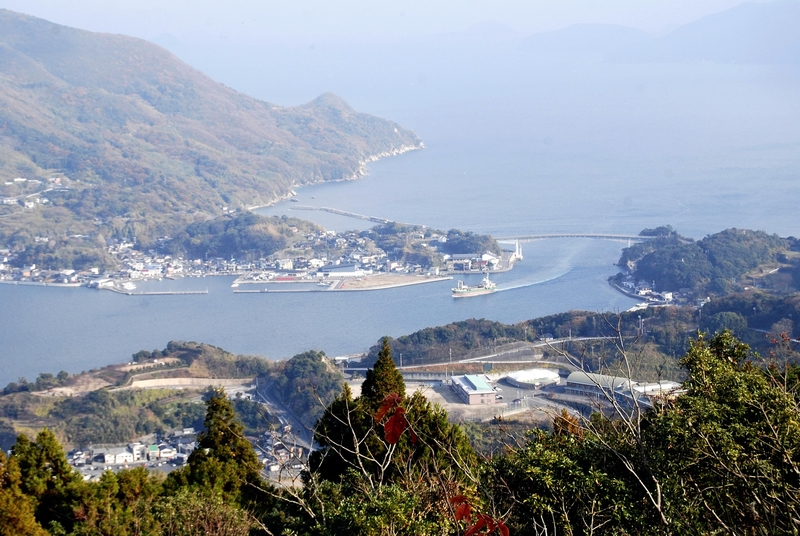
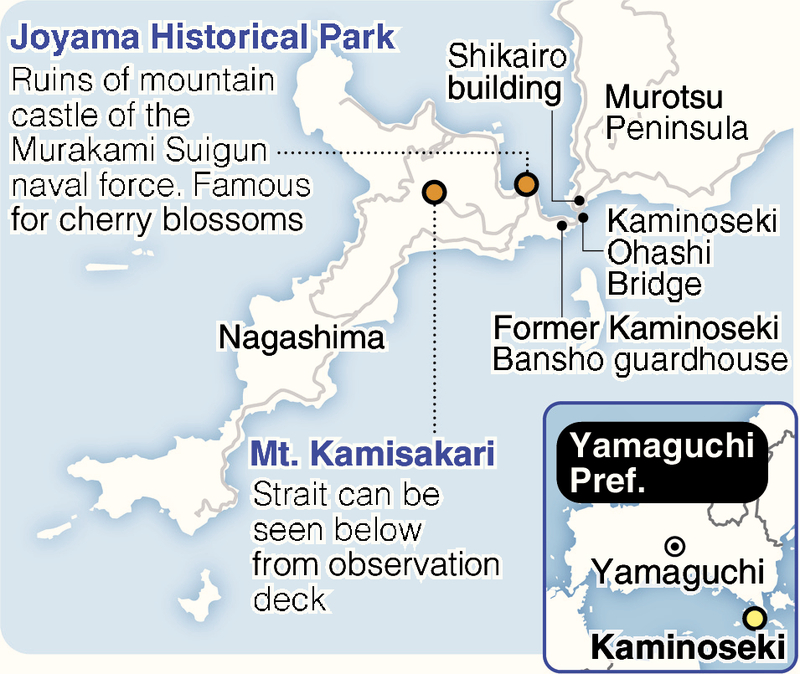
KAMINOSEKI, Yamaguchi -- "Kaminoseki was a port of call for 11 of the 12 missions from Korea to Japan," said Kazuyuki Yasuda, 71, head of Kaminoseki's tourism association, who gave me a tour of the port's historical sites.
The missions were delegations of hundreds of cultural emissaries who came to Japan for such occasions as the successions of new shogun in the Edo period (1603-1867). I'm sure that the sight of foreign fleets passing though the narrow strait was a magnificent sight.
Though only a few buildings dating back to those days remain now, the feudal clan's Kaminoseki Bansho guardhouse has been preserved and the town's landscape and layout have remained unchanged
After the start of the Meiji era, Kaminoseki Port's heyday ended as cargo ships became larger. Today, it is a small port town mainly relying on the fishing industry.
I stayed in a local inn facing the port. Innkeeper Reiko Yamane, 67, served me a dish of sauteed sole, a locally caught fish that's been dried overnight with an unexpectedly elastic texture and concentrated umami.
The dried fish was once given as thank-you gifts in the furusato nozei hometown donation system.
Noboru Yamane, 71, her husband, said with a smile: "Kaminoseki has few tourists. We have to make efforts."
The following morning, I set sail to Iwaishima island aboard a regularly scheduled boat, taking an old route depicted in the Manyoshu, the nation's oldest waka poetry collection.
It took about 30 minutes to reach the small mountainous island. Other passengers headed for their destinations at quick paces, leaving only me and some stray cats to stroll around the port.
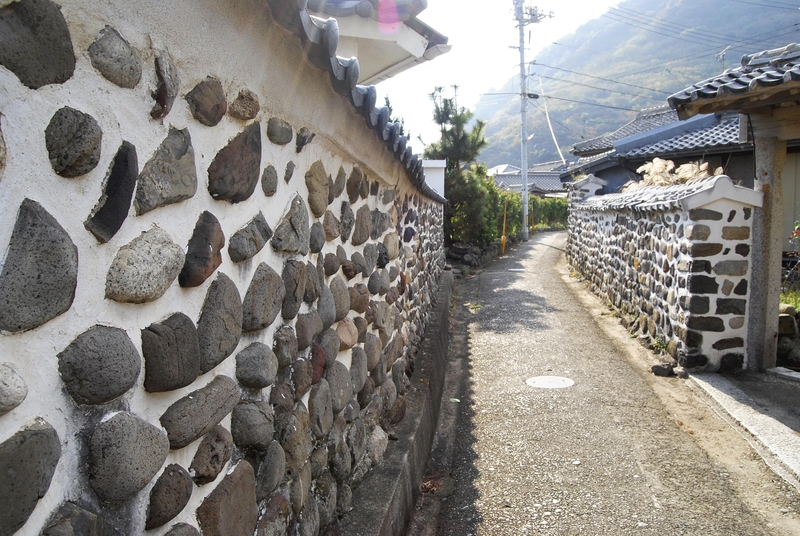
In a small flat area beside the sea, houses of low stature stand closely packed in lines. Their outer walls, called nerihei, made of mud and stones piled up and solidified with plaster, have an impressive appearance.
I passed through the labyrinth-like paths between the walls, so narrow only one person can walk through at a time. I climbed a steep slope and the Seto Inland Sea and its islands appeared before me, giving me a great sense of freedom.
When I returned to the port, I spotted a coffee shop among the lines of houses. A cup of authentic coffee really hits the spot.
Keisuke Hotta, 54, owner of the coffee shop, Iwata Kohi-ten, used to run a coffee shop in Sapporo where he served the drink made from home-roasted coffee beans.
About eight years ago, he moved to the island. Through his participation in work the islanders shared, such as harvesting hijiki seaweed, he was gradually accepted as a local.
"I realized that many things I considered necessary before actually aren't. Living here is joyful," he said.
The departure time of the boat was approaching, so I left the coffee shop and returned to the town of Kaminoseki.
As sunlight was still visible between the clouds, I headed for the observation deck on Mt. Kamisakari, which Yasuda recommended I visit. I took a rental car through the narrow mountain roads and made it to the summit.
From the top of the mountain, I saw the strait and the Kaminoseki Ohashi bridge. As I watched a ship passing under the bridge, leaving a white trail in the water, I lost all track of time.
While I can't say that this is a convenient tourist spot, the scenery was excellent, the local people were kind and the food and drinks from the shops I visited were all tasty.
Whenever I feel like I want to leisurely see the Seto Inland Sea and islands, I'll be sure to visit Kaminoseki again.
'Tempura' mentioned in TV drama
There was a popular TV drama series set in Kaminoseki, "Hatoko no Umi," which aired from 1974 to 1975 and was filmed in the town.
"The filming was done on a beach near the Kaminoseki Ohashi bridge. In the early morning, actors and staff would eat tempura fresh from the pan," recalled Hiroyuki Harada, 89, president of Kaminoseki Suisan, a local marine products company.
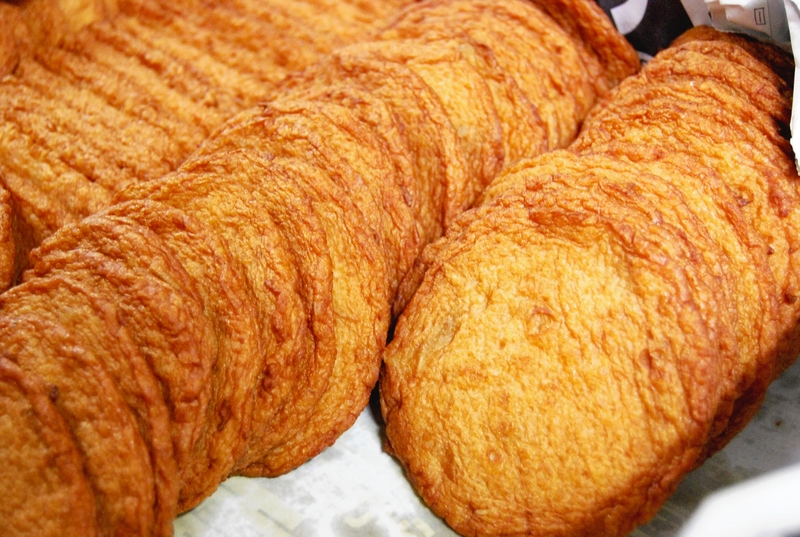
Tempura in Kaminoseki refers to fried minced fish with a distinct oval shape.
As a result of the TV drama, the local dish was named "Hatoko tempura," and has been popular as a local specialty in Kaminoseki.
A pack of five with fries is priced at 360 yen. In the Michi no Eki Kaminoseki Kaikyo roadside rest area, Hatoko tempura, fresh from the pan, are available at 150 yen each. For more information, call (0820) 62-0031.
Access:
About a 4-hour and 20-minute ride on the Shinkansen from JR Tokyo to Shin-Iwakuni station. From there, it's about a 2-hour drive to Kaminoseki, or about a 1-hour bus ride from Yanai Station on the JR Sanyo Line.
Read more from The Japan News at https://japannews.yomiuri.co.jp/


.jpg?w=600)