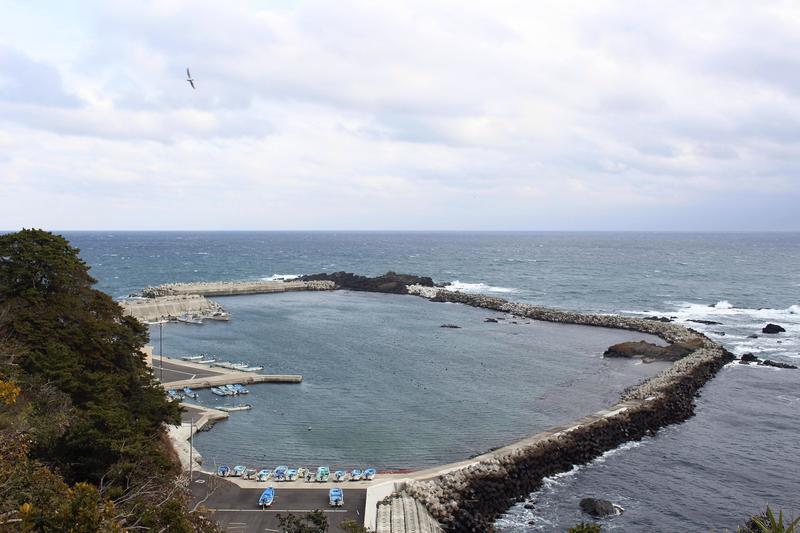
ISHINOMAKI, Miyagi -- It has been nine years since the Great East Japan Earthquake and I visited a beach engulfed by tsunami during the 2011 disaster. A long and massive seawall was under construction seemingly obstructing visitors' view. Nonetheless, as I drove a car along the coast, from a plateau the beautiful scenery of the Bay of Ogatsu in the city of Ishinomaki, Miyagi Prefecture, spread before me.
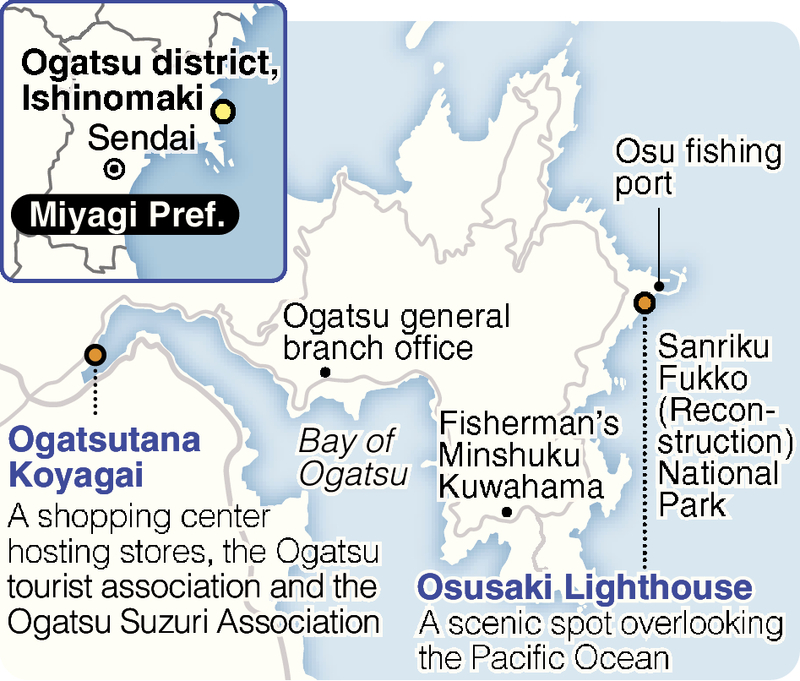
I walked up to Osusaki Lighthouse overlooking the Pacific Ocean. Seen right below was a fishing port that formed a different shape than usual. Hisayoshi Abe, 46, a local resident, found on an online image posting website a photo of the port calling it "heart-shaped" and has since taken it upon himself to actively spread information online about the port.
"Around the time of the summer solstice, the bay looks like a heart with an arrow through it as the sun rises from the edge of the sea," he said.
The lighthouse has gained popularity along with the heart-shaped port. The Nippon Romantist Association selected the lighthouse as a "lighthouse for lovers" in 2018, saying, "The figure of the lighthouse continuing to stand through the difficult years in the aftermath of the earthquake disaster warms the hearts of its viewers."
Abe returned to his hometown of Ogatsu after being involved in the production of TV programs in Tokyo. He is head of an association aimed at reconstruction and development of the town by providing visitors with opportunities to experience fishing and leisure activities. The association publicizes the allure of the area through such means as its official website Ogatsutabi.
"Fishermen and owners of minshuku guest houses are our primary tourism resources," Abe said. "We'll seek to promote tourism in a natural way worthy of a fishing village."
Inkstones and slate tiles
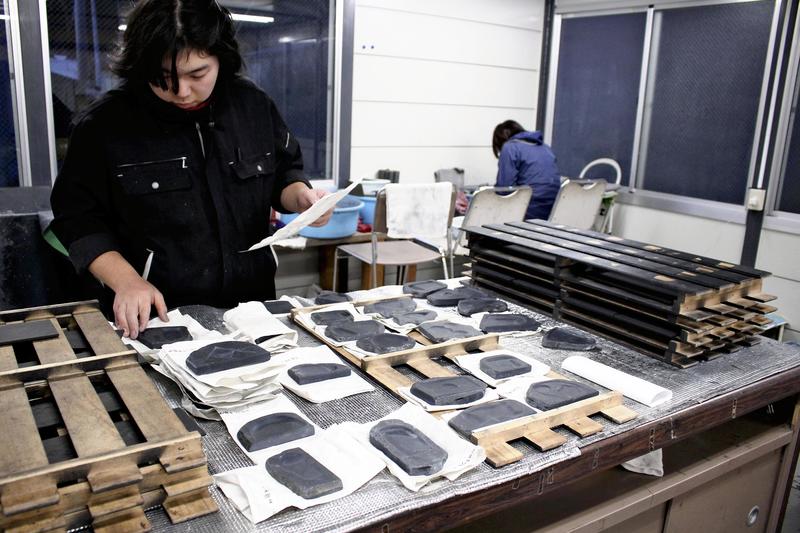
Suzuri inkstones are said to have been made in Ogatsu since the Muromachi period (1336-1573) by using locally produced slate called Ogatsu Stone. Since the Meiji era (1868-1912), slate tiles have been used for Western-style architectural structures. Slate and inkstones were swept away by the tsunami in large quantities, but more than 10,000 items were recovered with the help of volunteers. Slate tiles were also used to restore part of the roof on the Marunouchi side of Tokyo Station.
I visited the Ogatsu Suzuri Association located in the temporary shopping center named Ogatsutana Koyagai. According to the association's chief of the secretariat, Takashi Chiba, 58, Ogatsu Suzuri used to account for the nation's biggest share of inkstones produced for schoolchildren. Ogatsu Suzuri was designated as the nation's traditional craft, but suffered destructive damage in the 2011 disaster just as it was struggling to survive competition with ceramic products and inkstones made in China. The town is in such a difficult situation that Chiba said, "Ogatsu has presumably slipped to the lowest on the list of inkstone production centers."
While manufacturing inkstones and new Ogatsu Stone products in its temporary factory, the association has carried out programs linked to the "My Suzuri" movement proposed by Junkyu Muto, a sculptor who was born in Sendai and lives in Rome. The idea behind the movement is to provide chances for hands-on experiences of inkstone production at elementary and junior high schools in Ishinomaki.
Chiba expressed his desire for children to remember the craft culture of their hometown, saying: "Students are allowed to have free choice of shapes and designs. Some engrave heart shapes or manga and anime characters. I want them to become familiar with Ogatsu Suzuri by making their personal inkstone."
9 years have passed
Fisherman's Minshuku Kuwahama is operated by Kiyoo Konno, 73, and his wife, Kitsuko, 67. During the 2011 disaster, their house built on the beach was swept away. After living in temporary housing, the couple rebuilt the house on higher ground in autumn 2015 and started the minshuku local inn business there. The husband and wife offer staying guests food made from the marine products they catch. Disaster relief volunteers come back and stay there as they miss the couple's personality.
While tasting fresh sea squirts, they talked about the hardships they faced during and after the 2011 disaster.
"All of a sudden, it's been nine years," Kitsuko said. The thousands of emotions she condensed in this phrase could be felt.
Tourist facilities to open
Ogatsucho was among the city and six towns that merged in 2005 to give Ishinomaki its present shape. The Ogatsu district's population before the 2011 disaster was 3,994, according to the 2010 census. But its population dropped to 1,207 as of the end of this January. A difficult road lies ahead for the district's reconstruction, but projects are underway to construct tourist and commercial facilities, including the Suzuri tradition and industry hall, which is scheduled to open in the town shortly. I felt that what the town needed was an inflow of people to bring activity back to the town little by little.
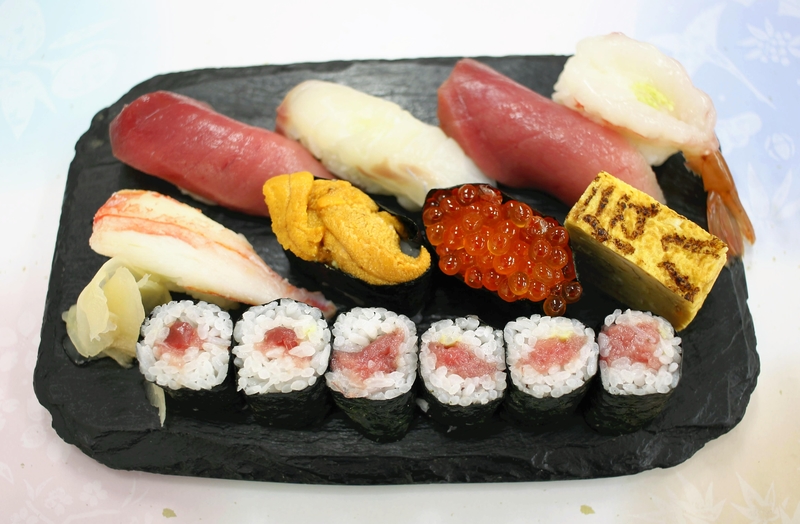
Sushi served on Ogatsu Stone
At Denpachi Sushi in the Ogatsutana Koyagai shopping center, sushi is served on plates made from Ogatsu Stone. The photo shows a jozushi deluxe sushi plate priced at 2,000 yen.
Ryuji Kano, the shop's 50-year old proprietor who trained at a sushi restaurant in Sendai, was in his 11th year running his own sushi shop in Ogatsu when the disaster struck and the shop was washed away by tsunami.
People connected to local commerce and industry placed high expectations on him, encouraging him to open the shop again. He started his comeback by serving disaster relief volunteers curry and rice, udon noodles and soba noodles, and his sushi menu began with low-priced sushi rolls.
Currently, Kano's offerings include chuzushi regular sushi plate (1,500 yen), kaisen-don sashimi-topped rice bowl (1,700 yen) and scallop sashimi on a bowl of rice (1,200 yen).
Denpachi Sushi is closed on Tuesdays. The Ogatsutana Koyagai shopping center will move into a facility scheduled to open nearby in April.
Inkstone production experience
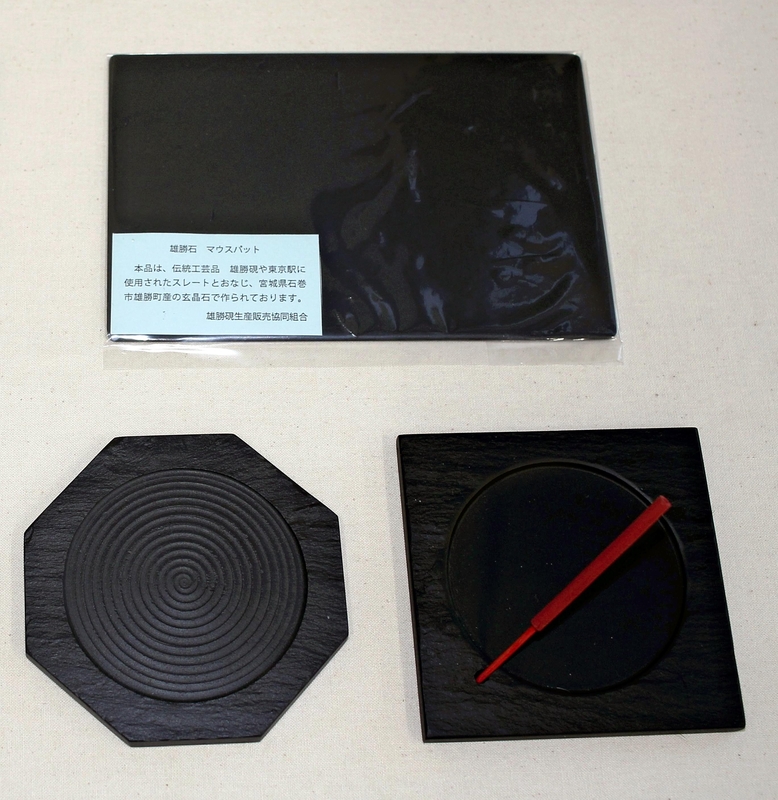
Ogatsu Stone products are available at the Ogatsu Suzuri Association in the Ogatsutana Koyagai shopping center and other shops in town. In addition to inkstones, dishes and desktop clocks, the photo shows a mouse pad (1,430, yen top), a coaster (1,540, yen left) and a coaster with an incense holder (1,650 yen).
To experience making your own inkstone, you have to make a reservation with the association. At a temporary factory of the association, three courses are offered, at 5,000, yen 10,000 yen and 15,000 yen depending on the size of stone to be used. Products will be finished by the association before being sent to you later.
Access:
From Tokyo Station, take the Shinkansen to Sendai Station (about 1-1/2 hours). Then take the Senseki Tohoku Line to Ishinomaki Station (about 1 hour). From there, it's about a 40-minute drive to the Ogatsu district.
For details, call the Ishinomaki tourist association's Ogatsu office at (0225) 57-3339 or Ogatsu Suzuri Association at (0225) 57-2632 (both closed Tuesdays).
Read more from The Japan News at https://japannews.yomiuri.co.jp/